Introduction
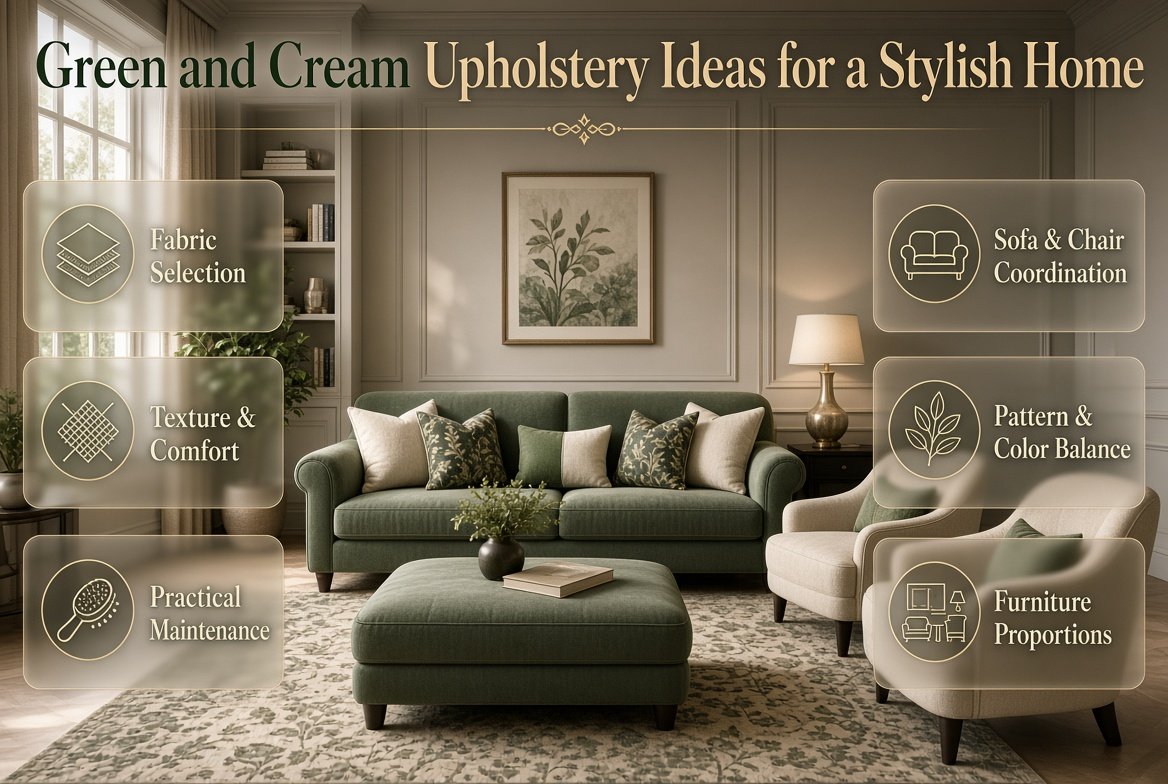
Green and Cream Upholstery Ideas | Choosing upholstery for your home can be more difficult than it first appears. A sofa may look beautiful in a showroom, but once you bring it home, the fabric might clash with your curtains, the color may look different under your lighting, or the material may be difficult to maintain. These problems become even more noticeable when you are trying to combine two colors as distinctive as green and cream.
Green and cream upholstery ideas offer a practical way to create a comfortable, coordinated interior without relying on too many colors or expensive decorative changes. Green introduces a natural, calming quality, while cream provides warmth and visual balance. Together, they can work in traditional homes, modern interiors, cozy living rooms, and carefully styled sitting areas.
However, successful upholstery design involves more than choosing two attractive shades. You also need to consider fabric texture, furniture proportions, cleaning requirements, existing finishes, and the amount of use each piece receives. A velvet accent chair may be suitable for a formal sitting room, while a frequently used family sofa may need a more practical fabric.
This guide explains how to choose green and cream upholstery, compare fabric options, coordinate sofas and chairs, mix patterns, update existing furniture, and avoid common decorating mistakes. The goal is to help you make informed decisions that suit your home, budget, and everyday needs.
For broader decorating inspiration, explore Preppy Room and use these upholstery ideas to develop a color scheme that feels consistent with your existing interior.
1. What Makes Green and Cream Upholstery a Good Choice?
Green and cream work well together because they offer contrast without creating an overly complicated color scheme. Green adds character, while cream softens the overall appearance and helps balance darker or more saturated shades.
This combination is particularly useful when you want upholstered furniture to feel distinctive without dominating the entire room.
For example, a sage green sofa with cream cushions can create a relaxed atmosphere. An olive green armchair paired with oatmeal-colored upholstery can feel warm and traditional. An emerald green accent chair beside a cream sofa creates a stronger contrast that suits a more dramatic interior.
The best arrangement depends on how you want the furniture to function within the room.
Why does the balance between green and cream matter?
Green and cream should have clear roles rather than competing equally on every surface. One color can provide the foundation, while the other adds contrast through selected furniture pieces, cushion covers, or upholstered accessories.
Consider these practical combinations:
- Cream-dominant upholstery: Suitable when you want the furniture to feel light and understated.
- Green-dominant upholstery: Useful when a sofa or chair should become the main visual feature.
- Balanced green and cream upholstery: Works when several pieces need to coordinate without looking identical.
- Patterned green and cream upholstery: Appropriate when you want decorative detail without introducing many unrelated colors.
A common example is a cream sofa with a green accent chair. The sofa establishes a neutral foundation, while the chair adds a clear point of interest.
The arrangement can be completed with a few cushions that repeat both colors. You do not need to cover every surface in matching fabric to achieve a coordinated result.
2. Which Green Shades Work Best for Upholstered Furniture?
The shade of green you choose influences the appearance of the furniture, its relationship with other materials, and how noticeable it becomes in the room.
Before choosing a fabric, decide whether you prefer a soft, earthy, deep, or vibrant green. Each option has different strengths.
Sage green upholstery for a relaxed appearance
Sage green is a muted shade that often contains gray undertones. It works well when you want colored furniture without a strong visual impact.
A sage green sofa can complement cream cushions, pale wood furniture, neutral rugs, and simple woven fabrics. It is particularly useful in interiors where comfort and understated styling are more important than dramatic contrast.
Sage upholstery is also flexible when you want to change accessories later. You can introduce different cream textures or subtle patterns without completely redesigning the room.
However, sage shades vary considerably. Some look cool and gray, while others appear warmer or more yellow. Always compare the actual fabric with your existing furniture and flooring.
Olive green upholstery for warmth and depth
Olive green has earthy undertones that make it suitable for traditional interiors and rooms containing warm wood finishes.
An olive upholstered chair can look particularly attractive beside a walnut side table or a cream sofa. Olive also works well with oatmeal, beige, and natural woven textiles.
This shade is useful when pale green feels too subtle but a bright green would be too noticeable.
The main consideration is lighting. In a dim room, some olive fabrics may appear considerably darker than expected. If the furniture is large, test a sample before committing to the full upholstery.
Emerald green upholstery for a statement piece
Emerald green is a rich, saturated shade that attracts attention. It can transform an otherwise neutral seating arrangement into a more distinctive interior.
An emerald sofa with cream cushions is one option. Another is a single emerald upholstered chair placed beside a cream sofa.
This approach works best when the remaining furnishings provide enough visual space for the green piece to stand out.
Avoid repeating strong emerald green across every large upholstered item unless you deliberately want a highly saturated interior. A few coordinated accents will often create a more balanced result.
Forest green upholstery for a classic interior
Forest green is deeper and more subdued than emerald in many fabric collections. It can complement cream upholstery, traditional furniture shapes, and medium or dark wood finishes.
Consider a forest green reading chair with a cream cushion, or a dark green sofa paired with lighter upholstered seating.
Because forest green can feel visually heavy, it helps to consider the size of the furniture and the amount of natural light in the room.
How do you choose between these shades?
Use your existing interior as the starting point.
If your room contains pale wood, light flooring, and neutral curtains, sage may fit naturally. If it has walnut furniture, warm lighting, and earthy finishes, olive may be a better match. Emerald and forest green are useful when you want upholstery to establish a stronger focal point.
The most suitable shade is the one that works with the actual materials and lighting in your home, not simply the one that looks attractive in a photograph.
3. How Do You Choose the Right Cream Upholstery?

Cream upholstery is available in many variations, and these differences can influence the appearance of green furniture.
A cool ivory may look crisp beside a gray-green fabric, while a warm cream may complement olive or moss green more naturally. Oatmeal cream introduces additional beige or brown undertones.
Warm cream for an inviting interior
Warm cream often has yellow, beige, or soft golden undertones. It works particularly well with olive green, earthy wood finishes, and natural textile textures.
Use it when you want the furniture to feel comfortable and visually connected to the rest of the room.
However, warm cream can appear too yellow beside certain cool greens. Compare both fabrics together before ordering.
Ivory cream for a cleaner contrast
Ivory cream generally provides a lighter, relatively neutral appearance. It can complement sage, emerald, and forest green, depending on the undertones of the specific fabrics.
It is useful for contrasting green upholstery without creating an extremely stark white-and-green combination.
Oatmeal cream for textured furniture
Oatmeal cream contains more visible beige or natural-looking undertones. It works well with woven upholstery, casual sofas, olive green chairs, and traditional wooden furniture.
This shade can also be forgiving visually because its textured appearance may make minor variations less noticeable than on a very smooth, pale fabric. Actual stain visibility still depends on the fabric and the type of mark.
How can you avoid choosing the wrong cream?
Follow these steps before purchasing upholstery:
- Obtain samples of the actual green and cream fabrics.
- Place them together against the flooring and nearby furniture.
- Check their appearance in daylight and evening lighting.
- Compare them with your existing curtains and other large textiles.
- Confirm the cleaning requirements and fabric specifications.
A cream fabric that looks perfect under showroom lighting may appear too yellow in your living room. Testing samples in the actual space is one of the simplest ways to avoid an expensive mismatch.
4. What Are the Best Green and Cream Sofa Upholstery Ideas?
A sofa usually occupies a substantial amount of visual space, so its upholstery can influence the entire decorating scheme. Decide whether the sofa should be the main feature or provide a neutral foundation.
Sage green sofa with cream cushions
A sage green sofa paired with cream cushions is suitable for relaxed, understated interiors.
Choose cushions with different textures, such as a smooth woven fabric and a more pronounced cotton weave. This introduces variety without requiring additional colors.
The sofa can be paired with a neutral rug, natural wood furniture, and simple accessories.
The main advantage is flexibility. If you want to change the appearance later, you can replace the cushion covers without changing the sofa.
Cream sofa with green accent cushions
A cream sofa offers a versatile foundation when you already have green accessories or want to introduce color gradually.
Start with two or three green cushion covers, then assess whether the arrangement needs another green element. A small upholstered footstool or occasional chair may provide enough additional color.
This approach can be especially useful when your existing sofa remains comfortable and structurally sound.
However, consider maintenance before selecting very pale upholstery. Cream can show spills and dark marks more readily than some medium-toned fabrics. Check whether the chosen material has suitable cleaning instructions for your household.
Emerald green sofa with cream chairs
For a stronger contrast, use an emerald green sofa with cream upholstered armchairs.
This arrangement allows each furniture piece to have a distinct role while maintaining a consistent color palette.
To make the combination work, pay attention to furniture proportions. The chairs do not have to match the sofa exactly, but their visual weight, seat height, and general style should feel compatible.
Use smaller green details to connect the pieces rather than introducing emerald into every decorative accessory.
Green sofa with two-tone upholstery details
If you want something more distinctive, consider green upholstery with cream piping or contrasting panels.
Cream piping can emphasize the shape of a green sofa, while green details on cream upholstery can create a subtle decorative finish.
This technique is best suited to furniture with a relatively simple silhouette. Too many contrasting seams or panels can make the design appear unnecessarily complicated.
Before ordering custom upholstery, ask the upholsterer how the contrasting sections will align with the furniture’s seams and cushions.
5. Which Upholstery Fabrics Are Best for Green and Cream Furniture?
Color is only one part of a successful upholstery decision. The fabric also needs to suit the furniture’s purpose, the expected level of use, and your preferred maintenance routine.
Linen and linen-blend upholstery
Linen and linen blends offer a natural, woven appearance that complements sage green and warm cream.
They work well for relaxed sofas, accent chairs, and interiors with understated decorative details.
Their texture can add interest even when the color scheme is simple. However, some linen fabrics wrinkle easily, and their durability varies according to construction and fiber composition.
Choose upholstery-grade material and check the manufacturer’s care instructions before purchasing.
Velvet upholstery
Velvet creates a richer appearance because its surface reflects light differently depending on the direction of the pile.
Emerald and forest green velvet can work well for statement furniture, while cream velvet can soften the appearance of a darker seating arrangement.
Velvet may show pressure marks or shading, and some versions require specialist cleaning. It is important to choose a fabric intended for upholstery rather than assuming every velvet is suitable for a sofa.
Cotton upholstery
Cotton upholstery is available in many colors, weaves, and printed patterns. It can be useful for floral chairs, striped seating, and simpler green or cream furniture.
Its performance depends on the fabric construction, finish, and intended use. Some cotton materials may wrinkle or stain more readily than other options.
Check the care guidance and durability specifications before choosing cotton for heavily used seating.
Chenille and woven blends
Chenille often provides a soft, textured appearance that suits cozy seating. Woven synthetic blends can also offer a broad range of colors and textures.
Neither category has identical performance across every product. The construction, fiber content, backing, and finishing treatment all matter.
Compare samples by touch and review the manufacturer’s specifications rather than choosing based on the fabric name alone.
How do you select upholstery for daily use?
For furniture that receives regular use, check:
- Whether the fabric is specifically designed for upholstery.
- Its documented abrasion or durability information.
- The recommended cleaning method.
- Whether the covers are removable, if applicable.
- Any restrictions on sunlight exposure or cleaning products.
- Whether the fabric is suitable for your household’s needs.
Professional recommendation: Request the care instructions before purchasing. A beautiful fabric that requires maintenance you cannot realistically provide may not be the right choice for everyday furniture.
6. How Can You Mix Green and Cream Upholstery Patterns?
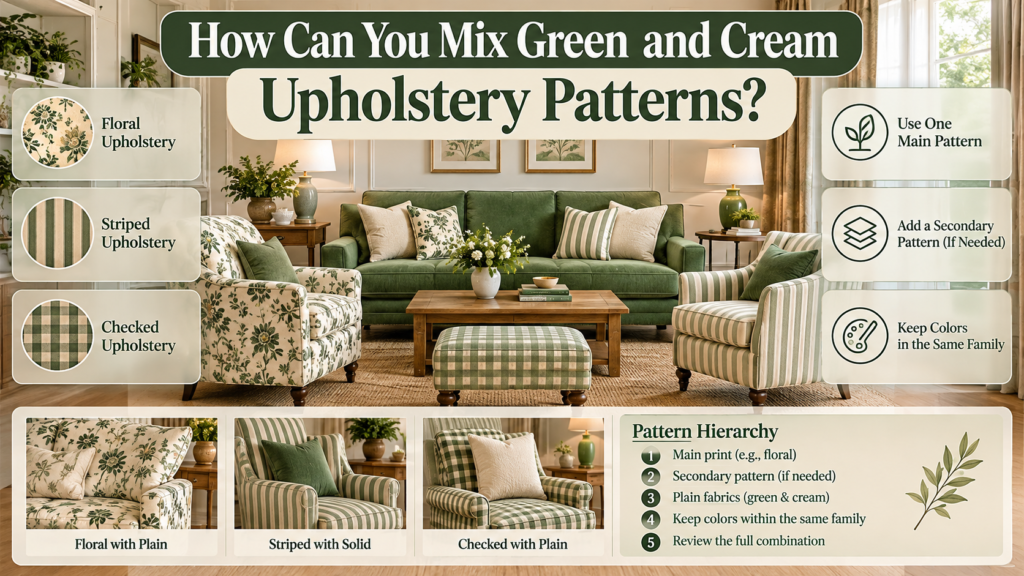
Patterns can make upholstered furniture more distinctive, but combining too many designs may cause visual clutter. The most reliable approach is to choose one main pattern and use simpler fabrics around it.
Floral upholstery for traditional interiors
Green and cream floral upholstery is suitable for classic, cottage-inspired, and botanical decorating styles.
A floral chair can introduce a patterned element while a plain cream sofa keeps the arrangement balanced. Alternatively, a simple green sofa can sit beside a cream chair featuring a subtle botanical print.
Look for patterns that repeat the main green and cream shades rather than introducing several unrelated colors.
For more ideas focused on botanical patterns and coordinated decorative details, explore Green and Cream Floral Interior Design.
Striped upholstery for a structured appearance
Green and cream stripes can make chairs and benches look crisp and organized.
Narrow stripes often suit traditional seating, while broader stripes create a more noticeable visual effect.
Use striped upholstery on a selected piece rather than repeating the same strong pattern across every sofa and chair.
When ordering striped fabric, ask the upholsterer to consider pattern direction and alignment. Poorly aligned stripes can make otherwise attractive furniture look unfinished.
Checked upholstery for a cozy atmosphere
Gingham and small checks can introduce a relaxed appearance, especially when combined with sage green, cream, and natural wood.
A checked accent chair beside a plain sofa is often easier to coordinate than a room filled with several large checked pieces.
Keep the surrounding fabrics relatively simple so the pattern remains a deliberate feature.
How should you combine different patterns?
Use a clear pattern hierarchy:
- Select one main print, such as a floral fabric.
- Add a smaller or more restrained secondary pattern if needed.
- Use plain green and cream fabrics to balance the arrangement.
- Keep the patterns within a compatible color family.
- Review the complete combination before ordering all the fabric.
For example, a floral chair, plain sage sofa, and cream cushions can create enough variety without requiring additional bold patterns.
The objective is not to eliminate contrast. It is to make sure every pattern has a clear role.
7. How Do You Coordinate Upholstery With Existing Furniture?
Green and cream upholstery looks most successful when it relates naturally to the furniture and finishes already present in the room.
Light wood with sage and cream
Light oak and similar pale wood finishes can complement sage upholstery and cream seating.
This combination is useful when you want a fresh, relaxed appearance. A sage sofa, cream armchair, and light wood coffee table can work together without requiring many additional decorative colors.
Walnut with olive and oatmeal
Walnut furniture often has warm brown undertones that suit olive green and oatmeal cream.
This combination is particularly useful for traditional interiors or rooms where the furniture already contains darker wood finishes.
If the room feels too dark, introduce lighter cream upholstery or a pale neutral rug to create visual contrast.
Dark wood with emerald and ivory
Dark wood can provide a strong foundation for emerald upholstery and ivory seating.
The contrast can feel elegant, but it requires attention to proportion and lighting. If every major piece is dark, the room may feel heavier than intended.
Balance the arrangement with lighter textiles and avoid adding dark upholstery to every large furniture item automatically.
Should every upholstered piece match?
No. A coordinated room does not require identical upholstery.
A green sofa, cream chairs, and a patterned accent seat can work together when their colors, proportions, and overall styles are compatible.
Repeat the main colors in a few places to connect the arrangement. For instance, cream cushions on a green sofa can visually link it to cream chairs across the room.
For broader ideas about coordinating furniture finishes and styles, see Green and Cream Furniture Ideas.
8. How Can You Use Green and Cream Upholstery in Small Rooms?
Small rooms require careful furniture selection, but they do not need to avoid green upholstery altogether.
A cream sofa with green cushions can introduce color while maintaining a relatively light visual foundation. A single sage accent chair is another option.
Choose furniture with suitable proportions
Before selecting upholstery, measure the available floor area and the dimensions of the furniture.
A compact sofa may work better than a bulky design with oversized arms. Consider the depth of the seat, the height of the back, and the amount of space required to move around the furniture.
Even attractive upholstery can feel unsuitable when the furniture blocks doorways or makes the room difficult to use.
Use patterns selectively
Large or highly contrasting patterns can become visually dominant in a small room.
If you prefer floral or striped upholstery, consider using it on one accent chair while keeping the largest sofa relatively simple.
This allows the pattern to contribute personality without competing with every other surface.
Consider the room’s lighting
Cream upholstery can help a room feel lighter, but it does not physically increase the available space. Its effect depends on the surrounding colors, materials, and natural light.
In a room with limited daylight, compare green fabric samples carefully. Some deep shades may appear much darker than expected.
A practical small-room example
Imagine a compact living room with a cream two-seater sofa, a sage green chair, and a light wood coffee table.
The sofa provides the neutral foundation, while the chair introduces color. Two green cushions can connect the pieces, and a simple rug can help define the seating area.
This arrangement creates a clear color scheme without requiring numerous decorative accessories.
9. How Can You Update Green and Cream Upholstery on a Budget?
You do not need to replace all your furniture to improve the appearance of a room. Small changes can help establish a coordinated color scheme while preserving pieces that remain comfortable and useful.
Start with the furniture you already own
Examine your existing sofa, chairs, and footstools before buying anything new.
If a cream sofa remains in good condition, consider green cushion covers or a suitable throw. If you already have a green chair, use cream accessories to connect it to the rest of the room.
This approach avoids spending money on furniture that may not be necessary.
Replace smaller items first
An upholstered footstool, dining chair, or compact accent seat may be less expensive to update than a full sofa.
A single green accent chair can make a noticeable difference in a room with cream seating.
Choose a piece that complements your existing furniture in scale and shape so the change feels intentional.
Consider reupholstery when the furniture is worth keeping
Reupholstery may be suitable when the frame is sound, the furniture remains comfortable, and its dimensions work well in your room.
Before proceeding, compare the fabric and labor costs with the price of a suitable replacement. Include any necessary frame repairs or cushion work in the estimate.
A secondhand chair with a sturdy frame may be a good candidate for new green upholstery. However, a sofa requiring extensive repairs may not be economical to recover.
Avoid unnecessary purchases
Budget decorating works best when each purchase solves a clear problem.
Before buying a new cushion, rug, or chair, ask whether it improves the color balance, comfort, or practical use of the room.
If the existing arrangement already works, adding more accessories may make it harder to maintain a clear visual direction.
10. What Common Mistakes Should You Avoid?

Several mistakes can undermine an otherwise attractive green and cream upholstery scheme.
Choosing fabric without testing it
Fabric colors can look different under showroom lighting, daylight, and warm indoor lamps.
How to avoid it: Test samples beside your actual flooring, curtains, and furniture finishes before ordering.
Mixing incompatible undertones
A cool gray-green fabric may not complement a strongly yellow cream in the way you expect.
How to avoid it: Compare the materials together and evaluate the complete combination rather than selecting each color independently.
Using too many patterns
Floral, striped, checked, and geometric fabrics can compete when they appear in similar proportions.
How to avoid it: Choose one main pattern and use simpler fabrics to support it.
Ignoring maintenance
A fabric may look attractive but require cleaning that is unsuitable for your household.
How to avoid it: Review the manufacturer’s care instructions, durability information, and any cleaning restrictions before purchasing.
Buying furniture that is too large
Oversized furniture can restrict movement and make a room difficult to use.
How to avoid it: Measure the room and the intended furniture footprint, including the space needed for doors and walking paths.
Choosing color without considering comfort
The most attractive upholstery will not improve a room if the furniture is uncomfortable or unsuitable for its purpose.
How to avoid it: Evaluate seat depth, cushion support, fabric feel, and practical use alongside the color scheme.
11. What Professional Tips Help Create a Cohesive Upholstery Scheme?
A successful design usually comes from a few well-considered decisions rather than numerous decorative additions.
Establish a clear color hierarchy
Decide which color will dominate the room. You might choose cream for the main sofa and green for accent seating, or reverse the arrangement with a green sofa and cream chairs.
This gives the furniture a clear visual relationship.
Introduce variety through texture
If a room looks flat, consider changing the fabric texture before adding another color.
Smooth cream upholstery, textured green cushions, and a restrained woven pattern can create depth while keeping the palette consistent.
Repeat the main green shade thoughtfully
Repeat green in a few selected places, such as the sofa, an accent chair, and a cushion or upholstered bench.
The repeated color helps connect the furniture without requiring every item to match exactly.
Check the pattern placement
When commissioning custom upholstery, ask how the pattern will align across the seat, back, arms, and seams.
A carefully selected fabric can lose its visual impact if the main motifs are poorly positioned.
Think about long-term flexibility
If you enjoy changing your decorating style, use a relatively versatile upholstery color for expensive furniture and introduce stronger colors through smaller pieces.
A cream sofa can accommodate changing green cushion covers, while a neutral chair can work with different accent fabrics over time.
For additional inspiration on coordinating room details, explore Green and Cream Preppy Room Ideas.
How Do You Choose the Best Green and Cream Upholstery for Your Living Room?
Choosing the right green and cream upholstery starts with understanding your room’s lighting, existing furniture, and everyday needs. Sage green works well for a soft, relaxed appearance, while olive green creates a warmer, more traditional feel. Emerald green is a stronger choice when you want a sofa or accent chair to become the main feature. Cream upholstery balances these shades and helps the furniture feel coordinated rather than overwhelming.
Before making a final decision, compare fabric samples with your flooring, curtains, and other furniture finishes. Consider how the colors appear during the day and under your usual evening lighting. The fabric should also be suitable for the amount of use the furniture receives.
Professional tips:
Choose one dominant upholstery color and use the other for contrast.
Test green and cream fabric samples together before ordering.
Consider fabric durability, comfort, and cleaning requirements alongside appearance.
Coordinate upholstery with existing furniture instead of replacing everything at once.
Which Fabrics Are Best for Green and Cream Upholstered Furniture?
The best upholstery fabric depends on the furniture’s purpose, your preferred appearance, and how much maintenance you can manage. Linen and linen blends provide a natural, relaxed texture, while velvet creates a richer appearance that works particularly well with deep green shades. Cotton offers a wide range of colors and patterns, and suitable performance fabrics may be practical for frequently used sofas and chairs.
However, no fabric is automatically the best choice for every household. Velvet can show pressure marks, some linen fabrics wrinkle easily, and cream upholstery may show spills more readily than darker materials. Always check the manufacturer’s cleaning instructions and durability information before purchasing.
Professional tips:
Choose upholstery-grade fabric designed for the intended furniture.
Consider performance fabric for busy seating areas when its specifications suit your needs.
Check whether removable covers can be cleaned according to the manufacturer’s instructions.
Request fabric samples to evaluate texture, color, and comfort before committing.
How Can You Mix Green and Cream Upholstery Patterns Without Making a Room Look Cluttered?
The most effective way to mix green and cream upholstery patterns is to establish a clear visual hierarchy. Choose one main pattern, such as floral upholstery on an accent chair, and balance it with plain green or cream seating. If you want additional detail, introduce a smaller striped or checked pattern that shares similar colors.
For example, a plain sage green sofa can work beautifully with a cream floral armchair and simple cream cushions. The furniture looks coordinated because the colors connect the pieces, while the different patterns add personality. Using several large, contrasting prints across every upholstered item can make the room feel visually busy.
Professional tips:
Select one main patterned fabric before choosing supporting textiles.
Combine bold patterns with simpler, solid-colored upholstery.
Keep the green and cream shades compatible across different fabrics.
Check the pattern placement on seats, backs, and arms before ordering custom upholstery.
Is Green and Cream Upholstery Suitable for Small Living Rooms?
Green and cream upholstery can work very well in small living rooms when the furniture’s size, color balance, and arrangement are carefully considered. A cream sofa with sage green cushions creates a relatively light foundation, while a single green accent chair introduces color without requiring several large upholstered pieces. Light cream fabrics may help a room feel brighter, although the overall effect also depends on natural light, wall colors, and flooring.
Furniture proportions are just as important as fabric color. An oversized sofa can restrict movement regardless of how light its upholstery appears. Measure the available space before purchasing and leave sufficient room for comfortable circulation.
Professional tips:
Consider compact furniture with simple shapes and suitable seat dimensions.
Use green selectively if you want a lighter overall appearance.
Limit large, high-contrast patterns when they compete for attention.
Keep walking paths clear and evaluate the complete furniture arrangement before buying.
How Can You Update Green and Cream Upholstery Without Replacing Your Existing Furniture?
Updating your upholstery does not always require purchasing a new sofa or replacing an entire furniture set. If your existing furniture is comfortable and structurally sound, you can introduce the green and cream combination through cushion covers, removable throws, an upholstered footstool, or a single accent chair. These smaller changes can help connect existing furniture and establish a more consistent color scheme.
If the furniture looks worn but remains worth keeping, professional reupholstery may be another option. Compare the cost of fabric, labor, repairs, and cushion work with the price of a suitable replacement. Reupholstery is most useful when the furniture’s frame and proportions still meet your needs.
Professional tips:
Start with the furniture you already own and identify what actually needs updating.
Use green cushion covers to introduce color to a cream sofa.
Consider reupholstering a small chair before committing to a larger project.
Request a detailed estimate and check fabric requirements before starting the work.
Prioritize improvements that increase comfort, practicality, and visual coordination rather than buying unnecessary accessories.
Conclusion
Green and cream upholstery ideas offer a timeless way to create a home that feels comfortable, balanced, and visually appealing. The combination works across classic, modern, preppy, cottage-inspired, and contemporary interiors because green introduces natural color while cream adds softness and brightness. The key to achieving a polished result is choosing shades, fabrics, patterns, and furniture pieces that complement one another rather than competing for attention.
Start by considering the room’s natural light, existing wall colors, flooring, and everyday needs. Olive and sage green upholstery can create a relaxed atmosphere, while deeper forest green adds richness and definition. Cream sofas, accent chairs, cushions, and curtains help balance stronger shades and make the overall design feel cohesive. Practical fabric choices, thoughtful pattern combinations, and suitable maintenance routines will also help your upholstered furniture remain attractive over time.
You do not need to replace every item to achieve a fresh look. Updating cushion covers, introducing a complementary accent chair, refreshing existing upholstery, or coordinating textiles can make a meaningful difference without requiring a complete redesign. For more inspiration, explore Green and Cream Furniture Ideas and Green and Cream Room Ideas to discover ways to coordinate furniture, colors, and decorative details throughout your home.
For additional interior styling inspiration, Preppy Room offers ideas for creating spaces that combine classic character with fresh, practical design. With a clear color palette, carefully selected upholstery, and attention to comfort, you can create a green and cream interior that feels welcoming, coordinated, and suited to your lifestyle.