
Introduction
Green and Cream Furniture Ideas | Choosing furniture for a green and cream room can be more challenging than it first appears. A cream sofa may look elegant in a showroom, while a green accent chair may seem perfect on its own, but combining different furniture pieces requires careful attention to color, proportions, materials, and the room’s existing features. Without a clear plan, even attractive furniture can make a space feel disconnected.
Green and cream furniture ideas offer a practical way to create interiors that feel balanced, welcoming, and visually coordinated. Green introduces a natural element, while cream softens the overall appearance and helps different furniture pieces work together. Whether you’re furnishing a living room, updating a bedroom, arranging a dining area, or decorating a small apartment, this combination offers plenty of flexibility.
The key is understanding how each piece contributes to the room. Instead of purchasing an entire matching furniture set, you can combine green upholstery, cream-painted furniture, natural wood finishes, and complementary textiles to create a more personal result.
For additional decorating inspiration, explore Preppy Room, where you can discover ideas for coordinating colors, furniture, and interior styles.
This guide explains how to select the right green shades, combine furniture materials, plan practical layouts, coordinate different rooms, control decorating costs, and avoid common mistakes. The goal is to help you make confident furniture choices that look attractive and work well in everyday life.
1. What Are the Best Green and Cream Furniture Ideas?
The best green and cream furniture combinations balance visual interest with practical use. Cream furniture creates a light foundation, while green pieces introduce color and personality. Natural wood, textured fabrics, and carefully selected accessories help connect the two shades.
A successful arrangement does not require equal amounts of green and cream. Instead, choose one color to dominate and use the other to create contrast.
Consider these furniture combinations:
- Cream sofa with sage green accent chairs.
- Forest green armchairs with a cream coffee table.
- Cream upholstered bed with green bedside cabinets.
- Green dining chairs with a neutral dining table.
- Cream dresser with a green upholstered bedroom bench.
- Natural wood furniture with cream cushions and olive green accents.
- Green-painted side tables beside cream upholstered seating.
Each combination serves a slightly different purpose. A cream sofa can help a living room feel bright, while a dark green armchair can establish a strong focal point. In a bedroom, green bedside furniture can introduce color without making the entire space feel dark.
Before buying anything, consider your room’s dimensions, natural light, flooring, and existing furniture. These details influence which shades and finishes will look most harmonious.
2. Which Green Shades Work Best With Cream Furniture?
Green furniture is available in many shades, from pale mint to deep forest green. The right choice depends on the atmosphere you want to create and how much contrast your room can accommodate.
Sage green furniture for a calm interior
Sage green is a muted shade that works particularly well with cream upholstery and natural wood. Its understated appearance makes it suitable for furniture that should complement the room rather than dominate it.
Sage green works well for accent chairs, bedside tables, upholstered benches, small cabinets, and occasional furniture.
It is especially useful when you want to introduce color into a neutral room without creating a dramatic change.
For example, a cream sofa paired with a sage green armchair and an oak coffee table creates a coordinated arrangement without requiring matching furniture.
Practical tip: If your room already contains several neutral finishes, choose a sage shade that relates to the undertones of your existing flooring and textiles.
Olive green furniture for a warm, natural look
Olive green has an earthy quality that complements warm cream, walnut, oak, and woven materials.
Olive furniture can make a room feel grounded and comfortable. It works well in traditional living rooms, reading corners, home offices, and bedrooms with natural textures.
An olive green chair beside a cream sofa can introduce enough contrast to make the seating arrangement interesting. Alternatively, an olive bedside cabinet can add personality to a bedroom without competing with the bed.
Avoid combining too many unrelated earthy shades. A few compatible materials and a consistent color direction usually create a more organized result.
Forest green furniture for stronger contrast
Forest green creates a deeper and more dramatic appearance. It is particularly effective when used on a main furniture piece, such as a sofa, accent chair, or upholstered headboard.
Cream furniture helps balance this darker shade by introducing lighter surfaces around it.
For example, a forest green sofa can work well with cream armchairs, a pale rug, and a medium-tone wooden coffee table. The result feels intentional because the darker furniture has enough visual contrast.
Forest green is also suitable for traditional interiors where richer colors and substantial furniture are part of the design.
Mint green furniture for lighter spaces
Mint green offers a fresher appearance than olive or forest green. It can be useful in guest bedrooms, compact sitting areas, and rooms where you want a gentle color accent.
Pair mint green furniture with cream surfaces and simple wood finishes. Avoid adding too many competing pastel colors unless you are deliberately creating a playful decorating scheme.
The aim is to maintain a clear relationship between the main furniture pieces.
3. How Can You Combine Green Sofas With Cream Living Room Furniture?
The living room is often the best place to establish a green and cream color scheme because the sofa, chairs, tables, and storage furniture naturally create several opportunities for contrast.
The most effective arrangement depends on whether you already own a sofa or are furnishing the room from scratch.
Green sofa with cream armchairs
A green sofa can become the central feature of a living room when cream armchairs provide contrast.
Choose sage green for a softer arrangement or forest green for a stronger focal point. Cream chairs help distribute lighter tones throughout the seating area rather than leaving all the pale colors against the walls.
To make the arrangement functional:
- Position the sofa where it supports the room’s main activity.
- Place the chairs where people can comfortably converse.
- Leave enough room to move between the furniture.
- Use a neutral rug to visually connect the seating pieces.
- Repeat the green color in a small number of accessories.
The furniture should encourage conversation rather than simply look attractive from one angle.
Cream sofa with green accent chairs
If you prefer a lighter living room, begin with a cream sofa and introduce green through one or two chairs.
This is a particularly flexible choice because the main sofa remains neutral. You can update cushions, rugs, or decorative accessories later without needing to replace the largest furniture item.
Choose chair shapes that complement the sofa. They do not have to be identical, but their proportions and materials should feel compatible.
For example, a cream sofa with simple lines can work with a sage green upholstered chair and a natural wood side table.
Green sofa with a cream coffee table
A cream coffee table can balance a dark green sofa and create a lighter center within the seating arrangement.
Consider the shape of the table as well as its color. Rounded tables can soften a room containing substantial furniture, while rectangular designs may suit a more structured layout.
The table should also provide enough usable surface area for everyday needs. Decorative appeal is important, but practical furniture should support how the room is actually used.
Cream storage furniture with green seating
Cream sideboards, bookcases, and cabinets can make a living room feel cohesive without repeating the sofa color everywhere.
Use the storage furniture to organize books, household objects, and decorative items. Keep the display selective so that the room retains a sense of openness.
For more general styling guidance, explore Green and Cream Room Ideas.
4. How Do You Choose Green and Cream Bedroom Furniture?

Bedroom furniture should support relaxation, comfortable movement, and practical storage. Green and cream can create a coordinated bedroom when the larger pieces are chosen first and the smaller accents are added afterward.
Cream bed with green bedside tables
A cream upholstered bed provides a neutral foundation for sage or olive green bedside tables.
This arrangement is especially useful when you want color without committing to a green bed frame or a large amount of green upholstery.
Choose bedside tables that offer enough storage for your daily essentials. Their height should also relate comfortably to the mattress, making lamps and personal items easy to reach.
Wooden handles or natural wood details can connect the green tables with other bedroom furniture.
Green bed frame with cream storage furniture
A green upholstered bed can become the main feature of a bedroom. Cream wardrobes, dressers, and bedside cabinets provide contrast and help prevent the furniture arrangement from becoming too dark.
Sage green is suitable for a gentle appearance, while forest green can create a richer, more traditional effect.
If you choose a deep green bed frame, keep the surrounding furniture relatively simple. This allows the bed to remain the focal point.
Cream dresser with a green bedroom bench
You do not need to replace all your bedroom furniture to introduce the palette.
A cream dresser can be combined with a green upholstered bench, compact stool, or accent chair. These smaller additions introduce color while preserving the usefulness of existing furniture.
Before purchasing a bench, measure the available space near the bed and ensure that drawers, wardrobes, and doors can open freely.
Coordinating bedroom textiles
Furniture color is only one part of a bedroom’s appearance. Bedding, curtains, rugs, and cushions can help connect the different pieces.
A useful combination might include cream bedding, a sage green bench, natural wood bedside tables, and a restrained botanical pattern.
If you want more ideas for a coordinated guest bedroom, explore Green and Cream Guest Bedroom Ideas.
For bedrooms with stronger decorative themes, consider how furniture relates to the walls, lighting, and available storage before choosing additional accessories.
5. Which Green and Cream Furniture Works Best in Dining Rooms?
Dining furniture should combine comfortable seating with durable surfaces and a layout that supports everyday use.
Green and cream provide several options, whether you prefer a traditional dining room or a more contemporary arrangement.
Cream dining table with green chairs
A cream dining table paired with green chairs creates a clear color contrast without requiring a complicated decorating scheme.
Sage green chairs offer a softer appearance, while olive and forest green provide greater definition.
Consider the chair legs and table finish carefully. Natural wood can connect the pieces, while darker finishes can create a more formal atmosphere.
Before purchasing dining chairs, check their seat height, width, and clearance beneath the table. A coordinated color scheme will not compensate for uncomfortable seating.
Green dining table with cream chairs
A green dining table can become a distinctive feature of the dining area. Cream chairs balance the table’s color and help keep the overall arrangement visually light.
This combination works particularly well when the room has relatively simple walls and flooring.
If the table already has a strong finish, avoid introducing several additional statement pieces. Let the table remain the main feature.
Cream sideboard with green dining accents
A cream sideboard can complement an existing dining table and chairs while providing practical storage.
Introduce green through an upholstered dining bench, a small cabinet, or selected table accessories. This approach is useful when replacing large furniture pieces is not necessary.
Keep the sideboard organized and avoid covering its entire surface with decorative objects.
6. Which Materials Complement Green and Cream Furniture?
Materials influence how furniture looks, feels, and performs over time. Even when the colors are well chosen, incompatible finishes can make the room feel disconnected.
| Material | Main benefit | Suitable furniture |
|---|---|---|
| Light oak | Adds warmth and a natural appearance | Coffee tables, dining tables, bedside tables |
| Walnut | Creates depth and a traditional feel | Desks, sideboards, cabinets |
| Linen | Provides a relaxed, textured finish | Sofas, chairs, headboards |
| Velvet | Adds visual richness | Accent chairs, sofas, benches |
| Rattan and cane | Introduces natural texture | Occasional chairs, storage furniture |
| Painted wood | Provides a coordinated color finish | Dressers, cabinets, side tables |
| Metal | Adds a defined structural accent | Handles, table legs, lighting fixtures |
Should you choose natural wood or painted furniture?
Natural wood works well when you want the room to feel warm and grounded. Painted furniture can provide a more deliberate color statement, especially when you want green to appear in a specific area.
Both finishes can be used together.
For example, sage green bedside tables with natural wood handles can complement a cream bed and oak flooring. The furniture pieces do not need identical finishes because the materials share a compatible overall appearance.
How do you combine different upholstery textures?
Mixing textures creates interest without requiring additional colors.
A linen sofa can work with a velvet chair, while a woven rug and wooden coffee table introduce further variation. The contrast between smooth, soft, and natural surfaces prevents the furniture scheme from looking flat.
However, texture should remain practical. Choose fabrics according to cleaning requirements, durability, and how frequently the furniture will be used.
7. How Can You Use Green and Cream Furniture in Small Rooms?
Small rooms require careful planning because furniture can quickly obstruct movement and reduce the sense of available space.
The objective is not to avoid green furniture altogether. It is to use color and furniture proportions strategically.
Start with a simple foundation, such as a cream sofa, compact dining table, or neutral bed. Introduce green through one or two pieces that provide a clear visual purpose.
Consider the following approaches:
- Choose appropriately sized furniture: Avoid oversized sofas and deep cabinets that dominate the floor plan.
- Look for exposed legs: Furniture with visible space underneath can create a lighter visual effect.
- Use multifunctional pieces: Storage ottomans, nesting tables, and compact benches can reduce clutter.
- Keep large surfaces simple: A limited number of finishes helps the room feel organized.
- Preserve walking routes: Make sure furniture does not obstruct doors, drawers, or frequently used pathways.
- Use green selectively: A green accent chair or bedside table can introduce color without overwhelming the room.
Dark green furniture can still work in a small space. A forest green chair may look attractive against cream walls, particularly when the rest of the furniture is relatively light.
The important consideration is the size and position of the furniture, not simply the darkness of its color.
8. How Do You Match Green and Cream Furniture to Your Interior Style?
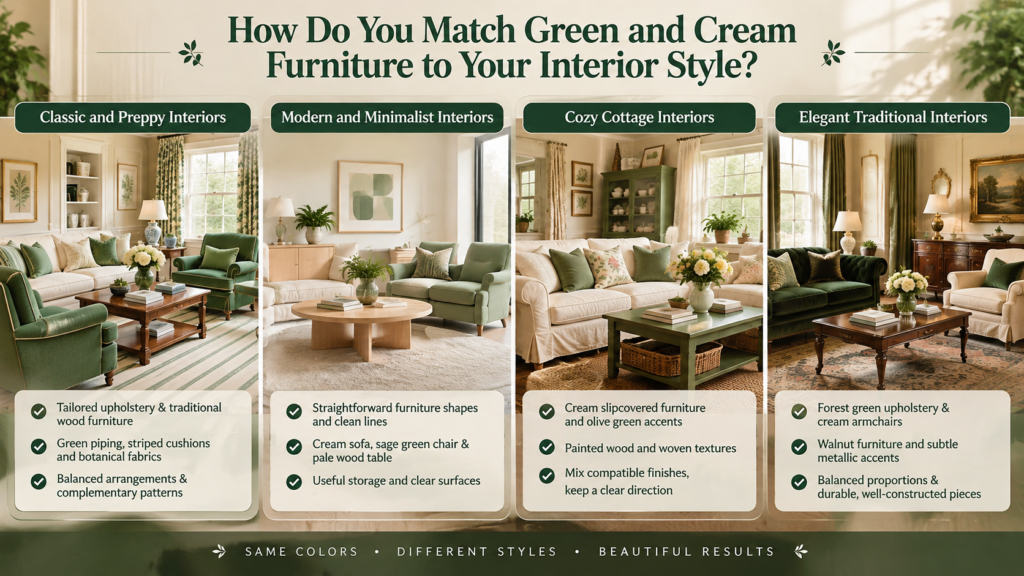
The same colors can create very different results depending on furniture shapes, finishes, and decorative details.
Classic and preppy interiors
Classic interiors benefit from tailored upholstery, traditional wood furniture, balanced arrangements, and carefully selected patterns.
A cream sofa with green accent chairs can create a polished living room. Green piping, striped cushions, and botanical fabrics can reinforce the theme without requiring every piece to match.
Choose patterns that complement each other in scale. If the sofa already has a noticeable pattern, use simpler fabrics on the surrounding chairs.
For a more detailed look at this decorating direction, visit Green and Cream Preppy Room Ideas.
Modern and minimalist interiors
Modern rooms often benefit from straightforward furniture shapes and a controlled color palette.
A cream sofa, sage green accent chair, and pale wood coffee table can provide enough contrast without filling the room with decorative objects.
Choose furniture that offers useful storage and maintain clear surfaces where possible.
The aim is to let the furniture proportions, materials, and colors create the visual interest.
Cozy cottage interiors
Cottage-inspired rooms can combine cream slipcovered furniture, olive green accents, painted wood, and woven textures.
The furniture does not need to look perfectly matched. A mixture of compatible finishes can make the room feel relaxed and personal.
However, avoid collecting too many unrelated pieces. Repeat a few materials or colors so that the room retains a clear direction.
Elegant traditional interiors
Forest green upholstery, cream armchairs, walnut furniture, and subtle metallic accents can create a more formal appearance.
This style works particularly well when the furniture has balanced proportions and the room includes enough space for the main pieces.
Choose durable upholstery and well-constructed furniture where the items will receive frequent use.
9. What Accent Colors Work With Green and Cream Furniture?
Green and cream form the main palette, but a carefully selected accent color can help connect furniture with the surrounding decor.
The best choice depends on the green shade, the undertone of the cream, and the materials already present.
| Accent color | Visual effect | Best application |
|---|---|---|
| Warm beige | Creates a softer transition | Rugs, curtains, cushions |
| Natural brown | Adds warmth | Tables, shelves, frames |
| Muted gold | Provides a subtle highlight | Handles, lamps, small details |
| Terracotta | Introduces earthy contrast | Cushions, ceramics, artwork |
| Soft blue | Creates a cooler accent | Small textiles and decorative objects |
| Charcoal | Adds definition | Frames, furniture legs, lighting |
You do not need to introduce every color in the table. Select one or two that complement your existing furniture.
For example, a cream sofa, sage chair, oak coffee table, and terracotta cushion create a warm, relaxed combination. A forest green sofa with cream armchairs and walnut furniture creates a richer appearance.
Pay attention to undertones. Warm cream often works naturally with earthy greens and warm wood, while cooler off-white finishes may suit cooler green shades.
10. How Do You Coordinate Furniture With Green and Cream Walls?
Furniture and walls should complement one another without competing for attention.
The best arrangement depends on whether you want the furniture or the wall treatment to serve as the room’s main feature.
Green furniture against cream walls
Cream walls provide a neutral background that allows green furniture to stand out.
This arrangement works with sage, olive, and forest green. Choose the shade according to the amount of contrast you want and the room’s lighting conditions.
If the furniture has a strong color, keep nearby decorative elements relatively restrained.
Cream furniture against green walls
Cream furniture can soften green walls and help create a balanced room.
This combination is particularly effective in bedrooms, sitting rooms, and reading areas. The cream furniture introduces contrast, while the green walls provide a consistent background.
If the walls already contain a noticeable pattern, simple furniture upholstery can prevent the room from becoming visually busy.
How should you coordinate painted walls and furniture?
Wall color should relate to the undertones of the furniture rather than simply matching its shade.
A muted green wall may work well with cream cabinets, while a cream-painted wall can provide contrast for a green dresser or sofa.
For more focused wall inspiration, explore Green and Cream Painted Wall Designs.
The goal is to create a clear relationship between the wall surfaces and furniture, with each element contributing to the overall design.
11. How Can Floral and Striped Patterns Complement Green and Cream Furniture?
Patterns can add personality to a green and cream room, but they should be selected according to the furniture’s shape, scale, and surrounding finishes.
Floral patterns for a softer appearance
Floral fabrics and botanical designs can connect green furniture with natural motifs.
They work well on cushions, occasional chairs, curtains, and selected upholstered pieces. A cream background with green botanical details can also connect furniture to the wider color scheme.
If you choose a large floral chair, keep the surrounding upholstery relatively simple so that the pattern remains easy to appreciate.
For related styling inspiration, explore Green and Cream Floral Interior Design.
Striped patterns for a structured look
Stripes provide a more orderly appearance than many floral designs. They can work well with classic sofas, dining chairs, bedroom cushions, and upholstered benches.
Use striped patterns where they support the furniture style rather than adding them to every surface.
For example, a cream sofa with subtle green-striped cushions can work alongside a plain sage chair and a wooden coffee table.
For additional pattern-focused ideas, visit Green and Cream Striped Interior Ideas.
How many patterns should you combine?
There is no fixed rule, but the patterns should differ in scale or visual intensity.
A large botanical print can be paired with a restrained stripe and a plain fabric. Keep the main colors consistent so that the different patterns remain connected.
The goal is variety without visual competition.
12. What Are the Most Common Green and Cream Furniture Mistakes?
Understanding common decorating problems can help you avoid unnecessary purchases and create a more cohesive room.
Using too many different green shades
This often happens when furniture is purchased at different times without comparing samples.
Several unrelated greens can make the room feel disconnected, especially when their undertones differ.
How to avoid it: Choose one main green and, if needed, a related secondary shade. Compare upholstery and paint samples before committing to major furniture purchases.
Choosing cream upholstery without considering maintenance
Cream upholstery can show everyday marks more clearly than some darker fabrics.
The problem is not the color itself but choosing a material that does not suit the room’s use.
How to avoid it: Check cleaning instructions, durability, removable covers, and stain-resistance claims. Select fabrics according to your household’s needs.
Ignoring furniture proportions
An oversized sofa can make a small room difficult to use, while tiny accent furniture may look disconnected in a large living room.
How to avoid it: Measure the room, mark the furniture footprint, and account for doors, drawers, and walking routes before purchasing.
Mixing too many wood finishes
Different wood tones can work together, but competing undertones may make the furniture arrangement look unplanned.
How to avoid it: Repeat one wood finish across several pieces or choose finishes that share a similar warmth.
Matching every furniture item
Using green on every major piece and cream on every remaining surface can make the design feel overly controlled.
How to avoid it: Vary the materials, furniture shapes, and proportions. Allow some pieces to remain neutral while others provide color.
Ignoring the room’s lighting
Green and cream can look different under daylight and artificial lighting.
How to avoid it: Examine samples in the room at different times of day. Check how they relate to the flooring and existing furniture before making a final choice.
13. How Can You Create a Green and Cream Furniture Plan Step by Step?
A clear plan helps you avoid impulse purchases and ensures that the furniture works as a complete arrangement.
Step 1: Measure the room
Record the dimensions, window positions, door openings, and location of existing furniture.
Identify the routes people use most frequently. Furniture should support the room’s purpose without obstructing movement.
Step 2: Choose the dominant color
Decide whether cream or green will occupy the largest visual area.
Cream can create a light foundation, while green can become the focal point through a sofa, bed, or statement chair.
Step 3: Select the main furniture pieces
Choose the sofa, bed, dining table, or primary storage unit before purchasing smaller accessories.
Consider comfort, construction, maintenance, and dimensions alongside appearance.
Step 4: Coordinate materials
Select wood finishes, upholstery textures, and hardware that complement the chosen colors.
Repeat selected materials to establish continuity without making every item identical.
Step 5: Review the complete arrangement
Before buying decorative items, check whether the furniture allows comfortable movement and provides the storage or seating you need.
Make adjustments first. Accessories should complete a functional room rather than compensate for a poor furniture layout.
14. How Can You Decorate With Green and Cream Furniture on a Budget?

A coordinated room does not require replacing every piece of furniture. In many cases, the most effective improvement comes from keeping useful furniture and updating only the items that need attention.
Start by assessing what you already own.
A cream sofa may remain a useful foundation, even if the rest of the room needs a different direction. A wooden table may complement green upholstery once the surrounding colors are adjusted.
Consider these budget-conscious strategies:
- Update smaller furniture pieces: Repainting a suitable side table or cabinet can introduce green without the cost of replacing it.
- Change selected textiles: Cushions, throws, and removable covers can connect existing furniture to the new palette.
- Shop secondhand: Inspect furniture for structural condition, upholstery wear, dimensions, and cleaning requirements.
- Prioritize essential pieces: Focus your budget on furniture that receives frequent use.
- Use existing accessories: Reposition suitable lamps, frames, and storage baskets before purchasing replacements.
- Decorate gradually: Add new items only after you understand what the room actually needs.
Always check whether a furniture finish is suitable for repainting and follow the product’s preparation and application instructions.
A gradual approach also gives you time to compare colors under real conditions. This is often more effective than purchasing several items at once and discovering that their finishes do not work together.
15. What Professional Tips Help Green and Cream Furniture Look More Cohesive?
A successful furniture arrangement depends on more than choosing attractive colors. The pieces should relate to one another through their proportions, materials, placement, and everyday function.
Keep these recommendations in mind:
Choose a clear focal point. A sofa, bed, dining table, or statement chair should establish the direction of the room. The remaining furniture should support that focal point rather than compete with it.
Balance visual weight. A dark green sofa may need lighter furniture nearby. A pale cream sofa may benefit from a darker chair or wooden table to provide definition.
Repeat colors selectively. If the main chair is sage green, repeat that shade in a small cushion or decorative object. This helps the color feel intentional without overwhelming the room.
Consider daily use. Furniture should be comfortable, durable, and appropriate for the activities that take place in the room.
Test samples in context. Review fabric and paint samples beside the actual walls, flooring, and existing furniture.
Leave room to move. Open floor space is part of good design. Avoid filling every corner simply because an additional piece matches the palette.
The most important principle is to make each purchase solve a real need. Furniture should improve the room’s function as well as its appearance.
What furniture colors go best with green and cream interiors?
Green and cream interiors work particularly well with natural wood, warm beige, walnut brown, and subtle muted-gold accents. The right combination depends on whether your furniture is light sage, earthy olive, or deep forest green. Rather than matching every piece, choose complementary colors that create contrast while keeping the room visually connected.
Light oak: Creates a fresh, natural look alongside sage green and cream.
Walnut brown: Adds depth and works especially well with olive or forest green furniture.
Warm beige: Connects cream upholstery with other neutral furnishings.
Muted gold: Adds a refined accent through handles, lamp bases, and small decorative details.
Professional tip: Select your largest furniture pieces first, then choose supporting finishes. This helps prevent the room from looking overcrowded or unnecessarily coordinated.
How do you style a green sofa with cream furniture?
A green sofa can become the focal point of a living room when surrounded by cream armchairs, a neutral coffee table, and complementary wood finishes. The key is to balance the sofa’s color with lighter furniture and maintain enough open space for comfortable movement.
Pair a sage green sofa with cream armchairs for a soft, relaxed appearance.
Combine a forest green sofa with ivory furniture for stronger contrast.
Use a natural wood coffee table to introduce warmth.
Add a few cream or green cushions to connect the seating pieces.
Choose a rug that complements the furniture without competing with it.
Professional tip: If the sofa is dark green, avoid surrounding it with several other bulky, dark-colored pieces. Lighter upholstery and carefully selected finishes help maintain balance.
Is green and cream furniture suitable for small living rooms?
Green and cream furniture can work very well in small living rooms when the pieces are appropriately sized and arranged to preserve walking space. Cream furniture provides a lighter visual foundation, while green accents introduce character without requiring a large amount of color.
Choose a compact cream sofa or loveseat.
Introduce green through one accent chair, a small cabinet, or selected cushions.
Consider furniture with exposed legs to create a more open visual effect.
Use nesting tables or storage ottomans when additional functionality is needed.
Measure the room before purchasing furniture and account for doorways and walking routes.
Professional tip: You do not have to avoid dark green in a small room. A carefully positioned forest green chair can create a striking focal point when balanced with lighter furniture and uncluttered surroundings.
How can you keep cream furniture clean while maintaining a green and cream color scheme?
Cream furniture can show everyday marks more clearly than darker upholstery, so material selection and routine care are important. Choose fabrics according to how frequently the furniture will be used, and always follow the manufacturer’s cleaning instructions.
Check whether upholstery has removable, washable covers.
Consider durable performance fabrics for frequently used seating.
Vacuum fabric regularly using a suitable upholstery attachment.
Address spills promptly using the recommended cleaning method.
Test cleaning products on an inconspicuous area when the manufacturer permits it.
Professional tip: Before purchasing a cream sofa or chair, review its care requirements alongside its appearance. A beautiful fabric is only a practical choice if you can maintain it comfortably.
How can you create a stylish green and cream furniture look on a budget?
You can create a coordinated green and cream interior without replacing every furniture item. The most effective approach is to retain useful pieces, update selected elements, and build the color scheme gradually.
Keep existing cream sofas, wooden tables, or neutral cabinets that remain in good condition.
Introduce green through an accent chair, bedside table, or upholstered bench.
Refresh suitable furniture with a compatible paint finish when appropriate.
Update cushions, throws, or removable covers to connect existing pieces.
Consider secondhand furniture after checking its condition, stability, dimensions, and cleaning requirements.
Purchase essential furniture before spending money on decorative accessories.
Professional tip: Invest first in the pieces that receive the most daily use. A comfortable, well-made sofa or practical storage cabinet usually contributes more to long-term satisfaction than several inexpensive decorative purchases.
Conclusion: Creating a Timeless Green and Cream Furniture Look
Green and cream furniture ideas offer a versatile way to create interiors that feel fresh, balanced, and welcoming. From deep green sofas paired with cream armchairs to sage green accents, warm cream upholstery, natural wood finishes, and textured accessories, this color combination can work beautifully in both traditional and contemporary homes. The key is to select furniture that suits your room size, lighting, lifestyle, and existing décor rather than following trends without a clear plan.
To achieve a cohesive look, choose one dominant color, use the second to create balance, and introduce complementary materials such as wood, linen, cotton, rattan, or subtle metal accents. Consider practical factors such as upholstery durability, cleaning requirements, furniture proportions, and storage needs before making your final selections. Small changes, including cream cushions on a green sofa or a green accent chair beside a neutral seating arrangement, can refresh a room without requiring a complete redesign.
For more inspiration, explore Green and Cream Room Ideas and discover ways to coordinate furniture with walls, textiles, and decorative details. You can also browse Preppy Room for more interior styling ideas that help you create a home that reflects your personal taste.
Ultimately, the best green and cream furniture arrangement is one that combines visual harmony with everyday comfort. By choosing complementary shades, prioritizing quality, and keeping the overall design intentional, you can create a timeless interior that feels inviting today and remains easy to update in the future.