Introduction
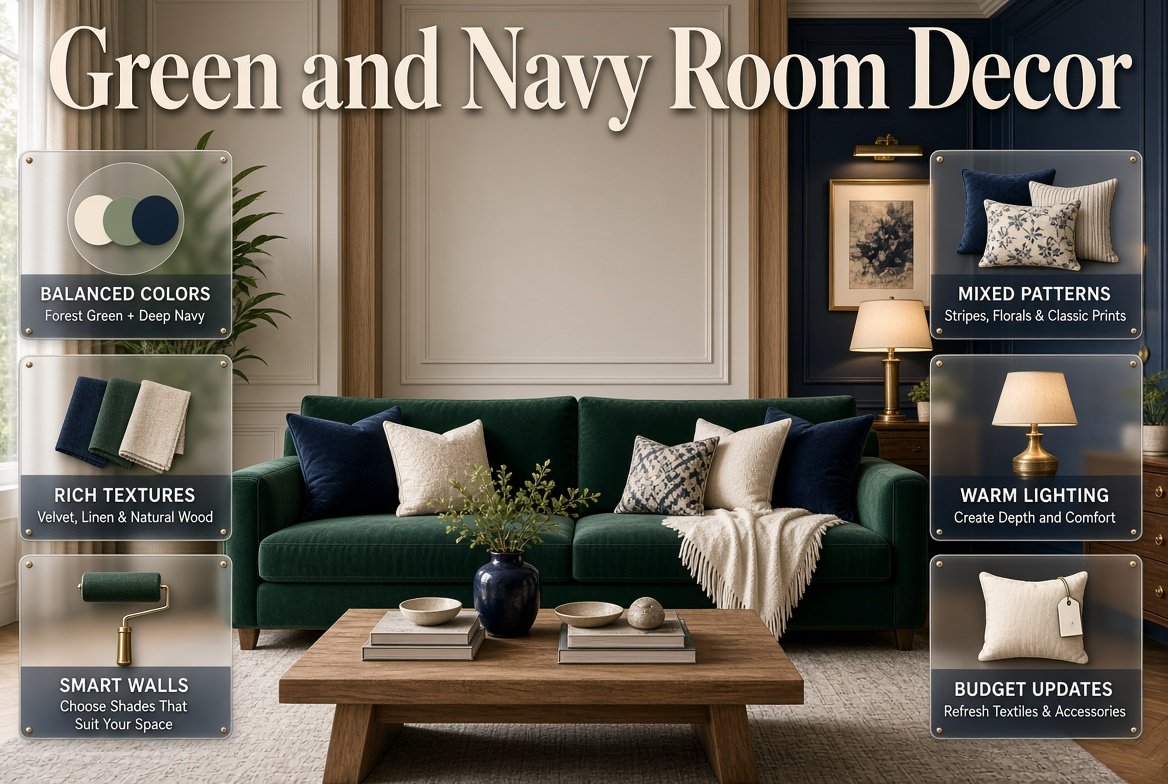
Green and Navy Room Decor | Green and navy room decor offers a beautiful way to create a space that feels classic, comfortable, and full of character. However, combining these two colors can be tricky. Forest green and deep navy may look elegant individually, but using too much of both can make a room feel dark, while choosing the wrong supporting colors can leave the entire design looking disconnected.
The secret is to understand how the shades work together, which materials complement them, and where each color should appear. Whether you’re refreshing a living room, decorating a bedroom, or updating an existing interior without replacing your furniture, a thoughtful color plan can make the process much easier.
At Preppy Room, thoughtful color coordination and practical decorating ideas help readers create interiors that reflect their personal style. Green and navy are particularly versatile because they work with traditional furniture, contemporary shapes, natural materials, and classic patterns.
In this guide, you’ll discover how to select the right shades, coordinate walls and furniture, choose textiles, mix patterns, improve lighting, decorate on a budget, and avoid common design mistakes. You’ll also learn how to adapt this palette to different rooms, sizes, and decorating preferences without making everything look identical.
What Is Green and Navy Room Decor?
Green and navy room decor is an interior color scheme that combines green shades, such as sage, olive, forest green, and emerald, with deep navy blue. The combination creates a balance between nature-inspired freshness and the depth of a classic blue. Cream, white, wood, brass, and textured fabrics help make the palette feel complete.
This color pairing can support several decorating styles, including modern, traditional, coastal, transitional, and preppy interiors. The final appearance depends on the shades, materials, furniture shapes, patterns, and proportions you choose.
For example, sage walls with navy curtains and light oak furniture create a softer appearance than forest-green walls paired with a navy velvet sofa and walnut furniture.
The colors do not need to appear in equal amounts. One can establish the main visual foundation while the other provides contrast through accessories, textiles, artwork, or furniture.
Why Does Green and Navy Work Together?
Green and navy have different visual qualities that make them complementary decorating partners.
Green introduces a natural, organic character. Depending on the shade, it can feel fresh, earthy, peaceful, or dramatic. Navy provides depth and structure, helping furniture, architectural details, and decorative objects stand out.
Their combination also gives you flexibility. You can create a light, relaxed interior with sage and muted navy or a richer, traditional room with forest green and deep blue.
The pairing works especially well when you:
- Use green to introduce softness and natural character.
- Use navy to establish a focal point or create visual definition.
- Include lighter neutrals to prevent the palette from becoming too dark.
- Repeat the colors in a few carefully selected places.
- Introduce different textures to keep the room from looking flat.
A practical example is a cream living room with a navy sofa, sage cushions, botanical artwork, and a light wood coffee table. Each element contributes something different, yet the overall arrangement feels coordinated.
Which Shades of Green and Navy Are Best for Room Decor?
Choosing the right shades is more important than simply deciding to use green and navy. Green can range from pale and muted to rich and saturated, while navy can appear almost black, slightly gray, or distinctly blue.
The best combination depends on natural light, existing finishes, room size, and the mood you want to create.
1. Sage Green and Navy Blue
Sage green and navy are excellent choices when you want a calm, versatile interior without excessive contrast.
Sage has a muted quality that makes it suitable for walls, bedding, curtains, and upholstered furniture. Navy adds definition through a headboard, accent chair, rug, or decorative cushions.
This combination works particularly well in bedrooms, home offices, and relaxed living rooms.
Consider sage-green walls, a cream sofa, navy cushions, and natural oak furniture. The pale background keeps the room visually open, while the darker accents establish a clear color identity.
Best supporting colors: Warm white, cream, pale oak, beige, and muted brass.
Common mistake: Combining sage with a very dark navy without testing them together. Some sage shades look more gray, while others have stronger yellow or blue undertones. Sample both colors before making a large commitment.
2. Forest Green and Deep Navy
Forest green and deep navy create a richer, more traditional atmosphere. Both shades have considerable visual weight, making them suitable for rooms where you want a strong focal point.
You might use forest green on an accent wall and navy in the curtains, or reverse the arrangement by choosing navy upholstery with green decorative accessories.
Because the colors are both deep, introduce lighter surfaces through bedding, upholstery, rugs, or wall colors.
For example, a forest-green accent wall can look balanced with a cream sofa, navy cushions, walnut furniture, and brass lighting.
Best supporting colors: Ivory, warm white, walnut, tan, and brass.
Best for: Traditional living rooms, sophisticated bedrooms, reading corners, and studies.
3. Olive Green and Muted Navy
Olive green adds an earthy quality that can make navy feel less formal. Its warmer appearance works particularly well with natural materials, including wood, leather, linen, and woven accessories.
Try olive cushions on a navy sofa, or use olive upholstery with navy artwork and a beige rug.
Olive is also useful when a room already contains warm wood flooring or furniture. Rather than introducing a completely different color family, it connects the existing materials to the navy accents.
Best supporting colors: Sand, beige, warm cream, cognac, and walnut.
Best for: Relaxed interiors, transitional spaces, reading areas, and natural-inspired decorating.
4. Emerald Green and Navy
Emerald green is more saturated than sage or forest green, so it creates a stronger focal point.
Instead of covering every surface with emerald, use it selectively. An emerald accent chair, decorative vase, cushion, or artwork can stand out against navy and cream.
A navy sofa with an emerald cushion, warm white walls, and a brass lamp is a simple way to introduce the combination without overwhelming the room.
Best supporting colors: Cream, warm white, brass, and natural wood.
Best for: Statement furniture, elegant living rooms, accent corners, and interiors that need a stronger color feature.
5. Mint Green and Medium Navy

Mint green creates a fresher, lighter interpretation of the palette. Its contrast with navy can make a room feel playful without abandoning the sophistication of blue.
Use mint through small furniture pieces, cushions, bedding, artwork, or decorative accessories. Pair it with crisp white and pale wood for a contemporary appearance.
This combination is especially useful when you prefer lighter colors but still want navy to provide definition.
Best supporting colors: White, pale gray, light oak, and small amounts of cream.
Best for: Bright bedrooms, cheerful guest rooms, and playful contemporary interiors.
How Can You Compare These Color Combinations?
| Color combination | Overall appearance | Suitable supporting colors |
|---|---|---|
| Sage and navy | Soft and balanced | Cream, oak, warm white |
| Forest green and navy | Rich and traditional | Ivory, walnut, brass |
| Olive and navy | Earthy and relaxed | Beige, tan, natural wood |
| Emerald and navy | Bold and sophisticated | Cream, brass, oak |
| Mint and navy | Fresh and playful | White, pale wood, gray |
Choose a combination based on the room you have, not simply the one that looks most attractive in an inspiration photograph.
How Do You Balance Green and Navy in a Room?
The easiest way to balance green and navy is to decide which color will dominate and which will provide contrast. Instead of distributing both colors across every surface, give them different roles and use neutral materials to connect them.
The 60-30-10 color rule is a helpful starting point. It suggests using approximately 60% of a main color, 30% of a secondary color, and 10% of an accent color.
For a green and navy interior, the main 60% can also be a neutral shade.
| Proportion | Suggested role | Example |
|---|---|---|
| 60% | Main background | Cream walls, neutral rug, light upholstery |
| 30% | Secondary color | Navy curtains or green furniture |
| 10% | Accent details | Contrasting cushions, brass, artwork |
These percentages are not strict requirements. A room can look balanced with a different distribution, depending on its architecture, furnishings, and lighting.
Should Green or Navy Be the Dominant Color?
Choose navy as the dominant color if you prefer a structured, traditional appearance. A navy sofa, upholstered bed, or set of curtains can establish a strong foundation.
Choose green as the dominant color if you want the room to feel more nature-inspired. Sage walls, olive upholstery, or green bedding can establish the atmosphere while navy provides definition.
You can also let a neutral shade dominate and use both colors as accents. This is often the easiest option when decorating an existing room.
For example:
- Cream walls create the background.
- A navy sofa establishes the focal point.
- Sage cushions introduce the secondary color.
- Light wood adds warmth.
- Brass details provide a small finishing accent.
The important principle is to make the relationship between the colors clear rather than forcing them to appear equally throughout the space.
What Wall Colors Work Best With Green and Navy Decor?
Wall color influences how the entire palette appears. Cream, warm white, beige, pale gray, and soft green are versatile options because they can support darker furnishings without competing for attention.
Cream and Warm White Walls
Cream and warm white walls are among the easiest choices for a green and navy room.
They create contrast against navy furniture and allow green accents to remain visible. Cream generally produces a softer, warmer appearance, while some whites create a cleaner, brighter effect.
For example, warm white walls, navy curtains, sage cushions, and oak furniture create a balanced living room without requiring extensive decoration.
Choose your wall color according to the existing floor, furniture undertones, and amount of daylight. A white that looks attractive beside pale oak may appear too stark next to warm walnut.
Sage Green Walls
Sage walls create a subtle foundation that connects the interior to the green part of the palette.
Pair them with navy curtains, a cream sofa, light wood furniture, and understated artwork. This arrangement gives green a larger role without relying on a highly saturated wall color.
If you want a coordinated look, repeat the sage shade in one or two smaller accessories elsewhere in the room.
Avoid matching every accessory exactly. A related but slightly different green can create a more layered result.
Navy Accent Walls
A navy accent wall can create a focal point behind a bed, sofa, desk, or dining area.
It works best when the surrounding surfaces provide enough contrast. Cream upholstery, light wood, pale curtains, and warm lighting can prevent the wall from dominating the room.
Before painting, test a sample on the intended wall. Observe it in morning daylight, afternoon light, and under your evening lamps.
A shade that looks clearly blue during the day may appear almost black in a dim corner.
Can You Use Green and Navy on the Same Wall?
Yes. You can combine them through wallpaper, painted panels, decorative trim, or a carefully selected pattern.
However, both colors should have a clear relationship. A large navy background with a restrained green botanical pattern may feel balanced, while an equally intense green-and-navy design covering every wall can become visually demanding.
If the pattern is strong, simplify the curtains, furniture upholstery, and nearby accessories.
How Can You Coordinate Green and Navy Furniture?
Furniture establishes the main structure of a room. The most effective approach is to use one or two larger pieces to anchor the palette and let smaller items connect the colors.
Use a Statement Sofa or Accent Chair
A navy sofa is a versatile foundation for green cushions, cream throws, botanical artwork, and natural wood furniture.
Alternatively, a green accent chair can provide the main color feature while a navy rug, cushions, or curtains support the scheme.
If your existing sofa is beige, gray, or cream, you do not need to replace it. Introduce the colors through smaller upholstered pieces and accessories.
This approach is often more practical because large furniture purchases can be expensive and difficult to change.
Choose Wood Finishes That Support the Palette
Wood helps connect green and navy by adding warmth and texture.
- Light oak: Creates a fresh, casual appearance.
- Walnut: Supports traditional and sophisticated interiors.
- Natural pine: Suits relaxed, cottage-inspired spaces.
- Rattan and woven finishes: Add texture and soften formal arrangements.
You do not need every wooden item to have the same finish. However, selecting finishes with compatible undertones can make the room feel more cohesive.
Mix Upholstery Textures
Different fabrics help the colors look distinct even when their shades are similar.
Velvet emphasizes the richness of navy and emerald. Linen and cotton create a more relaxed appearance, while wool and textured woven fabrics introduce warmth.
For example, a navy velvet chair can work alongside linen curtains, a cream wool rug, and sage cotton cushions.
The contrast between materials prevents the palette from feeling flat.
How Can You Use Green and Navy Cushions, Throws, and Rugs?
Textiles are among the easiest ways to introduce this color combination because they can be changed without major decorating work.
Layer Cushions With Intention
Start with a combination of solid colors and one patterned fabric.
A coordinated sofa arrangement might include two navy cushions, two sage cushions, and one cream cushion featuring a subtle botanical or geometric pattern.
On a bed, navy pillowcases can provide contrast against cream bedding, while a green throw connects the color scheme to the rest of the room.
The exact number of cushions depends on the furniture size. Avoid adding so many that the seating becomes uncomfortable or the bed looks overcrowded.
Add a Throw for Contrast
A cream throw on a navy sofa creates an immediate light contrast. A sage throw on a cream bed introduces a natural accent, while a navy throw can help anchor lighter green bedding.
Choose a texture that suits the room’s purpose. Knitted throws feel cozy, while lightweight cotton and linen are useful for a more relaxed appearance.
Choose a Rug That Connects the Colors
A rug can bring the entire color scheme together, particularly when it contains both green and navy.
Consider a cream rug with navy geometric details, a traditional pattern featuring muted green and blue, or a low-contrast botanical design.
If your sofa and cushions already have bold patterns, choose a simpler rug. If the furniture is mostly solid, a patterned rug can provide visual interest.
Check the rug’s actual dimensions before purchasing. A rug that is too small for the furniture arrangement may make the room feel disconnected, even when its colors are attractive.
How Can You Decorate Walls With Green and Navy?

Wall decor adds personality and helps connect colors that appear in different parts of the room.
Use Botanical Artwork
Botanical prints are a natural fit for green and navy interiors because they introduce organic shapes and repeat the green color without requiring more green furniture.
Choose framed leaf illustrations, landscape prints, or artwork featuring green and blue tones.
For a gallery wall, use a consistent frame finish and vary the artwork’s size. This creates visual interest without making every piece look identical.
Add Stripes, Plaid, or Geometric Prints
Stripes and plaid can strengthen a classic decorating scheme, while geometric designs often suit modern interiors.
A navy-and-cream striped print can work alongside a green botanical picture and solid-color cushions.
The key is to avoid using several large, equally strong patterns in the same visual area.
Use Mirrors and Decorative Shelves
Mirrors can help reflect available daylight and make a room feel more open. Place one where it reflects a window or a well-lit part of the space.
Decorative shelves can introduce books, small ceramics, framed artwork, and a few green accents. Leave some open space so the shelves do not become crowded.
Brass, natural wood, and simple dark frames can all complement the palette.
How Do You Mix Patterns Without Making the Room Look Busy?
Pattern mixing works when the designs have a clear hierarchy. Green and navy provide a shared color connection, but the patterns should differ in scale, density, or visual intensity.
Use these principles:
- Choose one dominant pattern. A large plaid, floral print, or striped rug can establish the design.
- Add one supporting pattern. Smaller checks or subtle geometric shapes can introduce variation.
- Include solid fabrics. Plain cushions, bedding, and curtains give the eye somewhere to rest.
- Repeat colors selectively. Navy in the rug can connect to the cushions, while green in the artwork can relate to the curtains.
- Check patterns together. View fabric samples side by side before purchasing.
For example, navy-and-cream striped curtains can work with a small green gingham cushion, cream bedding, and a solid sage throw.
The patterns are different, but the shared colors help them belong together.
Common mistake: Choosing multiple large patterns because each one looks attractive individually. The result may feel cluttered when all the designs compete for attention.
How Can You Make Green and Navy Decor Feel Warm and Cozy?
Green and navy can sometimes feel cool, especially when combined with glossy surfaces and bright lighting. Natural materials, warm light, and soft textiles help create a more welcoming atmosphere.
Introduce Natural Textures
Wooden furniture, woven baskets, linen curtains, wool throws, and textured rugs soften the visual impact of darker colors.
If the room feels too formal, try replacing some smooth or shiny finishes with natural textures rather than introducing another accent color.
A woven lampshade, linen cushion, or wooden side table can make the interior feel more relaxed.
Use Layered Lighting
Combine general lighting with lamps and focused lighting for reading or working.
Warm-white bulbs often complement green and navy, but the best choice depends on the paint, materials, and atmosphere you prefer.
Useful lighting options include:
- A table lamp beside a sofa.
- Bedside lamps with fabric shades.
- A floor lamp beside a reading chair.
- Dimmable overhead lighting where practical.
Avoid relying entirely on a single bright ceiling light. Multiple light sources help reveal the room’s textures and make it easier to adjust the atmosphere throughout the day.
Add Natural Elements
Plants and simple floral arrangements can reinforce the natural character of green decor.
Choose plants suited to the room’s actual light and maintenance requirements. If caring for plants is impractical, botanical artwork, natural wood, or woven accessories can provide a similar visual connection.
Green and Navy Room Decor Ideas for Different Rooms
The best way to use this palette changes according to the room’s purpose, available space, and existing furniture.
| Room | Green element | Navy element | Balancing detail |
|---|---|---|---|
| Living room | Cushions or accent chair | Sofa or curtains | Cream rug and wood |
| Bedroom | Sage bedding or wall color | Headboard or throw | White bedding |
| Home office | Green desk accessories | Desk chair or shelves | Light walls |
| Guest room | Botanical prints | Decorative pillows | Neutral linens |
| Reading corner | Green upholstered chair | Navy cushion | Brass lamp |
| Dining room | Green centerpiece | Navy accessories | Natural wood |
Green and Navy Living Room Decor
A navy sofa, green cushions, cream walls, and a wooden coffee table create a practical starting point.
For a traditional appearance, choose plaid cushions and brass lighting. For a modern look, use simple shapes, solid fabrics, and minimal accessories.
If the sofa is already green, introduce navy through artwork, a rug, or a pair of cushions. Repeating the colors in small amounts helps the arrangement feel intentional.
Green and Navy Bedroom Decor
Bedrooms benefit from a mixture of soft textiles, comfortable furniture, and controlled color contrast.
Try a navy upholstered headboard, cream bedding, sage cushions, and light wood bedside tables. If you prefer darker bedding, use cream sheets or pillowcases to separate the different surfaces.
Keep decorative accessories manageable so the room remains practical and comfortable.
For inspiration focused on room layouts, color balance, and coordinated styling, explore Green and Navy Preppy Room Ideas.
Green and Navy Home Office Decor
A navy desk chair and sage accessories can create a polished workspace without distracting from the room’s main purpose.
Keep the walls light if the office is small or has limited natural light. Use practical storage to control clutter and choose task lighting that illuminates the work surface effectively.
A botanical print or navy-and-cream desk mat can connect functional items to the wider color scheme.
Green and Navy Guest Room Decor
For a guest room, prioritize flexibility and comfort. Cream bedding, navy cushions, and a green throw create a coordinated appearance without requiring expensive furniture.
Keep patterns relatively restrained and provide clear bedside surfaces, useful lighting, and accessible storage.
The room should feel welcoming and easy to use rather than arranged exclusively for decoration.
Green and Navy Dining Room Decor
In a dining room, navy can appear through upholstered chairs, a table runner, or artwork, while green can be introduced through a centerpiece, cushions, or botanical prints.
A wooden dining table provides warmth and connects the colors naturally.
If the dining area is small, keep the walls light and use darker shades selectively. In a larger room, you can experiment with deeper upholstery or a more prominent accent wall.
How Can You Choose Accessories That Complete the Palette?
Accessories should reinforce the color scheme without making the room look like a matching set.
Useful options include:
- Brass or gold-finish details: Lamp bases, handles, and picture frames introduce warmth.
- Cream ceramics: Vases and decorative bowls provide a lighter contrast.
- Botanical prints: Connect green accents to natural elements.
- Natural baskets: Add texture and useful storage.
- Books and decorative objects: Repeat navy or green in small amounts.
- Curtains: Help connect the palette while managing privacy and daylight.
You do not need every item on this list. Choose a few accessories that suit the room’s function and existing style.
For more guidance on combining patterns, decorative objects, and classic color details, explore Green and Navy Preppy Decor.
How Many Accessories Should You Use?
There is no fixed number that works for every room. The right amount depends on furniture size, available surfaces, and the overall style.
A small side table may need only a lamp and one decorative object. A large console may accommodate a lamp, framed artwork, and a low bowl.
Arrange objects in groups where appropriate, but leave enough open space for the furniture to remain practical.
The purpose of accessories is to support the design, not to fill every empty surface.
What Are the Most Common Green and Navy Decorating Mistakes?

The most common problems involve using too much dark color, choosing incompatible undertones, introducing too many patterns, and purchasing accessories before establishing a clear palette.
Mistake 1: Using Too Much Dark Color
Why it happens: Both navy and forest green look attractive, so it is tempting to use them across every surface.
Why it can be a problem: The colors may blend together, reducing contrast and making a room with limited daylight feel heavier.
How to avoid it: Introduce cream, warm white, pale wood, or lighter textiles. Keep some major surfaces visually distinct.
Mistake 2: Choosing Greens With Conflicting Undertones
Why it happens: A yellow-toned olive and a cool blue-green may look unrelated when placed together.
Why it can be a problem: The palette can feel disconnected even when both shades look attractive individually.
How to avoid it: Compare samples in the same lighting and choose greens that work with the particular navy you have selected.
Mistake 3: Mixing Too Many Patterns
Why it happens: Stripes, plaid, florals, and checks all suit certain traditional interiors.
Why it can be a problem: When every surface features a strong pattern, the room lacks a clear focal point.
How to avoid it: Choose one dominant pattern, one supporting pattern, and several solid colors.
Mistake 4: Ignoring Lighting
Why it happens: Paint and fabric colors are often selected under showroom lighting or from online photographs.
Why it can be a problem: The same navy may look almost black in one room and noticeably blue in another.
How to avoid it: Test samples near their intended location and view them in daylight and evening lighting.
Mistake 5: Buying Accessories Before Planning the Palette
Why it happens: Small decorative pieces are easy to purchase without considering the room as a whole.
Why it can be a problem: The finished interior may contain too many unrelated shades, materials, and patterns.
How to avoid it: Select the main color, supporting color, neutral background, and accent finish first. Buy accessories that reinforce those decisions.
Mistake 6: Matching Every Item Exactly
Why it happens: Matching cushions, curtains, bedding, and rugs can seem like the easiest route to a coordinated room.
Why it can be a problem: The result may feel overly uniform rather than thoughtfully layered.
How to avoid it: Repeat related shades through different materials and patterns. Sage curtains, navy cushions, cream bedding, and botanical artwork can work together without matching exactly.
Mistake 7: Forgetting the Existing Flooring
Why it happens: Attention often goes to walls and furniture before the floor is considered.
Why it can be a problem: A green and navy palette may clash with the undertones of the flooring or compete with an existing rug.
How to avoid it: Treat the floor as part of the color scheme from the beginning. Use samples and test the palette beside the actual floor finish.
What Do Interior Designers Recommend for Green and Navy Rooms?
A successful green and navy interior depends less on expensive furniture than on proportion, color relationships, materials, and careful editing.
Start With the Furniture You Already Own
Identify the pieces that will remain in the room. If you already have a navy sofa, use it as the starting point rather than purchasing new seating.
Choose a green shade that complements the sofa and repeat it in a few deliberate places, such as cushions, artwork, or a decorative chair.
This approach makes the design more practical and reduces unnecessary spending.
Test Samples Before Making Large Changes
Paint samples, fabric swatches, and rug samples can help prevent expensive mistakes.
Place them beside the furniture, flooring, and curtains they need to coordinate with. Observe them at different times of day before committing.
Do not assume a shade will look identical to an online photograph. Screen settings, room lighting, and surrounding materials all influence how colors appear.
Spend on Long-Term Pieces First
Prioritize functional items such as seating, a bed, curtains, or a properly sized rug.
Use less expensive accessories to experiment with seasonal changes or smaller color adjustments.
This keeps the palette flexible and makes future updates easier.
Edit the Room After Decorating
Once the main pieces are in place, step back and assess the overall balance.
Ask yourself:
- Is there enough contrast between the green and navy?
- Do the main furniture pieces stand out clearly?
- Are the patterns competing for attention?
- Does the room feel comfortable in daylight and the evening?
- Are the accessories adding value or simply filling space?
Removing an unnecessary accessory can sometimes improve a room more than adding another decorative item.
How Can You Create Green and Navy Room Decor on a Budget?
You can introduce this palette without replacing all your furniture. Start with small changes and gradually build a coordinated look.
A Practical Budget-Friendly Decorating Plan
Step 1: Keep existing neutral furniture. Beige, gray, cream, and natural wood pieces can often support green and navy without modification.
Step 2: Introduce cushion covers. Choose navy or green covers that relate to the existing furniture and rug.
Step 3: Add one contrasting textile. A cream throw or sage cushion can soften a dark sofa or bed.
Step 4: Refresh the wall decor. Reuse existing frames and choose artwork that incorporates green, navy, or botanical imagery.
Step 5: Reuse or update small furniture. An existing side table may work well with a new lamp or a carefully chosen decorative accessory.
Step 6: Review the room before buying more. Once the main colors are present, decide whether another item is genuinely necessary.
If you already have navy curtains, for example, sage cushion covers and a cream throw may be enough to establish the palette.
Focus on visible, useful changes rather than buying every accessory at once.
How Can You Keep Green and Navy Decor Looking Fresh Over Time?
A room can remain attractive for years when its foundational pieces are flexible and its decorative details are easy to update.
Keep the main furniture and color scheme consistent while changing smaller textiles or accessories when your preferences change.
Lighter cotton fabrics, botanical prints, and softer shades can create a fresh appearance. Richer textures, plaid throws, and warmer lighting can make the same room feel cozier.
You can also update the appearance by rearranging artwork, changing cushion covers, or introducing a different accent material.
Avoid making every element dependent on a single trend. A practical foundation allows you to experiment with new details without redesigning the entire room.
How do you decorate a room with green and navy without making it look too dark?
The best way to decorate with green and navy is to balance these deeper shades with lighter colors, natural materials, and layered lighting. Cream walls, light wood furniture, and white textiles help create contrast, allowing navy and green accents to stand out without overwhelming the room. The amount of each color should depend on the room’s size, natural light, and existing furniture.
Professional decorating tips:
Use cream or warm white for larger surfaces when you want a brighter appearance.
Introduce navy through curtains, cushions, rugs, or a statement furniture piece.
Choose sage or muted green when you prefer a softer look.
Add light oak, linen, and woven textures to create warmth.
Test paint and fabric samples in your room before making major changes.
What colors go best with green and navy room decor?
Cream, warm white, beige, natural wood, and brass are excellent supporting choices for green and navy interiors. These colors create contrast and help connect the two dominant shades. For a softer atmosphere, choose sage green with navy and cream. For a richer traditional interior, combine forest green and deep navy with walnut furniture and warm metallic accents.
Color combinations worth considering:
Green, navy, and cream: A timeless, balanced combination.
Green, navy, and natural oak: A fresh, nature-inspired appearance.
Green, navy, and brass: A refined, traditional finish.
Green, navy, and beige: A warmer, more relaxed atmosphere.
Green, navy, and white: A crisp, contemporary look.
Choose supporting colors according to the undertones of your main shades rather than introducing every accent color at once.
Is green and navy room decor suitable for small bedrooms and living rooms?
Green and navy can work beautifully in small rooms when the darker colors are used strategically. Instead of covering every wall and furnishing in deep shades, keep the larger surfaces lighter and introduce green and navy through selected decorative elements. This creates visual contrast while allowing the room to feel coordinated and comfortable.
Practical ideas for small spaces:
Keep walls cream, warm white, or another light neutral.
Use a navy headboard, accent chair, or a few cushions as a focal point.
Introduce sage green through bedding, artwork, or small accessories.
Choose furniture with visible legs to maintain a lighter visual appearance.
Use mirrors and layered lighting to make better use of available light.
A small room does not need to avoid dark colors entirely. The key is to control their placement and maintain enough contrast between the main elements.
How can you make green and navy room decor look expensive on a budget?
A polished green and navy interior comes from thoughtful color coordination, suitable materials, and careful styling rather than buying expensive furniture. Start with the pieces you already own, then introduce a few coordinated accessories that strengthen the palette. Repeating colors through different textures creates a more considered appearance than purchasing an entire matching set.
Budget-friendly decorating strategies:
Replace existing cushion covers instead of buying a new sofa.
Add a cream throw or a green decorative pillow to create contrast.
Refresh wall art with botanical prints or navy-and-cream designs.
Reuse wooden furniture and coordinate it with the new color scheme.
Choose one attractive lamp or decorative accessory instead of filling every surface.
Keep patterns controlled and allow some areas to remain visually simple.
Prioritize items that are both functional and visually important. A well-coordinated room with a few carefully chosen details can look more refined than a crowded space filled with expensive accessories.
How do you mix patterns and textures in green and navy room decor?
The most effective way to mix patterns and textures is to establish a clear visual hierarchy. Choose one dominant pattern, add a smaller supporting design, and use solid fabrics to balance the arrangement. Green and navy can connect different patterns, but their scale and intensity should vary to prevent the room from looking busy.
Professional styling tips:
Combine navy-and-cream stripes with a small green check or subtle botanical print.
Use velvet for depth, linen for softness, and natural wood for warmth.
Repeat one or two colors across cushions, curtains, rugs, and artwork.
Keep larger patterned surfaces balanced with simpler furnishings.
Compare fabric samples together before purchasing.
For example, a navy sofa with sage cushions, a cream throw, and a restrained botanical rug creates variety without making every element compete for attention.
Conclusion
Green and navy room decor offers a timeless way to create a space that feels elegant, comfortable, and full of personality. The richness of navy adds depth, while green introduces a natural, refreshing quality that keeps the overall design balanced. Whether you prefer a classic preppy look, a modern interior, or a cozy and relaxed atmosphere, these two colors can work beautifully together when supported by the right textures, patterns, lighting, and accent shades.
The key to successful green and navy decorating is to give each color a clear purpose. Use navy for statement pieces such as cushions, artwork, curtains, or accent furniture, and introduce green through decorative accessories, plants, textiles, or feature elements. Cream, white, natural wood, and warm metallic finishes can soften the palette and help the room feel inviting rather than overly dark. Thoughtful layering also makes it easier to combine stripes, plaid, botanical prints, and textured fabrics without overwhelming the space.
Before making major changes, consider your room’s natural light, existing furniture, and overall style. Start with a few complementary accessories, observe how the colors work together, and gradually add more decorative details as needed. For additional inspiration, explore our guides to Green and Navy Preppy Room Ideas and Green and Navy Preppy Decor to discover more ways to personalize your interior.
With a thoughtful color balance and carefully chosen details, green and navy room decor can transform an ordinary room into a polished, welcoming space that reflects your taste and remains stylish for years to come.