
Introduction
Green and Cream Master Bedroom Design | A master bedroom should be more than a place to sleep. It should be a comfortable, practical, and attractive space where you can relax at the end of the day. However, choosing wall colors, furniture, bedding, lighting, and accessories that work together can be challenging. Too much green can make a room feel visually heavy, while too much cream may leave it looking plain.
Green and cream master bedroom design offers a balanced solution. Green brings a natural character to the room, while cream introduces warmth, softness, and visual brightness. Together, these colors can create a sophisticated bedroom without requiring expensive furniture or complicated decorating techniques.
Whether you are updating an existing bedroom or planning a completely new interior, the most important decisions involve choosing compatible shades, positioning furniture correctly, creating a comfortable bed area, and selecting finishes that complement each other.
This guide explains how to make those decisions step by step. You will learn which green shades work best with cream, how to select a headboard and bedroom furniture, what bedding and lighting to use, how to work with different room sizes, and which decorating mistakes to avoid. You will also discover practical ways to create a coordinated master bedroom without unnecessary spending.
1. Why Is Green and Cream a Good Choice for a Master Bedroom?
Green and cream are effective bedroom colors because they offer a balance between natural color and a soft neutral foundation. Green introduces depth and character, while cream keeps the overall appearance warm and adaptable. The combination can suit traditional, contemporary, transitional, and preppy interiors when the shades and furnishings are selected carefully.
A master bedroom usually contains several large visual elements, including the bed, wardrobe, walls, curtains, and flooring. If these elements compete with one another, the room can feel disorganized even when every individual item looks attractive.
Green and cream help simplify those decisions because both colors can be repeated across different surfaces without making the design feel unnecessarily complicated.
Green Creates Character
Green is available in many variations, from pale sage to deep forest green. Lighter greens can create a subtle background, while richer shades provide contrast and make furniture stand out.
For example, a muted green wall behind a cream upholstered bed creates a clear focal point. The bed remains visually prominent, and the wall adds personality without requiring decorative wallpaper or elaborate architectural details.
Cream Provides Balance
Cream is a useful alternative to a stark white finish when you want the bedroom to feel warmer. It works on walls, bedding, curtains, upholstered furniture, and other large surfaces.
A cream background also makes it easier to introduce green gradually. You can begin with green cushions or a throw, then add a painted accent wall later if you want a stronger color presence.
The Combination Works With Different Materials
Another advantage is its compatibility with natural materials and simple finishes.
Consider these combinations:
- Sage green with natural oak furniture.
- Olive green with walnut bedside tables.
- Forest green with cream upholstery and warm metal accents.
- Pale green with ivory bedding and light wood flooring.
- Muted green with beige textiles and woven accessories.
The objective is not to use every combination in one room. Choose materials that complement the main colors and repeat them in a few carefully selected places.
For additional inspiration across the broader color theme, visit Preppy Room and explore ideas that can help you identify the overall look you prefer.
2. Which Green Shades Work Best With Cream?
The best green shade depends on your bedroom’s natural light, furniture finishes, wall dimensions, and preferred atmosphere. Sage green is a versatile choice for a relaxed interior, olive green introduces warmth, and forest green creates stronger contrast. Pale green can make the room feel light, while deeper shades require more attention to lighting and balance.
Sage Green and Cream
Sage green is a muted shade with gray undertones. It is useful when you want green to be noticeable without dominating the entire bedroom.
Pair sage walls with cream bedding, natural wood furniture, and understated accessories. This creates a cohesive appearance that does not depend on expensive decorative elements.
Sage also works well when your furniture already contains several finishes. Because it is relatively subdued, it can connect wood, cream upholstery, and neutral flooring without competing with them.
Best application: Use sage green for the wall behind the bed, a painted furniture feature, or selected textiles.
Olive Green and Cream
Olive green has a warmer, earthier appearance. It often works particularly well with walnut, warm beige, bronze, and natural wood.
This combination can make a master bedroom feel grounded and inviting. However, olive green may appear more yellow or darker under certain lighting conditions, so sample testing is important.
Best application: Use olive on a focal wall, upholstered headboard, or decorative bedding while keeping the larger surfaces cream.
Forest Green and Cream
Forest green creates a deeper and more dramatic contrast. It can work beautifully in a bedroom with a cream bed, light curtains, and appropriately positioned lamps.
The key is to use the darker shade intentionally. If every wall, curtain, and textile is deep green, the room may feel visually dense, especially when natural light is limited.
Best application: Introduce forest green behind the bed or through a substantial textile, then balance it with cream and lighter materials.
Pale Green and Cream
Pale green is useful when you want a gentle, airy color scheme. It works with ivory, light oak, and simple furniture shapes.
The main challenge is that pale green and very light cream may look almost identical from a distance. Add contrast through wood finishes, textured fabrics, or a slightly deeper green accent.
Best application: Use pale green on larger wall surfaces and introduce stronger color through cushions, artwork, or a headboard.
How Should You Compare the Different Shades?
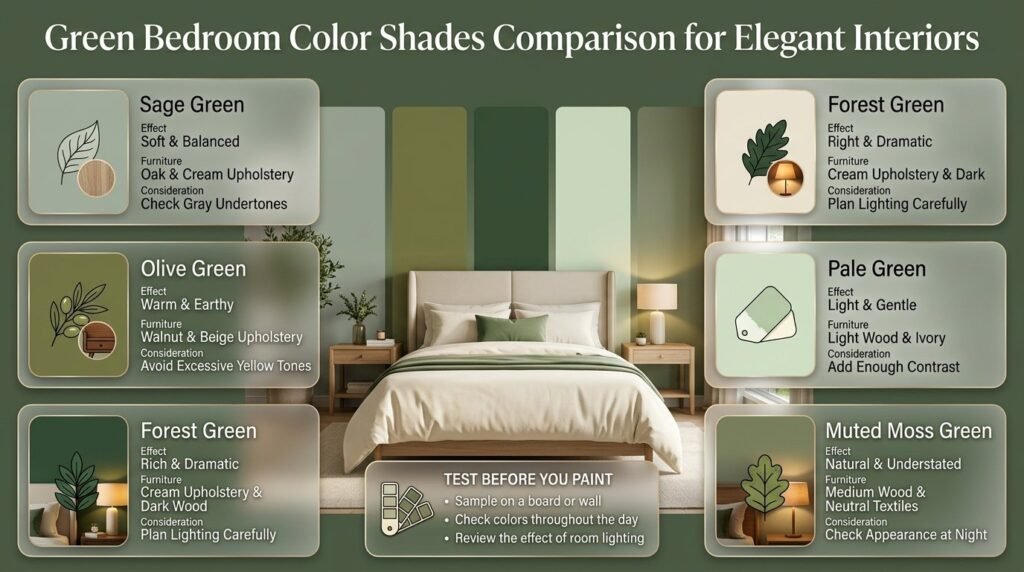
| Green shade | Overall effect | Suitable furniture | Main consideration |
|---|---|---|---|
| Sage green | Soft and balanced | Oak, cream upholstery | Check gray undertones |
| Olive green | Warm and earthy | Walnut, beige upholstery | Avoid excessive yellow tones |
| Forest green | Rich and dramatic | Cream upholstery, dark wood | Plan lighting carefully |
| Pale green | Light and gentle | Light wood, ivory furniture | Add enough contrast |
| Muted moss green | Natural and understated | Medium wood, neutral textiles | Check its appearance at night |
Practical advice: Do not choose a wall color from a small online sample alone. Paint a sample on a board or a suitable section of the wall and examine it at different times of day. The surrounding flooring, window direction, and artificial lighting can change how the color appears.
3. How Much Green and Cream Should You Use?
The best balance depends on how much color you want in the room. Cream can dominate the walls and bedding while green appears in smaller details, or green can become the main feature with cream providing contrast. A clear color hierarchy prevents the bedroom from looking disconnected.
A useful starting point is to assign each color a specific role.
Light and Airy Approach
Use cream for most walls, bedding, and curtains. Introduce green through the headboard, cushions, artwork, or one accent wall.
This approach is particularly helpful when the room is small, has limited natural light, or contains dark furniture that already creates visual weight.
Balanced Approach
Use cream on the main surfaces and introduce green across several larger elements, such as the headboard wall, bedding, and a pair of accent cushions.
This creates a recognizable color scheme without requiring every decorative item to match.
Rich and Dramatic Approach
Choose a deeper green for a prominent wall or another major feature. Balance it with cream bedding, lighter curtains, and furniture finishes that prevent the room from feeling too heavy.
The darker approach works best when you consider the whole room rather than choosing the wall color in isolation.
| Design direction | Green’s role | Cream’s role |
|---|---|---|
| Light and airy | Small accents and selected details | Main walls and bedding |
| Balanced | Focal wall and supporting textiles | Walls, bedding, or upholstery |
| Dramatic | Strong focal wall and selected accessories | Bedding, curtains, and contrasting furniture |
These are visual guidelines rather than strict percentages. The right combination depends on the room’s architecture and the effect you want to achieve.
Common mistake: Choosing a green wall, green curtains, green bedding, and green furniture without considering how the elements interact. Repetition can help a room feel coordinated, but the same color needs enough variation in texture, shade, and surrounding materials.
4. How Can You Create a Beautiful Master Bedroom Focal Wall?
The wall behind the bed is often the most effective place to establish the main color feature. A green accent wall, understated paneling, or carefully chosen wallpaper can give the bed a defined backdrop. Cream walls elsewhere help maintain balance and allow the focal feature to stand out.
Paint Behind the Headboard
Painting the headboard wall is a straightforward way to introduce green.
Sage creates a gentle contrast, olive provides warmth, and forest green creates a more dramatic appearance. Select the shade according to the furniture and lighting already present.
Before painting, check whether the wall contains windows, doors, shelves, or other features that may interrupt the visual arrangement. The objective is to make the bed area feel intentional.
Add Decorative Paneling
Wall paneling can introduce depth without requiring additional colors. Simple rectangular molding suits traditional bedrooms, while clean vertical lines can complement more contemporary interiors.
For example, a muted green wall with restrained paneling and a cream upholstered bed can create an elegant appearance without relying on elaborate decorations.
If you choose paneling, consider how the lines relate to the headboard height, bedside tables, and ceiling. Excessive detailing may compete with patterned bedding or decorative furniture.
Use Wallpaper Carefully
Wallpaper is suitable when you want a pattern or texture rather than a solid green surface.
Possible designs include subtle botanical prints, delicate stripes, small geometric patterns, and understated floral motifs.
Use a stronger pattern behind the bed and keep nearby curtains and bedding relatively simple. This makes the wallpaper the focal point instead of allowing several patterns to compete.
Should Every Wall Be Green?
Not necessarily. A single green wall is a practical starting point because it establishes the color scheme while leaving room for cream surfaces.
Painting every wall green can also work, especially with lighter shades, sufficient lighting, and complementary furniture. However, you should evaluate the room’s proportions and natural light before making that decision.
For a more decorative interpretation of the palette, explore Green and Cream Preppy Room Ideas. Keep your master bedroom’s main design decisions focused on comfort, furniture placement, and a suitable sleeping environment.
How to Create a Welcoming Green and Cream Guest Bedroom
A comfortable guest bedroom should combine attractive decor with practical details that make visitors feel at home. Green and cream offer a versatile color palette that brings natural freshness and warmth to the space. Start with cream walls, neutral bedding, and light-colored curtains, then add green accents through cushions, throws, botanical artwork, or a small upholstered chair. Natural wood furniture and warm bedside lighting can make the room feel more inviting without overwhelming the design. To improve functionality, provide a bedside table, accessible lighting, extra blankets, and enough space for guests to store their luggage. Keep decorative accessories coordinated and maintain clear walking paths around the bed. For more inspiration, explore our guide to Green and Cream Guest Bedroom Ideas for practical styling tips, furniture arrangements, and thoughtful decorating ideas that help create a beautiful and comfortable guest room.
5. How Should You Choose the Bed and Headboard?
The bed should guide the rest of the bedroom design because it is usually the largest piece of furniture and the main visual focus. Cream upholstery works well against green walls, natural wood creates an organic appearance, and a green headboard can add color when the walls are cream.
Cream Upholstered Headboards
A cream upholstered headboard creates a soft contrast against a green wall. It also provides a comfortable surface for sitting up in bed when the construction and padding are suitable for that use.
Choose a fabric that fits your daily needs. Some textured materials can be more difficult to clean than smooth upholstery, so consider maintenance before selecting a finish.
A simple, well-proportioned headboard is often more versatile than a heavily decorated design.
Wooden Headboards
Natural oak can create a light, relaxed appearance, while walnut provides deeper contrast.
Wooden headboards are especially useful when you want the bedroom to feel less formal. They also make it easier to repeat the same finish in bedside tables or other furniture.
Avoid introducing too many unrelated wood tones. If the bed, wardrobe, and bedside tables all have different finishes, connect them through the bedding, wall color, and rug.
Green Upholstered Beds
A green upholstered bed can work beautifully with cream walls. Sage or muted olive is often easier to coordinate with other materials than an extremely bright green.
If the bed itself provides the main green feature, keep other large surfaces relatively neutral. This creates a clear focal point and reduces the need for additional green decorations.
Consider the Bed’s Proportions
The right bed is not only about appearance. It should fit the room without blocking the route to the wardrobe, window, or door.
Measure the bed frame, including any extended headboard or footboard, and consider how much space remains for bedside tables. If the room is narrow, a simpler bed frame may be more practical than an oversized design.
6. What Bedroom Furniture Complements Green and Cream?

Natural wood, cream finishes, and carefully selected darker furniture can all complement this color scheme. Choose furniture according to its function, size, and relationship to the wall color rather than purchasing a complete matching set. Consistent finishes and sensible proportions usually create a more cohesive bedroom.
Bedside Tables
Bedside tables should provide enough space for the items you use regularly without obstructing movement.
Consider the following features:
- A comfortable height relative to the mattress.
- Enough surface space for a lamp and everyday essentials.
- Drawers or shelves for useful storage.
- A finish that complements the bed and flooring.
Matching bedside tables can create symmetry, while different tables with compatible finishes can make the room feel more relaxed.
Wardrobes and Dressers
Cream wardrobes can blend with cream walls, helping large storage units feel less prominent. Natural wood creates contrast and can connect the furniture to the floor.
In a smaller bedroom, measure wardrobe doors and drawers before selecting their positions. Sliding doors may be useful where opening space is limited, provided the chosen design suits your storage needs.
Do not select a dresser simply because it looks attractive in a showroom. Consider the amount of storage required and whether the furniture will leave sufficient walking space.
Bedroom Benches and Chairs
A bench at the foot of the bed can provide a place to sit or temporarily place clothing. An accent chair can also work in a larger master bedroom.
However, these pieces are optional. If they make the room difficult to navigate, they are not worth adding merely for decoration.
Professional recommendation: Plan the essential furniture first. Once the bed, wardrobe, and bedside tables fit comfortably, decide whether there is enough space for additional pieces.
For more focused inspiration on selecting and coordinating furniture, see Green and Cream Bedroom Furniture Ideas.
7. How Can You Style Green and Cream Bedding?
A coordinated bed begins with comfortable foundation pieces and adds color through a small number of carefully selected layers. Cream sheets and a duvet provide a neutral base, while green cushions, a quilt, or a throw introduce the main accent. Different textures make the bed interesting without requiring too many patterns.
Start With Cream Bedding
Cream bedding creates a visual connection between green walls and other neutral elements.
Choose cotton, linen, or another fabric according to comfort, temperature, and care requirements. The most attractive bedding is not useful if it is uncomfortable or difficult to maintain.
Ivory and warm cream are particularly helpful when bright white bedding looks too stark against the wall color.
Introduce Green Through Layers
You can use green through a duvet cover, quilt, cushions, or throw.
For a subtle design, keep the main bedding cream and use sage cushions. For a richer appearance, choose olive or forest-green bedding with cream sheets and a lighter throw.
A few coordinated layers are usually sufficient. Too many cushions can make the bed harder to use every day.
Combine Textures
Texture adds depth without introducing more colors.
Consider combining smooth cotton bedding, a knitted throw, a linen cushion, and a soft upholstered headboard. Each material contributes a different surface quality while remaining within the same palette.
Velvet can add richness, but it does not need to appear throughout the room. Use it selectively if you prefer a more understated interior.
Should the Bedding Match the Curtains?
The bedding and curtains do not need to be identical. They should complement one another through color, texture, or undertone.
For example, cream bedding with sage cushions can work with cream curtains and a neutral rug. Alternatively, green bedding can complement a green accent wall when the curtains provide a lighter transition.
The aim is coordination rather than exact matching.
8. Which Curtains and Rugs Work Best With This Palette?
Cream curtains and neutral rugs provide a flexible foundation, while green textiles can reinforce the main color scheme. The best choice depends on the amount of daylight, the flooring, and the existing bedding. Choose window treatments for privacy and light control first, then consider their decorative contribution.
Cream Curtains
Cream curtains create a soft transition between the walls and windows. They work particularly well when green appears on the headboard wall or bedding.
Consider the fabric’s thickness, privacy requirements, and how it hangs. A suitable lining can help control light, but heavy curtains may reduce daylight when the window is already small.
Green Curtains
Green curtains can create a coordinated look in bedrooms with cream walls and light furniture.
If you choose green curtains, check how their shade looks next to the wall paint. Matching the curtains exactly to the wall is not essential; a compatible shade may create more depth.
Avoid selecting heavy, dark curtains without considering their effect on the room’s brightness.
Choose a Suitable Rug
A rug can visually connect the bed and surrounding furniture. Cream rugs with green detailing are useful when the room needs a softer appearance, while neutral textured rugs work well with more colorful bedding.
Before buying a rug, consider the bed’s dimensions and how much of the rug should remain visible around it. A rug that is too small may look disconnected from the furniture arrangement.
Avoid Excessive Patterns
If the curtains feature a noticeable botanical print, use simpler bedding and rugs. If the bedding contains a strong pattern, consider plain curtains.
This approach creates visual hierarchy and makes the bedroom easier to coordinate over time.
9. How Does Lighting Affect Green and Cream Bedroom Design?
Lighting changes how green and cream appear throughout the day. Daylight can reveal the undertones of the paint, while artificial lighting may make cream appear warmer or green look darker. A combination of general lighting, bedside task lighting, and optional accent lighting makes the room more functional and helps the colors remain attractive after sunset.
General Lighting
A ceiling fixture or suitable recessed lighting provides the overall illumination needed for everyday activities.
Choose a fixture that fits the room’s scale. An oversized fitting can dominate a small bedroom, while a very small fixture may look out of proportion in a spacious room.
Bedside Lighting
Bedside lamps or wall lights support reading and provide a comfortable evening atmosphere.
They also help balance a dark green focal wall by introducing light at a lower level. If you share the bed, consider whether each person needs an independent light source.
Accent Lighting
Accent lighting can highlight paneling, artwork, or a decorative feature.
It should support the overall arrangement rather than create unnecessary brightness. If the room already contains several light sources, additional accent lighting may not be needed.
Choose Bulb Color Carefully
Warm-white lighting is often suitable for cream and green interiors because it complements warm neutral finishes.
However, the best result depends on the cream’s undertone and the green shade. Test the lighting in the room rather than relying entirely on the bulb packaging.
Quick Tip: Check your paint samples in both daylight and evening lighting before committing to the final color.
10. How Can You Make a Small Master Bedroom Look Balanced?

A small master bedroom can use green and cream effectively when the larger surfaces remain visually simple and the furniture fits comfortably. Cream walls, light bedding, appropriately sized storage, and clear walking routes help the room feel organized. Green can still provide character through one focal wall, the headboard, or selected textiles.
Keep the Main Surfaces Simple
Cream or pale green walls provide a flexible background. A stronger green can appear behind the bed without covering every wall.
This does not mean that small rooms must avoid dark colors. A deep green focal wall can create an intentional appearance, provided the surrounding surfaces and lighting are considered.
Choose Furniture Based on Measurements
Measure the bed, wardrobe, nightstands, and available walking space.
A large bed may be appropriate if it is your priority, but it may require smaller bedside tables or a more compact dresser. Decide which pieces are essential before buying optional furniture.
Use Storage to Reduce Clutter
Everyday items should have practical storage locations. Drawers, wardrobes, and appropriately positioned shelves can help keep the bedroom comfortable to use.
Avoid adding decorative storage that takes up more space than it provides. The most useful solution is one that fits your daily routine.
Make Good Use of Natural Light
Keep window areas reasonably clear and choose curtains that suit the amount of daylight you receive.
Mirrors may help distribute light when positioned thoughtfully, particularly if they reflect a window or a bright wall. They are optional, however, and should not obstruct the room’s main circulation routes.
For more guidance on planning furniture placement, see Green and Cream Bedroom Layout Ideas.
11. How Can You Make the Bedroom Look Elegant Without Overspending?
An elegant bedroom does not require a complete furniture replacement. Repainting a suitable wall, coordinating bedding, improving lighting, and reusing functional furniture can make a substantial difference. Prioritize changes that affect the overall appearance and everyday comfort before purchasing small decorative objects.
Begin With What You Already Own
Review the existing furniture and textiles.
A wooden bed frame may work well with a new green wall and cream bedding. Existing curtains may be suitable if their undertones complement the new palette. A dresser can remain in place if it fits the room and provides useful storage.
Keeping functional items reduces waste and allows more of your budget to go toward changes that matter.
Update the Main Visual Elements
If the bedroom feels outdated, begin with the surfaces and textiles that occupy the most visual space.
Possible changes include:
- Painting one wall green.
- Replacing mismatched bedding with coordinated cream textiles.
- Updating a lampshade or bedside lamp.
- Rearranging furniture to improve movement.
- Introducing a suitable rug or a small amount of artwork.
You do not need to make every change at once. Assess the room after each major update.
Choose Quality Where It Matters
Comfortable bedding, a suitable mattress, useful lighting, and durable everyday furniture deserve more attention than purely decorative purchases.
The appropriate spending level depends on your existing belongings, local prices, and priorities. Avoid assuming that an attractive bedroom must contain expensive accessories.
Avoid Buying Decorative Items Too Early
Small purchases can accumulate without improving the overall design.
Choose the wall color, furniture arrangement, and bedding first. Then identify the specific areas that need additional detail.
This process makes it easier to avoid unnecessary spending and helps the finished bedroom feel more intentional.
12. What Are the Most Common Decorating Mistakes?
The main mistakes in green and cream master bedroom design include ignoring undertones, using too many competing patterns, overcrowding the room, and selecting lighting without testing the colors. These issues often arise when individual items are purchased separately without a clear plan. A consistent palette and practical layout help prevent them.
Mistake 1: Choosing Incompatible Undertones
Cream can lean yellow, pink, or beige, while green can appear gray, blue, or yellow.
When the undertones conflict, the colors may look disconnected.
How to avoid it: Compare paint samples with the actual flooring, bedding, and furniture. Check the colors at different times of day.
Mistake 2: Using Too Many Green Shades
Several green shades can work together, but they need a clear relationship.
If sage, lime, olive, and forest green appear in equal amounts, the room may lack a clear focal point.
How to avoid it: Choose one main green and use other shades sparingly where they complement the overall palette.
Mistake 3: Overdecorating the Bed
Too many cushions, throws, and patterned textiles can make the bed difficult to use and visually crowded.
How to avoid it: Prioritize comfortable bedding and use only a few decorative layers that contribute something meaningful.
Mistake 4: Buying Furniture Without Measuring
Furniture that looks suitable online may be too large for the available space.
How to avoid it: Measure the room and check the full dimensions of each piece. Consider drawers, wardrobe doors, and walking routes.
Mistake 5: Ignoring Practical Storage
A bedroom may look attractive immediately after decorating but become difficult to maintain when everyday items have no designated place.
How to avoid it: Include sufficient storage in the original layout and keep frequently used items easy to access.
Mistake 6: Using the Wrong Lighting
A green shade that looks soft in daylight may appear much darker under artificial lighting.
How to avoid it: Test samples under the bulbs you intend to use. Include bedside lighting where it will improve everyday comfort.
Mistake 7: Making Everything Match Exactly
Matching the bed, curtains, cushions, and furniture in identical shades can make the room feel repetitive.
How to avoid it: Repeat the main colors while varying textures and finishes. A cohesive room does not require every item to come from the same collection.
13. What Professional Design Principles Make the Biggest Difference?

A professional-looking master bedroom generally has a clear focal point, a consistent color palette, comfortable circulation, layered textures, and suitable lighting. The strongest results come from thoughtful relationships between the main elements rather than from adding more decoration.
Establish a Clear Focal Point
The bed usually serves as the natural center of the bedroom.
Position it according to the room’s dimensions and access requirements. Then coordinate the headboard wall, bedside tables, lamps, and artwork around it.
Repeat Colors With Variation
Repeat green in at least two locations, such as the wall and cushions or the headboard and artwork.
The colors do not need to match exactly. Slightly different tones can add depth when they share compatible undertones.
Coordinate Materials
Cream upholstery, natural wood, textured bedding, and restrained metal accents can work together because each material contributes a different quality.
You can introduce velvet, linen, woven fabrics, or ceramic accessories without adding many new colors. This creates variety while keeping the palette consistent.
Leave Some Space Undecorated
Empty space allows the important elements to stand out.
You do not need artwork on every wall or ornaments on every surface. Keep the bedside tables useful, the walking routes clear, and the furniture arrangement comfortable.
Consider the Bedroom as a Complete Space
Evaluate the room from the doorway, the foot of the bed, and the main seating position if one exists.
These views can reveal whether the green is too dominant, the furniture feels crowded, or the room needs more contrast.
For additional styling guidance that can complement your overall decorating decisions, visit Green and Cream Room Styling. Apply those broader styling principles selectively so the master bedroom remains focused on its specific needs.
14. A Step-by-Step Plan for Your Green and Cream Master Bedroom
The easiest way to complete a coordinated bedroom is to make the major decisions first and add finishing touches last. Begin with measurements, select the main shades, arrange the essential furniture, and then choose textiles and lighting. This order helps prevent unsuitable purchases and keeps the project manageable.
Step 1: Measure the Room
Record the wall lengths, ceiling height, windows, doors, and fixed features.
Measure the bed and essential storage furniture. Check that the planned arrangement allows comfortable access to the wardrobe and door.
Step 2: Choose the Main Color Palette
Select one green shade and one compatible cream.
Decide whether green will be the main wall color, a focal feature, or an accent used through textiles. Test the colors in the room before purchasing large quantities of paint or fabric.
Step 3: Plan the Furniture Arrangement
Position the bed first because it is usually the most important furniture piece.
Add bedside tables, wardrobes, and dressers according to their practical requirements. Avoid optional furniture until the essential pieces fit comfortably.
Step 4: Choose the Wall Treatment
Decide whether the bedroom needs plain paint, a focal wall, subtle paneling, or wallpaper.
Keep the treatment consistent with the desired style and the existing furniture. A simple wall can be just as effective as a decorative one.
Step 5: Select Bedding and Curtains
Choose comfortable bedding that complements the wall color.
Then select curtains according to privacy, light control, and the overall palette. Introduce texture through fabric rather than adding too many competing patterns.
Step 6: Plan the Lighting
Provide general illumination and suitable bedside lighting.
Check how the colors look after sunset and make adjustments if the green becomes too dark or the cream appears too yellow.
Step 7: Add Accessories Gradually
Choose a rug, artwork, or decorative objects only where they improve the room.
After arranging everything, review the space and remove items that make it feel crowded. The final result should support both comfort and appearance.
How Do You Design a Green and Cream Master Bedroom That Looks Elegant and Timeless?
An elegant green and cream master bedroom starts with a balanced color palette, comfortable furniture, and a clear focal point. Sage or olive green can introduce natural warmth, while cream walls, bedding, or upholstery keep the room visually balanced. Rather than following short-lived decorating trends, choose finishes and furniture that complement each other and will remain practical as your preferences change.
The bed usually provides the strongest starting point. A cream upholstered headboard against a muted green wall creates contrast, while natural wood bedside tables add depth. Layered fabrics, suitable lighting, and a few carefully selected accessories can complete the look without making the room feel overcrowded.
Professional design tips:
Choose one dominant shade of green and a complementary cream.
Use natural wood, linen, or textured fabrics to introduce depth.
Keep decorative accessories limited and coordinated.
Select warm, comfortable lighting that complements the paint and bedding.
Prioritize a practical furniture arrangement over decorative trends.
Which Green Shades Work Best With Cream in a Master Bedroom?
The most suitable green shade depends on your room’s natural light, furniture finishes, and preferred atmosphere. Sage green is a versatile option for a soft, contemporary bedroom, while olive green creates a warmer, earthier appearance. Forest green offers stronger contrast and can make the room feel more dramatic when balanced with cream bedding and appropriate lighting.
For a bright bedroom, muted sage or olive can work well with cream walls and natural wood. In a room with limited daylight, a lighter green and warm cream may help maintain visual brightness. Darker greens can still be effective, but they need careful coordination with the room’s other surfaces.
How to choose the right shade:
Sage green: Suitable for a calm, understated appearance.
Olive green: Works well with walnut, beige, and warm wood.
Forest green: Ideal for a stronger focal wall or selected textiles.
Pale green: Useful for a light, airy color scheme.
Test paint samples beside your actual bedding and flooring.
Check the shades in daylight and under your bedroom lighting before making a final decision.
How Can You Make a Small Green and Cream Master Bedroom Look Spacious?
A small master bedroom can look balanced when cream covers the larger surfaces and green is introduced through selected features. Cream walls, light bedding, appropriately sized furniture, and clear walking routes help the room feel organized. Green can still provide character through an accent wall, headboard, cushions, or curtains without overwhelming the available space.
Furniture selection is especially important. An oversized bed frame or bulky bedside tables can restrict movement, regardless of how attractive the color scheme looks. Measure the room before buying furniture, and prioritize storage that fits your daily needs. Mirrors may help reflect natural light when positioned thoughtfully, while layered lighting can reduce dark corners.
Practical ways to improve a small bedroom:
Use cream or pale green on most wall surfaces.
Introduce deeper green through one focal feature.
Choose furniture that fits the room’s dimensions.
Keep wardrobes, drawers, and doorways accessible.
Use simple curtains and avoid excessive decorative patterns.
Select a rug that relates to the bed’s size rather than choosing one that is too small.
What Furniture, Bedding, and Curtains Should You Choose for a Green and Cream Master Bedroom?
The most cohesive combination usually includes furniture with natural or complementary finishes, cream bedding, and curtains that support the main color palette. A cream upholstered bed looks attractive against green walls, while oak or walnut furniture introduces warmth. If the walls are cream, a green headboard or green bedding can provide the contrast needed to establish a focal point.
Bedding should prioritize comfort as well as appearance. Cream sheets and a duvet create a flexible foundation, while green cushions or a textured throw add color. Cream curtains help maintain a light appearance, whereas green curtains can create a stronger, coordinated effect when paired with lighter walls and furnishings.
Recommended combinations:
Sage walls, cream bedding, and natural oak bedside tables.
Olive accents, ivory bedding, and walnut furniture.
Forest-green focal wall, cream headboard, and light curtains.
Cream walls, sage bedding, and understated botanical artwork.
Textured neutral rugs and simple curtains to balance patterned bedding.
Choose materials that are suitable for everyday use, and avoid matching every item in exactly the same shade. Repeating colors and textures usually creates a more natural, professionally coordinated appearance.
How Can You Create a Luxurious Green and Cream Master Bedroom on a Budget?
A luxurious-looking master bedroom depends more on thoughtful coordination than on expensive decorations. You can achieve an elegant result by retaining functional furniture, introducing a well-chosen green accent, updating the bedding, and improving the lighting. These changes can make the room feel more cohesive without requiring a complete renovation.
Start by identifying the elements that have the greatest visual impact. A freshly painted focal wall, coordinated cream bedding, a suitable headboard, and well-positioned bedside lamps can change the room’s appearance significantly. If your existing curtains, wardrobe, or bedside tables already complement the palette, there may be no reason to replace them.
Budget-friendly improvements:
Repaint one wall instead of the entire bedroom.
Keep existing furniture that is comfortable and in good condition.
Replace mismatched bedding with coordinated cream and green textiles.
Update lampshades or lighting where necessary.
Reuse suitable curtains, rugs, and decorative accessories.
Add texture through affordable cushions or a throw.
Purchase accessories gradually after assessing the completed arrangement.
The most important principle is to spend on comfort, functionality, and the main visual elements first. A well-planned bedroom with a consistent color palette will often look more refined than a room filled with expensive but unrelated decorations.
Conclusion
A green and cream master bedroom design offers a versatile way to create a space that feels calm, elegant, and comfortable. The combination brings together the natural character of green and the warmth of cream, making it suitable for both classic and contemporary interiors. Whether you prefer soft sage, earthy olive, or deep forest green, the key is to choose shades that complement your room’s natural light, furniture, flooring, and personal style.
For the best results, begin with a balanced color palette and build the design around the bed. Use cream bedding or upholstery to maintain visual balance, introduce green through walls or carefully selected accents, and incorporate natural wood, textured fabrics, and warm lighting to add depth. Pay equal attention to furniture placement, storage, and walking space so the bedroom remains practical as well as attractive. You can explore more inspiration through these Green and Cream Preppy Room Ideas and refine the overall look with thoughtful Green and Cream Room Styling.
You do not need an expensive renovation to achieve a polished result. Reusing suitable furniture, updating bedding, refreshing a focal wall, and coordinating a few accessories can make a meaningful difference. For more inspiration and practical decorating guidance, visit Preppy Room. Ultimately, the best green and cream master bedroom is one that reflects your preferences, supports restful everyday living, and maintains a cohesive appearance without unnecessary decoration.