Introduction
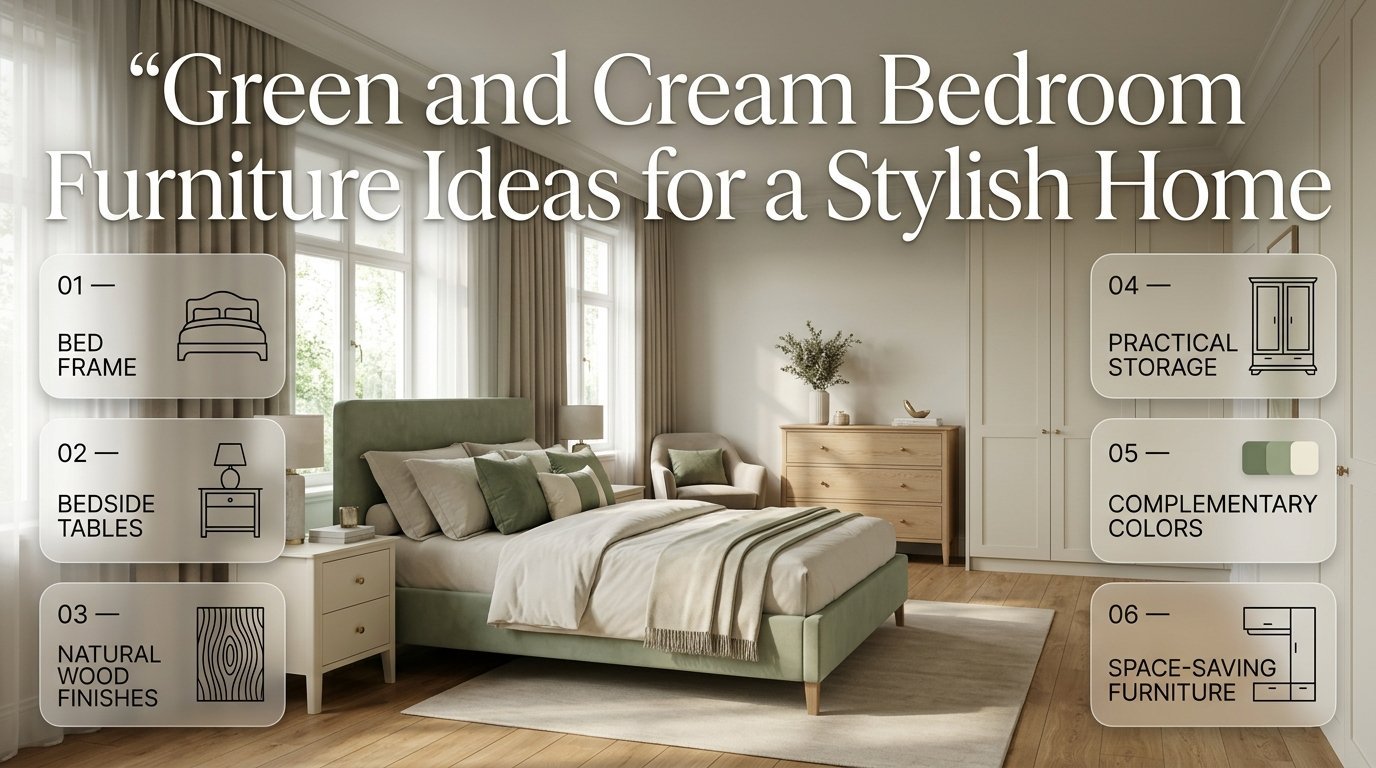
Green and Cream Bedroom Furniture Ideas | A green and cream bedroom can look beautiful in inspiration photos, but creating the same balanced feeling at home takes more than choosing attractive furniture. A bed may look too bulky once it enters the room, a wooden dresser may clash with the flooring, or cream furniture may make the space feel plain when everything has the same finish. These problems are easier to avoid when you plan the furniture around your room, lifestyle, and preferred decorating style.
Green and cream bedroom furniture ideas focus on selecting practical furniture, complementary materials, coordinated finishes, and suitable proportions to create a bedroom that feels comfortable and visually connected. Whether you prefer sage green and light oak, forest green and walnut, or pale green with cream-painted furniture, the right combination can make the room feel fresh without becoming overly decorated.
This guide explains how to choose bed frames, nightstands, dressers, wardrobes, seating, storage furniture, and decorative finishing pieces. You will also learn how to coordinate furniture with bedding, work with different bedroom sizes, establish a realistic budget, and avoid mistakes that can make a carefully planned room feel disorganized.
If you are developing a complete green and cream interior, Preppy Room can also help you explore the wider decorating style before making your final furniture decisions.
1. What Are the Best Green and Cream Bedroom Furniture Ideas?
The best green and cream bedroom furniture ideas combine a few complementary finishes rather than making every piece identical. Natural wood provides warmth, cream furniture creates softness, and carefully selected green accents connect the furniture to the overall color scheme. The most suitable combination depends on the green shade, room dimensions, natural light, and the amount of storage you need.
Before purchasing anything, decide which color will dominate the room. If your walls are already green, cream and natural wood furniture can provide balance. If your walls are cream, a sage green headboard, olive accent chair, or muted green dresser can introduce color without overwhelming the space.
Consider these three foundational combinations:
- Sage green, cream, and light oak: A relaxed combination for modern, Scandinavian, and natural interiors.
- Forest green, ivory, and walnut: A richer arrangement suited to traditional and sophisticated bedrooms.
- Pale green, warm cream, and white-painted wood: A light, welcoming option for cottage-inspired and classic preppy spaces.
The goal is to establish a recognizable palette before choosing individual products. This makes it easier to compare furniture and avoid buying pieces that look attractive separately but feel disconnected when placed together.
How Many Furniture Finishes Should You Use?
For most bedrooms, two or three main finishes are enough. You might use natural wood for the bed and nightstands, cream for the dresser, and green for a single accent piece. This arrangement creates variety without introducing too many competing elements.
You can use more finishes in a larger room, but they should have a clear relationship. Repeating a wood tone, hardware finish, or upholstery color helps connect different pieces.
Practical tip: Collect photographs or physical samples of your existing flooring, wall paint, bedding, and furniture before shopping. Comparing these materials together is more reliable than selecting each finish under different lighting conditions.
2. How Do You Choose the Right Bed Frame for a Green and Cream Bedroom?
The bed frame should establish the bedroom’s main visual direction because it is usually one of the largest and most noticeable pieces of furniture. Choose a frame that complements your wall color, bedding, flooring, and preferred decorating style while providing the size and support your household needs.
Light Oak Bed Frames for a Natural Look
Light oak is a versatile option for green and cream bedrooms because its natural grain introduces warmth without creating strong visual contrast. It works particularly well with sage green, pale olive, muted botanical shades, and warm cream.
A simple oak bed frame is suitable for modern and relaxed interiors. Straight lines and understated details keep the room looking uncluttered, while the wood grain adds enough character to prevent the design from feeling flat.
Pair the frame with cream bedding, a neutral headboard cushion if appropriate, and coordinated bedside tables. You can add a darker wooden picture frame or a muted green accessory for definition.
Light oak is especially useful in smaller bedrooms where a dark, visually heavy bed might dominate the available space. However, the exact effect depends on the room’s lighting and the surrounding finishes.
Cream Upholstered Beds for Softness
A cream upholstered bed introduces a softer texture and creates a comfortable-looking focal point. It is an especially good choice when the walls are sage, olive, or another muted green.
Linen-look fabrics, textured weaves, and simple padded headboards suit a relaxed bedroom. More structured upholstery can support a formal or traditional design.
When choosing an upholstered frame, consider the fabric’s maintenance requirements, durability, and resistance to everyday wear. Cream fabric may show marks more readily than darker materials, so practical care instructions matter.
An upholstered bed also works well when the other furniture is made from wood. The contrast between soft fabric and natural grain adds depth without requiring additional colors.
Dark Walnut Beds for Contrast
A walnut bed frame can create a richer appearance, especially when combined with forest green, deep olive, or darker botanical shades. Its deeper finish establishes a strong outline against cream walls and light bedding.
This option is useful when you want a traditional or sophisticated bedroom rather than an especially airy look. Walnut can also connect the bed to existing dark wooden flooring or architectural details.
To maintain balance, keep some large surfaces light. Cream bedding, pale curtains, or a lighter dresser can prevent the darker furniture from making the room feel visually crowded.
White-Painted Beds for a Classic Appearance
White-painted beds work well with pale green walls and cream textiles. They suit cottage, coastal, and traditional preppy interiors, particularly when the design includes simple paneling or gently shaped details.
However, bright white can look noticeably cooler than warm cream. If your bedding has yellow or beige undertones, compare the two finishes before choosing a frame.
The best bed is not necessarily the most decorative one. It should support comfortable sleep, fit the room properly, and provide a foundation for the rest of your furniture.
3. Which Nightstands Work Best With Green and Cream Furniture?
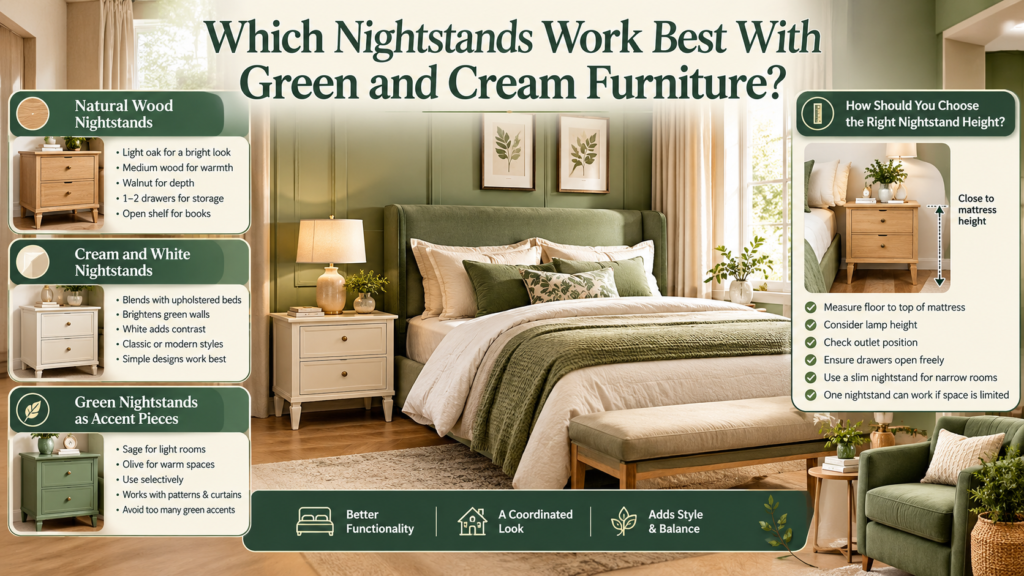
Nightstands should provide convenient storage and comfortable access to everyday items while supporting the bedroom’s overall color scheme. Natural wood, cream-painted designs, and restrained green accents are all suitable options, provided their dimensions work with the bed and available walking space.
Natural Wood Nightstands
Wooden nightstands are a dependable choice when the bed has a wooden frame or the bedroom already includes natural materials. Light oak creates a bright, relaxed look, while medium wood and walnut add warmth and depth.
A nightstand with one or two drawers is useful for storing small personal belongings and keeping the top surface clear. An open shelf can provide space for books or a storage basket, although it may require more frequent tidying.
Choose a finish that complements the bed rather than trying to match every wood grain perfectly. Similar undertones and compatible shapes usually matter more than identical coloring.
Cream and White Nightstands
Cream-painted nightstands blend easily with upholstered beds and light bedding. They are particularly useful when the walls are green because they introduce a lighter surface beside the bed.
White nightstands provide a slightly sharper contrast. They can suit pale green rooms, especially when white trim or other white furniture already appears elsewhere.
For a traditional bedroom, consider simple panel fronts or classic drawer pulls. For a modern interior, plain fronts and discreet handles are often more appropriate.
Green Nightstands as Accent Pieces
Green nightstands can introduce personality without requiring a major furniture investment. Sage works with pale walls and light wood, while deeper olive may suit cream walls and walnut furniture.
Use green nightstands selectively if the room already contains patterned bedding, green curtains, or a strong wall color. Too many similar accent pieces can make the palette feel repetitive.
How Should You Choose the Right Nightstand Height?
A nightstand is most convenient when its top is close to the height of the mattress, although the ideal measurement depends on the bed and your personal preferences.
Before buying, measure from the floor to the top of the mattress. Also consider the height of your lamp, the position of nearby outlets, and whether the drawers can open without hitting the bed.
For narrow rooms, a slim nightstand may be more useful than a large cabinet. If there is insufficient space on both sides of the bed, one well-positioned nightstand can be a better solution than forcing a matching pair into the layout.
Green and Cream Guest Bedroom Ideas for a Comfortable Welcome
A thoughtfully arranged guest bedroom helps visitors feel welcome while making the most of the available space. Green and cream create a versatile color scheme that combines natural freshness with a soft, inviting atmosphere. Start with cream bedding, neutral walls, and light-colored curtains, then introduce green through decorative pillows, a cozy throw, bedside accessories, or botanical artwork. Wooden furniture and warm bedside lighting can add texture and make the room feel more comfortable. Beyond decoration, consider practical details such as accessible charging points, a bedside table, extra blankets, and sufficient space for luggage. Keep the furniture arrangement simple so guests can move around easily without obstacles. For more decorating inspiration, explore our guide to Green and Cream Guest Bedroom Ideas for useful styling tips, furniture suggestions, and practical ways to create a welcoming and well-organized guest bedroom.
4. How Can You Select a Dresser That Complements Green and Cream Furniture?
A dresser should meet your clothing-storage needs while contributing to the room’s overall balance. Choose its size, drawer arrangement, and finish according to the space available, the items you need to store, and the visual weight of the bed and other furniture.
Light Wood Dressers
A light oak dresser creates a natural connection with wooden bed frames and nightstands. It works well in rooms with sage walls, cream bedding, and understated decorative accessories.
Look for drawers that open smoothly and provide enough usable depth for your belongings. A beautiful dresser with impractical storage can quickly become frustrating.
Light wood is especially suitable when you want the bedroom to feel calm and uncomplicated. It also offers flexibility if you later change your bedding or wall color.
Cream Dressers
A cream dresser provides a softer alternative to bright white. It can connect with upholstered furniture, warm bedding, and beige or ivory accessories.
Cream is particularly effective in a bedroom with darker green walls because it creates contrast without introducing another strong color.
If you choose a painted dresser, check the finish’s durability and cleaning requirements. Drawer edges, handles, and frequently touched areas may receive more wear than the main surfaces.
Walnut Dressers
Walnut furniture introduces depth and a more traditional character. It pairs well with deeper green shades, cream bedding, and warm lighting.
A walnut dresser can become the room’s main furniture feature, so consider its dimensions carefully. A large dark dresser may dominate a small bedroom, particularly when paired with a dark bed frame.
If the dresser is already dark, balance it with lighter textiles and avoid filling the same wall with several other bulky pieces.
Sage or Olive Dressers
A muted green dresser is a more distinctive choice. It can act as an accent piece in a cream bedroom, particularly when the bed and nightstands are neutral.
To keep the design cohesive, repeat the green shade in one or two smaller details, such as a cushion, artwork, or fabric accessory. There is no need to introduce the same color into every item.
Should You Choose a Tall or Wide Dresser?
A wide, low dresser may suit a room with an available horizontal wall, while a tall chest can provide useful storage when floor space is limited.
Measure the full furniture footprint, including the space needed to open drawers. Check nearby doors, windows, and wardrobe openings before deciding where the dresser will go.
A practical dresser should improve organization without creating a new obstacle in the room.
5. What Wardrobe Colors Suit a Green and Cream Bedroom?
Wardrobes often occupy a substantial portion of a bedroom, so their finish can have a significant effect on the overall appearance. Cream, white, and light wood are versatile choices, while walnut and muted green can work when the room has sufficient visual balance.
Cream and White Wardrobes
Light-colored wardrobes can blend with pale walls and reduce the visual prominence of a large storage unit. This is particularly useful in smaller bedrooms or spaces with limited natural light.
Choose a warm cream finish if your walls and bedding have beige undertones. A cooler white may be more suitable when the room contains crisp white trim and cooler green shades.
Mirrored wardrobe doors can reflect light and provide a useful dressing function, but consider how the reflection affects the room’s appearance. Mirrors should support the layout rather than reflect an area that regularly becomes cluttered.
Natural Wood Wardrobes
Wood wardrobes add warmth and work well with oak beds, wooden nightstands, and cream upholstery. Their natural texture can make a simple bedroom feel more welcoming.
If your bed and dresser already use different wood tones, avoid introducing a third highly contrasting finish without a clear reason. Choose a wardrobe that relates to at least one existing wood tone.
Built-In Versus Freestanding Wardrobes
Built-in wardrobes can use wall space efficiently and create a more integrated appearance. Freestanding wardrobes offer flexibility if you expect to rearrange the bedroom or move home.
The right option depends on the room’s structure, storage needs, and budget. Check internal hanging space, shelf positions, and door clearance rather than judging the wardrobe only by its exterior.
For a cohesive green and cream design, a wardrobe should function as a practical part of the room instead of competing with the bed for attention.
6. Which Wood Finishes Look Best With Green and Cream Furniture?
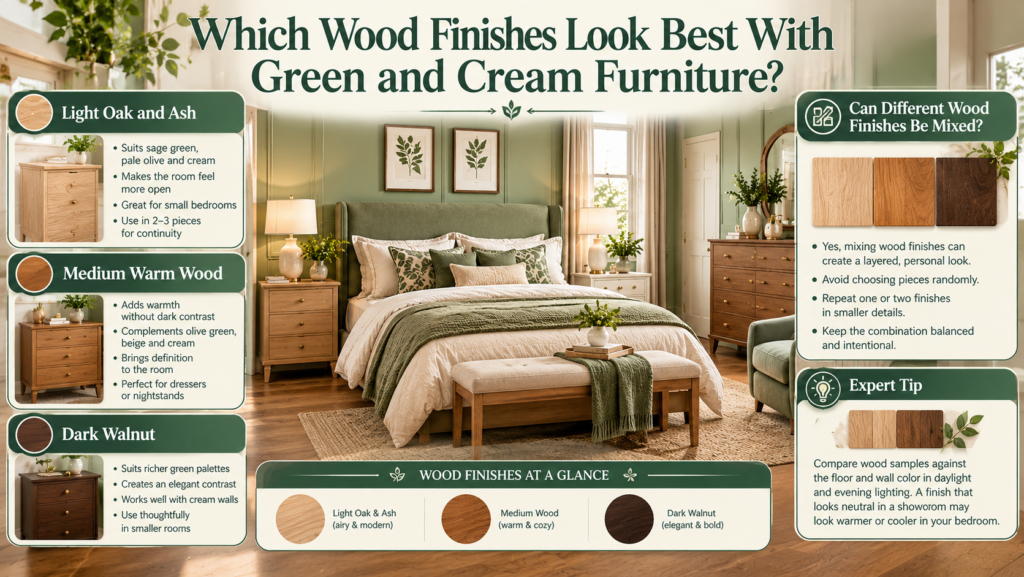
Wood finishes work particularly well with green and cream because they introduce natural warmth and contrast. Light wood makes the room feel more open, medium wood creates a welcoming atmosphere, and dark wood adds definition. The best choice depends on the green shade and the other materials already present.
Light Oak and Ash
Light oak and ash suit sage green, pale olive, and warm cream. Their relatively light appearance makes them useful in smaller bedrooms and modern interiors.
Use these finishes for a bed frame, nightstands, or dresser. Repeating the same wood tone in two or three locations helps create visual continuity.
However, light wood does not always mean the same thing across furniture collections. Some finishes look yellow, others appear gray, and some have a pinkish undertone. Compare samples whenever possible.
Medium Warm Wood
Medium-toned wood adds warmth without the strong contrast of very dark furniture. It can complement olive green, beige, and cream particularly well.
This finish is useful when the bedroom feels too pale or lacks definition. A medium wooden dresser or bedside table can introduce enough warmth without changing the room’s main color scheme.
Dark Walnut
Walnut suits richer green palettes and traditional furniture styles. It can create an elegant contrast against cream walls and lighter bedding.
Because darker finishes are visually prominent, use them thoughtfully in smaller rooms. One dark dresser may be enough if the bed and flooring are also dark.
Can Different Wood Finishes Be Mixed?
Yes. Mixing wood finishes can create a more personal and layered result. The key is to avoid selecting pieces randomly.
For example, a light oak bed can work with medium-toned nightstands and a darker wooden frame. Repeat one or two finishes in smaller details so the combination feels deliberate.
Expert tip: Compare wood samples against the floor and wall color in both daylight and evening lighting. A finish that appears neutral in a showroom may look noticeably warmer or cooler in your bedroom.
Green and Cream Master Bedroom Design for Comfort and Elegance
Creating a beautiful master bedroom involves combining a balanced color palette with comfortable furniture and thoughtful styling. Green and cream work together to establish a fresh, calming atmosphere while offering plenty of flexibility for different interior styles. Use cream walls, neutral bedding, or upholstered furniture as your foundation, then introduce green through curtains, decorative pillows, a statement headboard, or an accent chair. Natural wood bedside tables, layered lighting, and textured fabrics can add warmth and visual interest. For a more cohesive appearance, repeat your chosen green shade in a few carefully selected accessories and avoid overcrowding the room with competing patterns. Practical considerations, such as accessible storage and clear walking paths, also help maintain everyday comfort. For more inspiration, explore our guide to Green and Cream Master Bedroom Design for useful decorating tips, furniture placement ideas, and color coordination techniques to help create a stylish and relaxing bedroom.
7. How Can You Use Green Accent Furniture Without Overdoing It?
Green accent furniture adds character when the larger pieces remain relatively neutral. A sage chair, olive bench, or muted green dresser can connect the furniture to the room’s color scheme without making every surface look the same.
Sage Green Accent Chairs
A sage green chair can create a useful reading corner or dressing area. Pair it with a small wooden side table and a cream cushion if the chair needs additional softness.
Before purchasing, check the chair’s width, depth, and leg clearance. A large armchair may be comfortable but impractical in a narrow bedroom.
If you do not have room for a full chair, a compact upholstered stool can provide occasional seating without taking up as much floor space.
Olive Green Bedroom Benches
An olive bench can work at the foot of a bed, particularly when the bedding and bed frame are cream or natural wood.
It provides a place to sit while getting dressed or to temporarily arrange clothing. Some models also include storage, which can be useful for spare blankets or other textiles.
Check the bed height and available walking space before choosing a bench. A long or bulky design can restrict movement around the foot of the bed.
Green Bedside Cabinets
Green bedside cabinets create a more noticeable accent while remaining practical. Sage is suited to light and natural interiors, whereas olive can provide a stronger connection with traditional or earthy decorating styles.
If you choose green cabinets, consider a neutral bed and dresser to prevent too many pieces from competing for attention.
Green Upholstered Headboards
A green upholstered headboard is another way to introduce color through the bed rather than adding separate accent furniture. It works particularly well with cream bedding and light wood nightstands.
The fabric should complement the room’s other textures. A simple weave suits a relaxed bedroom, while a richer fabric can support a more formal appearance.
8. What Furniture Works Best in a Small Green and Cream Bedroom?
Small bedrooms benefit from furniture that provides useful storage, preserves comfortable walking routes, and avoids unnecessary visual weight. Light finishes, compact nightstands, vertical storage, and multifunctional pieces can help make the most of limited space.
Choose a Bed With Integrated Storage
A bed with built-in drawers or a suitable lift-up storage base can reduce the need for extra cabinets. This can be useful for spare bedding, seasonal clothing, or belongings that do not need to remain accessible every day.
Check the opening mechanism, available clearance, and storage capacity before buying. Side drawers may not work properly when the bed is positioned close to a wall.
Integrated storage is most useful when it replaces a separate item that would otherwise occupy floor space.
Consider Floating Nightstands
Wall-mounted nightstands create a more open floor area and can be particularly useful in narrow rooms. They also allow you to position the surface at a height that suits the bed.
However, the wall must be suitable for secure installation. Check the mounting requirements and the weight the unit can safely support.
A floating nightstand should still provide enough space for the items you use regularly. An attractive shelf that cannot hold a lamp, phone, or other essentials may not meet your needs.
Use Vertical Storage
Tall dressers and wardrobes can provide storage without occupying as much floor area as several low cabinets.
Measure the available height and confirm that the furniture does not interfere with windows, ceiling features, or doors. Secure tall furniture appropriately to reduce the risk of tipping.
Light-colored tall furniture can also blend into the background when the walls are pale, reducing the visual dominance of a large storage piece.
Select Furniture With Visible Legs
Furniture with visible legs allows more floor area to remain in sight. This can make a small bedroom feel less crowded than a collection of bulky pieces that sit directly on the floor.
Look for bed frames, nightstands, and chairs with proportions suited to the room. Exposed legs alone will not solve a poor layout, but they can contribute to a lighter appearance.
Use Multifunctional Furniture Selectively
A storage bench, bedside table with drawers, or dresser that also serves as a dressing surface can reduce the number of separate pieces you need.
Do not choose multifunctional furniture simply because it offers more features. Check whether those features are convenient to use and whether the furniture fits the available space.
For more detailed space-planning guidance, explore Green and Cream Bedroom Layout Ideas.
9. How Should You Coordinate Furniture With Green and Cream Bedding?
Furniture and bedding should support one another rather than compete for attention. If your bedding features a noticeable pattern, choose simpler furniture. If your bedding is plain cream, you have more freedom to introduce green through a headboard, chair, or dresser.
Cream Bedding With Natural Wood
Cream bedding and natural wood furniture create a flexible foundation. This combination works with sage, olive, and deeper green accents.
You can introduce texture through a quilt, cushion covers, or a woven throw without adding another strong color. The wood provides warmth while cream keeps the bed visually light.
This arrangement is particularly useful if you expect to change your wall color or accessories later.
Green and Cream Striped Bedding
Stripes can support a classic or preppy look. Pair striped bedding with a simple wooden bed and understated nightstands so the pattern remains the main decorative feature.
If the stripes are bold, avoid adding several other large patterns. A small checked cushion or subtle botanical detail may be enough.
Botanical Bedding With Painted Furniture
Botanical prints can complement cottage-style furniture, especially when the print contains similar shades to the walls or accessories.
White or cream-painted furniture can provide a quiet background for the pattern. Choose a relatively simple bed frame and avoid filling the room with decorative furniture that competes with the bedding.
Forest Green Accents With Ivory Bedding
A deeper green accent works well with ivory bedding and walnut furniture. The combination provides contrast without requiring bright colors.
Use darker green selectively, especially if the bedroom is small. A few cushions or a headboard may be sufficient.
How Can You Avoid a Flat Color Scheme?
A room can look dull when every surface has the same shade and texture. Instead of adding many new colors, vary the materials and finishes.
Combine smooth wood, woven upholstery, soft bedding, and restrained decorative details. The difference between these surfaces creates depth while keeping the palette cohesive.
For more ideas about connecting patterns, furnishings, and accessories, see Green and Cream Preppy Room Ideas.
10. Which Furniture Styles Suit a Green and Cream Bedroom?
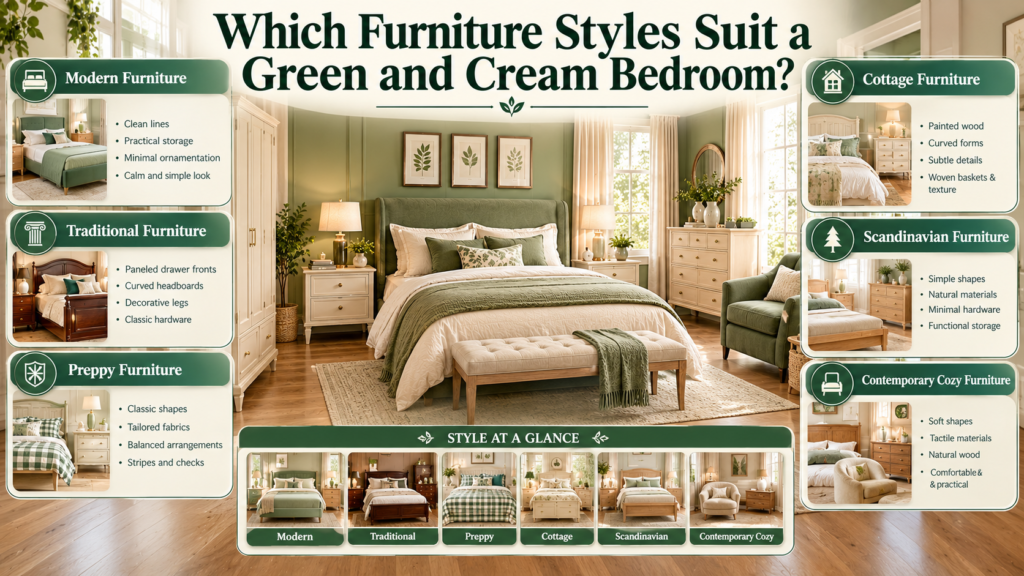
Green and cream can support modern, traditional, preppy, cottage, Scandinavian, and contemporary styles. The difference comes from furniture shapes, surface finishes, hardware, and decorative details rather than the colors alone.
Modern Furniture
Modern bedroom furniture usually features clean lines, practical storage, and minimal ornamentation. A simple bed frame, plain-front dresser, and coordinated nightstands create a calm appearance.
Choose sage green, cream, and light oak for a softer modern scheme. If the walls are darker green, lighter furniture can provide balance.
Avoid adding decorative details that do not support your chosen style. A restrained design often looks more cohesive than a collection of unrelated modern pieces.
Traditional Furniture
Traditional furniture may include paneled drawer fronts, curved headboards, decorative legs, and classic hardware. Walnut, warm cream, and deeper green can work particularly well with these details.
A traditional bedroom does not need to be formal or heavy. Balance decorative furniture with lighter bedding and a manageable number of accessories.
Preppy Furniture
Preppy bedrooms often combine classic furniture shapes, tailored fabrics, balanced arrangements, and carefully controlled patterns.
A simple bed, coordinated nightstands, and a structured dresser provide a useful foundation. Stripes, checks, and traditional hardware can add character without requiring every piece to be decorative.
If you prefer a preppy look, decide how much pattern you want before choosing bedding and upholstered furniture. This helps prevent visual competition.
Cottage Furniture
Cottage-style furniture often features painted wood, gently curved forms, and understated decorative details. Pale green and warm cream create a welcoming background for these pieces.
White-painted nightstands, a cream dresser, and a natural wood bed can form a balanced combination. Woven baskets and textured fabrics can introduce additional warmth.
Scandinavian Furniture
Scandinavian-inspired furniture prioritizes simplicity, functionality, and natural materials. Light wood, restrained hardware, and useful storage are common choices.
Pair these pieces with sage green and soft cream for a relaxed room. Keep the decorative accessories limited and make sure every furniture item serves a clear purpose.
Contemporary Cozy Furniture
Contemporary cozy interiors combine simple furniture with softer shapes and tactile materials. A rounded accent chair, upholstered headboard, and natural wood dresser can create this effect.
Choose a small number of contrasting textures rather than introducing many unrelated finishes. The result should feel comfortable and practical, not crowded.
11. How Do You Arrange Furniture in a Green and Cream Bedroom?
A successful layout begins with the bed and follows with essential storage. Accent furniture should be added only after the main pieces fit comfortably and the room has clear walking routes.
Step 1: Measure the Room
Record the room’s length and width, ceiling height where relevant, and the positions of doors, windows, radiators, and built-in storage.
Measure each furniture item before purchasing it. Include the space required to open drawers, wardrobe doors, and storage compartments.
This prevents the common problem of buying a piece that fits against a wall but obstructs everyday movement.
Step 2: Position the Bed
Place the bed where it provides comfortable access and does not block important features. A central position against a suitable wall may work well in a larger room, but a smaller bedroom may require a more flexible arrangement.
Do not force symmetry if the architecture does not allow it. A practical layout with one nightstand is better than a cramped layout with two.
Step 3: Plan the Storage Furniture
Identify the best locations for wardrobes and dressers before adding decorative pieces. Consider which drawers and doors you use most frequently and make sure they can open fully.
Tall storage may be suitable for narrow spaces, while a low dresser can work well along a wider wall.
Step 4: Add Nightstands and Lighting
Choose nightstands that fit beside the bed and provide enough surface area for everyday essentials. Plan the lamp size and position of electrical outlets at the same time.
Avoid placing a large lamp on a very small table if it leaves insufficient space for other items.
Step 5: Introduce Secondary Furniture
A chair, bench, or dressing stool should solve a specific need. Add it only if it does not block access to the bed or storage.
For example, a bedroom with a narrow walkway may benefit more from a compact stool than a full-size accent chair.
Step 6: Review the Room Before Decorating
Once the main furniture is in place, walk through the room as you normally would. Open the drawers, access the wardrobe, and check the routes between the bed and door.
Make adjustments before adding accessories. Furniture placement should be functional first and decorative second.
12. What Are the Most Common Furniture-Buying Mistakes?
The most common mistakes include selecting furniture that is too large, choosing incompatible finishes, buying storage that does not meet everyday needs, and adding too many green accents. Each problem can be avoided by planning the room before shopping and comparing materials in their actual surroundings.
Buying Furniture Before Measuring
Why it happens: A product photograph may make a bed or dresser look smaller than it is.
Why it creates problems: Large furniture can restrict movement and prevent doors or drawers from opening fully.
How to avoid it: Measure the room, the furniture, and the required clearance. Mark the furniture footprint on the floor if you are unsure whether it will fit.
Choosing Too Many Green Pieces
Why it happens: Green is the defining color, so it may seem natural to use it on every major item.
Why it creates problems: The room can feel visually heavy, especially when the green is dark or highly saturated.
How to avoid it: Use green on one or two key pieces and let cream and wood provide balance.
Ignoring Undertones
Why it happens: Cream, white, and green finishes can look different under store lighting.
Why it creates problems: Cool and warm finishes may appear disconnected when placed together.
How to avoid it: Compare paint samples, flooring, upholstery, and wood finishes in daylight and evening light before committing.
Prioritizing Appearance Over Storage
Why it happens: A decorative cabinet may look attractive even when it offers limited usable space.
Why it creates problems: Belongings end up on the dresser, nightstand, or floor because they have nowhere convenient to go.
How to avoid it: List the items each piece needs to hold and check drawer dimensions, shelf arrangements, and wardrobe capacity.
Matching Every Piece Exactly
Why it happens: A complete furniture suite seems like the easiest way to create a coordinated bedroom.
Why it creates problems: The room may feel generic or lack variation in texture and shape.
How to avoid it: Choose two or three complementary finishes and repeat them throughout the room.
Forgetting About Maintenance
Why it happens: Furniture is often selected for its appearance rather than its cleaning requirements.
Why it creates problems: Cream upholstery may require more frequent care, and certain finishes may be unsuitable for heavy everyday use.
How to avoid it: Check the manufacturer’s cleaning instructions, material specifications, and warranty information before buying.
Filling Every Empty Corner
Why it happens: An empty area may seem unfinished when compared with a fully decorated inspiration photograph.
Why it creates problems: Extra furniture can make the bedroom harder to navigate and maintain.
How to avoid it: Leave open space where it improves movement and comfort. Every piece should have a useful purpose or a clear decorative role.
13. What Professional Styling Tips Improve Green and Cream Bedroom Furniture?
Professional-looking interiors often depend on consistency, proportion, and careful editing rather than expensive furniture. You can apply the same principles by choosing a limited palette, repeating materials, balancing large and small pieces, and keeping everyday surfaces manageable.
Repeat Materials Without Making Everything Identical
If the bed is made from light oak, use a related wood tone in the nightstands or a smaller decorative element. The dresser can have a cream finish to provide contrast.
Repeating one material creates continuity, while small differences in shape and finish keep the room from feeling like a display suite.
Use Contrast to Define Important Pieces
A cream dresser against a green wall becomes more noticeable because the finishes contrast. Similarly, a walnut bed can stand out against pale bedding.
Choose where you want the eye to focus. If the bed is the main feature, keep the other large furniture relatively understated.
Balance Furniture Proportions
A very large bed paired with tiny nightstands can look unbalanced, while a small dresser may appear lost on a wide wall.
Consider the relative sizes of the pieces, not just whether each one fits. A balanced room usually contains a mix of larger functional furniture and smaller supporting elements.
Keep Decorative Surfaces Useful
A dresser top or nightstand does not need to be completely empty, but it should remain practical.
Use a small lamp, tray, or framed piece where appropriate, and leave enough surface space for everyday tasks. Avoid arranging so many objects that the furniture becomes difficult to use.
Choose Hardware That Supports the Style
Brass-colored hardware can complement warm cream and traditional wood furniture. Matte black provides stronger contrast, while brushed nickel may suit a cooler, more contemporary scheme.
Repeat the chosen metal finish in a few locations rather than using a different finish on every item.
Consider Lighting Before Finalizing Colors
Daylight can make green appear brighter or cooler, while warm artificial lighting may make cream look more yellow.
Evaluate paint and furniture samples under the lighting conditions you use most frequently. This is especially important when combining several shades of green with different cream finishes.
Prioritize Comfort and Everyday Use
Furniture should work for the people who use the room. A chair that looks attractive but is uncomfortable, or a nightstand that is difficult to reach, will not improve the bedroom in the long term.
Check seating comfort, drawer operation, storage access, and walking space before deciding that a piece is right for your design.
14. How Much Should You Spend on Green and Cream Bedroom Furniture?
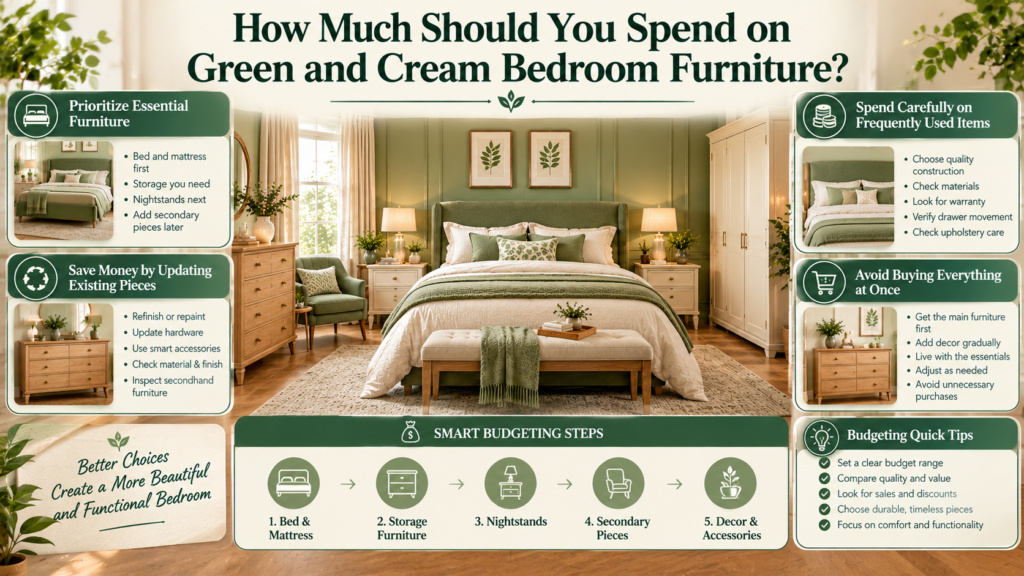
A realistic furniture budget depends on the number of items you need, the quality of materials, and whether you can reuse existing furniture. You do not need to replace every piece to create a cohesive green and cream bedroom.
Prioritize Essential Furniture
Start with the bed and mattress, followed by the storage furniture you genuinely need. Add nightstands after confirming the layout, then consider secondary pieces such as benches and accent chairs.
This order helps prevent decorative purchases from consuming the budget before essential needs are met.
Save Money by Updating Existing Pieces
If your dresser or bedside tables are structurally sound, consider whether a suitable refinish, new hardware, or carefully chosen accessories could bring them into the new palette.
Before repainting, confirm that the existing material and surface can accept the intended finish. Follow appropriate preparation and product instructions.
Secondhand furniture can also offer value, but inspect stability, drawer function, surface condition, and likely repair costs.
Spend Carefully on Frequently Used Items
A bed frame, dresser, or chair that receives regular use may justify a higher budget if the construction, materials, and warranty support the investment.
Look beyond appearance. Check stability, drawer movement, upholstery care, available replacement parts, and the manufacturer’s stated specifications.
Avoid Buying Everything at Once
If the budget is limited, establish the main furniture first and add decorative elements gradually. Living with the essential pieces for a short period can help you identify what the room actually needs.
You may discover that a chair is unnecessary or that a different storage arrangement would be more useful than another cabinet.
The most effective budget is one that supports comfort, functionality, and a cohesive appearance without encouraging unnecessary purchases.
15. How Can You Create a Complete Green and Cream Bedroom Furniture Plan?
A complete furniture plan brings together the bed, nightstands, dresser, wardrobe, and any secondary pieces before you begin shopping. Choose the main green shade, the preferred cream tone, and one principal wood finish, then use those choices to evaluate each item.
Example A: A Fresh Sage and Oak Bedroom
Choose a light oak bed, matching or coordinated bedside tables, and a cream dresser. Use sage green in the walls or a carefully selected accent chair.
This arrangement is suited to a relaxed modern bedroom. Cream bedding and understated accessories can keep the palette bright without making it feel sterile.
The main advantage is flexibility. You can change the bedding or smaller accents without needing to replace the main furniture.
Example B: A Traditional Olive and Walnut Bedroom
Choose a walnut bed and dresser, cream bedding, and muted olive accents. Add classic hardware and a restrained pattern if you prefer a traditional or preppy look.
The darker furniture introduces depth, while cream surfaces prevent the room from becoming too visually heavy.
This arrangement works particularly well when the room has enough light and space to support darker finishes.
Example C: A Pale Green and Cream Cottage Bedroom
Choose a white-painted or cream bed, a light wood nightstand, and a painted dresser with simple detailing. Use pale green on the walls or in selected textiles.
The result feels soft and welcoming without requiring ornate furniture. Natural materials and subtle patterns can introduce interest while preserving the calm color scheme.
Example D: A Small Green and Cream Bedroom
Choose a bed with suitable integrated storage, one or two compact nightstands, and a tall dresser or wardrobe where appropriate. Use light finishes on the larger pieces and introduce green through smaller accents.
Avoid adding a bench or accent chair unless the room has enough space for comfortable movement.
In a small room, a well-planned arrangement is more valuable than a large collection of furniture.
Example E: A Modern Green and Cream Bedroom
Choose a simple bed frame, plain-front dresser, coordinated nightstands, and restrained hardware. Use cream as the main neutral and introduce sage through one or two selected pieces.
The design should emphasize clean lines and practical storage. Decorative objects can be added later if the room needs more texture.
How Do You Turn the Plan Into a Shopping List?
Before purchasing, write down each item, its intended location, approximate dimensions, finish, and budget.
A useful checklist includes:
- Bed frame and mattress dimensions.
- Nightstand height and storage requirements.
- Dresser width, depth, and drawer capacity.
- Wardrobe dimensions and internal storage.
- Required clearance around doors and drawers.
- Main wood finish and upholstery color.
- Lighting and outlet requirements.
- Assembly, delivery, and maintenance considerations.
This list makes it easier to compare furniture without being distracted by products that do not suit your space.
What Color Furniture Looks Best in a Green and Cream Bedroom?
The best furniture colors for a green and cream bedroom are natural oak, warm walnut, cream, and soft white. The right choice depends on the shade of green, the room’s lighting, and the overall decorating style. Light oak creates a fresh, natural appearance, while walnut adds depth and works particularly well with darker green walls. Cream furniture provides a softer transition between the two main colors.
For a balanced design, consider the following combinations:
Sage green walls: Choose light oak, cream, or white furniture for a relaxed appearance.
Forest green walls: Use walnut or cream furniture to create contrast.
Cream walls: Introduce green through an accent dresser, upholstered headboard, or bedside tables.
Small bedrooms: Consider lighter furniture finishes to keep the room from feeling visually crowded.
Before purchasing furniture, compare the finishes with your existing flooring and bedding. Coordinated undertones are generally more important than making every piece exactly the same color.
How Do You Choose the Right Bed Frame for a Green and Cream Bedroom?
Choosing the right bed frame starts with three considerations: room dimensions, material, and the visual style you want to achieve. Since the bed is usually the bedroom’s main furniture piece, its finish influences how the remaining furniture looks together. A suitable frame should provide comfortable support while complementing the green and cream palette.
Consider these options when making your decision:
Light oak bed frames: Suitable for sage green, cream bedding, and natural interiors.
Cream upholstered beds: Ideal for introducing softness and creating an elegant focal point.
Walnut bed frames: Work well with forest green, ivory bedding, and traditional furniture.
White-painted beds: Complement pale green walls and classic cottage-inspired designs.
Measure the room before selecting a frame, including the space needed to move around the bed and open nearby drawers. Also consider the headboard height and whether the frame leaves enough room for comfortable bedside access.
The most effective choice is one that balances appearance, comfort, and everyday practicality rather than simply matching the rest of the furniture.
How Can You Make a Small Green and Cream Bedroom Look Spacious With the Right Furniture?
A small green and cream bedroom can feel more open when the furniture is appropriately sized, storage is carefully planned, and large surfaces use complementary light finishes. Cream furniture and natural wood can create a softer visual effect, while a few green accents provide character without overwhelming the room.
Start by prioritizing essential furniture instead of trying to fit every possible item into the space.
Choose a bed with integrated storage if it meets your needs and fits the layout.
Use compact nightstands or wall-mounted bedside shelves where suitable.
Consider a tall dresser or wardrobe when floor space is limited.
Select furniture with visible legs to maintain a lighter visual appearance.
Avoid oversized benches, chairs, and cabinets that obstruct walking routes.
Measure the room and check that doors and drawers can open comfortably before purchasing anything. A well-planned layout is often more effective than adding mirrors or decorative accessories in an attempt to make the bedroom appear larger.
The goal is to create enough storage and comfort without sacrificing the space needed for everyday movement.
Can You Mix Different Wood Finishes in a Green and Cream Bedroom?
Mixing wood finishes can make a green and cream bedroom feel more individual and thoughtfully furnished. You do not need to purchase a matching bedroom set, provided the different finishes complement the overall palette and have a clear relationship with one another.
For example, a light oak bed can work with medium-toned bedside tables and a cream dresser. A darker wooden frame or small accessory can add contrast without requiring every piece to use the same finish.
To create a coordinated result:
Choose one main wood tone for the largest furniture pieces.
Introduce a second wood finish where it adds warmth or contrast.
Compare undertones so that the finishes do not clash.
Repeat a wood tone in a few smaller details to connect the arrangement.
Balance darker furniture with cream bedding or lighter surfaces.
Lighting can change how wood finishes appear, so compare samples in your actual bedroom whenever possible. The objective is not perfect matching; it is a combination that looks intentional and works with the rest of the room.
How Do You Style Green and Cream Bedroom Furniture for an Elegant, Timeless Look?
An elegant green and cream bedroom depends on balanced proportions, complementary materials, practical storage, and restrained decoration. Rather than filling the room with matching furniture and accessories, choose a few well-coordinated pieces and allow their finishes and textures to create visual interest.
A natural wood bed, cream dresser, coordinated nightstands, and one muted green accent can provide a strong foundation. From there, introduce details that support the style without making the room feel crowded.
Use these practical styling principles:
Combine smooth wood with textured bedding or upholstered furniture.
Choose hardware that complements the furniture, such as understated brass-colored or black finishes.
Keep the dresser and nightstand surfaces functional rather than overcrowded.
Coordinate curtains and bedding with the furniture’s undertones.
Use lighting that complements the room’s colors and supports comfortable evening routines.
Prioritize durable materials and furniture that meets your actual storage needs.
You can also create an elegant result without replacing every existing piece. Updating suitable hardware, coordinating bedding, or introducing a carefully chosen accent can help bring older furniture into the new color scheme.
The key is consistency rather than excess: every furniture piece should contribute to the room’s comfort, function, or overall appearance.
Conclusion
Green and cream bedroom furniture ideas offer a practical way to create a bedroom that feels calm, coordinated, and timeless. The key to achieving a successful design is choosing furniture that complements the room’s color palette while supporting everyday comfort, storage, and functionality. Whether you prefer soft sage green accents, deep olive tones, warm wooden finishes, or classic cream furniture, the best choices are those that work naturally with your existing space.
Start with essential pieces such as the bed frame, nightstands, dresser, and wardrobe. Light wood and cream finishes can help create an airy atmosphere, while darker wood and muted green accents add depth and character. Instead of matching every piece perfectly, combine complementary finishes, textures, and shapes to create a bedroom that feels thoughtfully designed rather than overly coordinated. Pay attention to furniture scale, lighting, and layout so that even a small bedroom remains comfortable and easy to use.
For a more cohesive result, coordinate your furniture with bedding, curtains, rugs, and decorative accessories. Explore Green and Cream Preppy Room Ideas for additional inspiration, and use Green and Cream Room Styling to refine the finishing details. Before purchasing large furniture pieces, review Green and Cream Bedroom Layout Ideas to help arrange everything efficiently.
Ultimately, a beautiful green and cream bedroom does not require expensive furniture or a complete renovation. A thoughtful combination of functional pieces, balanced colors, natural textures, and personal details can transform an ordinary bedroom into a welcoming retreat. For more inspiration and practical decorating ideas, visit Preppy Room and create a bedroom that reflects your style while remaining comfortable, organized, and beautiful for years to come.