
Introduction
Green and Navy Plaid Room Ideas | Choosing bedding, curtains, and decorative accessories can be surprisingly difficult when you want a room to look coordinated without making everything match. Green and navy work beautifully together, but when you introduce plaid, the challenge becomes finding the right pattern, balancing darker shades, and deciding which other colors belong in the space.
Green and navy plaid room ideas offer a practical way to create an interior that feels classic, comfortable, and full of personality. The combination brings together the rich depth of navy, the natural character of green, and the traditional structure of plaid. It works particularly well in bedrooms, reading corners, dorm rooms, guest rooms, and relaxed living spaces.
The best results come from treating plaid as a design element rather than covering every surface with the same pattern. A plaid duvet cover can become the centerpiece of a bedroom, while a single cushion or throw can introduce the same style to a neutral living room.
If you’re still exploring the overall decorating style, Preppy Room offers a broader starting point for understanding classic patterns, coordinated color palettes, and preppy interior design.
In this guide, you’ll learn how to choose the right plaid, combine it with complementary colors, select furniture and accessories, decorate rooms of different sizes, mix patterns successfully, avoid common mistakes, and create a balanced interior without unnecessary spending.
What Are Green and Navy Plaid Room Ideas?
Green and navy plaid room ideas use intersecting lines and repeating checks in green and dark blue to introduce pattern, contrast, and traditional character into an interior. The design may also include cream, white, gray, or lighter blue lines, making it easier to coordinate with furniture, bedding, and decorative accessories.
Plaid can appear on large surfaces, such as bedding and curtains, or in smaller details, such as cushions, throws, and upholstered chairs. The right placement depends on the size of the room and how prominent you want the pattern to be.
Why does green and navy plaid look so appealing?
The two main colors contribute different qualities.
- Navy blue provides depth and a structured, traditional appearance.
- Green introduces a natural element and can soften the intensity of dark blue.
- Cream and white create contrast and help the plaid remain visually clear.
- Wood adds warmth through natural grain and texture.
- Brass accents introduce a subtle warm finish.
Together, these elements can create a room that feels traditional without being outdated.
For example, a forest-green and navy plaid comforter can look refined with cream sheets, a wooden bed frame, and simple bedside lamps. In a living room, two plaid cushions on a neutral sofa can create a similar effect without requiring new furniture.
The main principle is simple: let the plaid establish the style, then use the surrounding colors and materials to support it.
Creating a Stylish Green and Navy Patterned Bedroom
Patterns can transform a bedroom by adding texture, personality, and the timeless charm associated with classic preppy interiors. Green and navy are particularly suitable for patterned designs because their contrasting tones create visual interest while maintaining a coordinated appearance. You can introduce these colors through striped bedding, plaid cushions, gingham curtains, floral fabrics, or decorative wallpaper. For example, a green and navy patterned duvet can become the bedroom’s main focal point when paired with cream sheets, simple bedside furniture, and understated accessories. If you prefer a more subtle design, use patterned cushions or a decorative throw against solid-colored bedding. Mixing different prints can also work well, provided you vary their scale and maintain a consistent color palette. A larger plaid pattern, for instance, can be balanced with narrow stripes and smaller decorative details. Neutral shades such as ivory, beige, and white help prevent the room from feeling overcrowded, while natural wood and soft textures add warmth. Before choosing your patterns, consider the room’s lighting, existing furniture, and the overall atmosphere you want to create. For more decorating inspiration, explore our guide to the green and navy patterned bedroom, which offers another direction for incorporating coordinated prints into a preppy space. By combining patterns thoughtfully and allowing simpler elements to balance the design, you can create a bedroom that feels inviting, cohesive, and timeless.
Which Green and Navy Plaid Pattern Should You Choose?
Not all plaid designs have the same visual effect. Some use large blocks of color, while others feature fine lines and closely spaced checks. Choosing the right scale and structure can make the difference between a balanced room and one that feels overly busy.
| Plaid style | Appearance | Best applications |
|---|---|---|
| Traditional tartan | Multiple intersecting lines and colors | Bedding, throws, accent chairs |
| Windowpane plaid | Open grid with widely spaced lines | Curtains, cushions, upholstery |
| Buffalo check | Large, bold squares | Throws, casual seating |
| Fine-scale plaid | Small checks and closely spaced lines | Cushion covers, smaller accents |
| Multicolor plaid | Several intersecting shades | Statement bedding or a feature textile |
Traditional tartan for a classic bedroom
Traditional tartan is a strong option when you want a rich, established appearance. It often contains several related colors, which makes it useful for connecting green and navy with cream, gray, or muted blue.
Choose tartan bedding if you want the pattern to define the room. Keep the headboard, walls, and most of the surrounding textiles relatively simple so the design remains the main feature.
Windowpane plaid for a lighter look
Windowpane plaid uses open space between its intersecting lines. This makes it a useful choice when you want the structure of plaid without the visual density of a traditional multicolor check.
It works particularly well on curtains, cushions, and upholstered furniture in rooms with a modern or understated style.
Buffalo check for a bolder statement
Buffalo check has large, clearly defined squares. It tends to look more casual and noticeable than fine plaid.
Use it on a throw, accent cushion, or occasional chair. If you choose it for bedding, consider keeping the other textiles solid so the checks don’t dominate the entire room.
Pro Tip: Before purchasing plaid fabric, look at it from both close up and across the room. A pattern that appears subtle in a product photograph may look much stronger when it covers a full bed or window.
Adding Classic Charm With Green and Navy Gingham Decor
Gingham is a timeless pattern that brings a neat, traditional character to preppy interiors. When green and navy are combined in a checkered design, the result can feel both refreshing and sophisticated without requiring excessive decoration. This pattern works particularly well in bedrooms, study areas, and cozy living spaces where small fabric details can make a noticeable difference. You can introduce green and navy gingham through cushions, bedding, curtains, table linens, or decorative accessories, depending on the room’s existing color scheme. For example, gingham cushions can add visual interest to solid navy bedding, while cream sheets and neutral curtains help maintain a balanced appearance. If you want a more understated effect, use the pattern in one or two accent pieces rather than covering several surfaces with checks. Gingham can also complement classic preppy patterns such as stripes and subtle florals, provided the colors coordinate and the prints vary in scale. Pairing patterned fabrics with natural wood, simple furniture, and soft neutral textures can further enhance the overall look. For more inspiration on using this traditional print throughout your interior, explore our guide to green and navy gingham decor. With thoughtful placement and a balanced mix of patterns and solid colors, you can create a welcoming space that feels polished, timeless, and full of preppy character.
15 Green and Navy Plaid Room Ideas to Inspire Your Decorating
The most useful decorating ideas are those that show where the pattern belongs, which colors should accompany it, and how to make the arrangement work in everyday life.
1. Create a Classic Green and Navy Plaid Bedroom
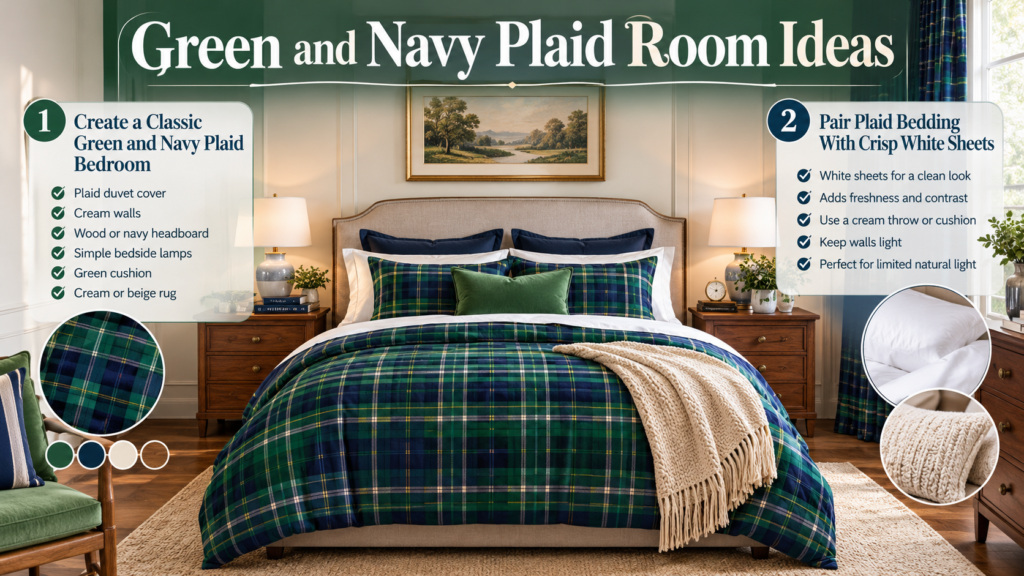
A plaid bedroom is one of the easiest ways to establish this color combination because the bed provides a natural focal point.
Choose a forest-green and navy plaid duvet cover, then layer it with cream sheets and solid-color pillowcases. A simple upholstered or wooden headboard will help the bedding stand out without competing with it.
Complete the arrangement with:
- Warm white or cream walls.
- A natural wood or navy headboard.
- Simple bedside lamps.
- One solid green cushion.
- A cream or beige rug.
This combination creates a traditional preppy appearance without making the room feel like a matching furniture set.
The most important decision is the bedding pattern. If it already contains several shades, you probably won’t need additional patterned curtains or a heavily decorated rug.
2. Pair Plaid Bedding With Crisp White Sheets
White sheets provide a clean background for green and navy plaid. They make the darker lines look more defined and help the bed feel fresh rather than visually dense.
This combination works especially well when the duvet contains forest green and deep navy.
To make the arrangement more comfortable, add a cream throw or a textured neutral cushion. The small difference between white and cream can introduce warmth without adding another strong color.
If your room has limited natural light, keep the walls and larger surrounding surfaces relatively light. This allows the plaid to create contrast without making the entire space feel dark.
3. Use Cream Bedding for a Softer Traditional Look
Cream is an excellent alternative to crisp white when you prefer a warmer atmosphere.
Pair a green and navy plaid comforter with cream pillowcases, a neutral upholstered headboard, and wooden bedside tables. The cream reduces the sharpness of the contrast while preserving the richness of the darker colors.
This approach is particularly suitable for guest bedrooms and traditional interiors.
Expert Tip: If your plaid contains cream lines, repeat that shade in at least one other visible element, such as the curtains, rug, or lampshade. This small connection can make the overall arrangement feel more deliberate.
4. Decorate a Neutral Sofa With Plaid Cushions
You don’t need a bedroom to enjoy green and navy plaid. In a living room, a pair of plaid cushions can introduce traditional character to a cream, beige, or light gray sofa.
Combine them with solid navy or muted green cushions, but avoid making every cushion patterned.
A practical arrangement might include two plaid cushions, one solid navy cushion, and a plain cream throw. This provides contrast without overwhelming the seating area.
The advantage is flexibility. You can move the cushions to another chair, change the arrangement, or store them when you want a simpler look.
5. Add a Green and Navy Plaid Throw Blanket
A plaid throw is a low-commitment way to introduce the pattern into an existing room.
Drape it over an armchair, fold it at the foot of a bed, or place it in a basket beside a reading corner. Choose a fabric that suits the season and the room’s intended use.
Cotton blends can be practical for everyday use, while thicker, wool-like textures may be more suitable for cooler weather.
Keep the surrounding textiles simple. A throw already creates a recognizable patterned area, so it doesn’t need several competing prints nearby.
6. Combine Plaid With Forest-Green Walls
Forest-green walls create a rich background for navy and green plaid, particularly when the room has enough natural light and lighter surfaces.
Consider painting the wall behind the bed rather than every wall. Then introduce plaid through the duvet cover or a single decorative textile.
Balance the darker colors with cream bedding, warm lighting, and natural wood furniture.
This approach works best when you want a traditional, slightly dramatic room. If the room is small or receives little daylight, use a lighter green or introduce more cream and white to maintain visual openness.
7. Create a Preppy Dorm Room With Plaid Bedding
A green and navy plaid bedding set can help a dorm room feel coordinated without requiring a complete makeover.
Use the bedding as the central pattern and introduce the colors through practical accessories, such as a navy desk organizer, a green storage basket, or a cream lamp.
Choose washable textiles and easy-to-store decorations, particularly if the room has limited space.
A simple dorm arrangement could include plaid bedding, solid cream pillows, a navy throw, and a small piece of coordinating artwork. These few elements are enough to establish a recognizable theme.
8. Use Plaid Curtains as a Statement Feature
Plaid curtains can create a strong decorative feature in a room with plain walls and simple furniture.
Choose a pattern that relates to the existing palette. If the room already contains dark navy furniture, a plaid with more cream or muted green may help balance the window area.
Before buying curtains, consider the size of the pattern and the weight of the fabric. Large checks can become visually dominant across wide windows, while finer plaid may feel more restrained.
Repeat one color from the curtains in a cushion, throw, or small accessory to connect the window treatment to the rest of the room.
9. Style a Cozy Reading Nook With Plaid
A reading nook provides a smaller area where plaid can be used confidently.
Choose a comfortable chair in navy, forest green, or a neutral fabric. Add a plaid cushion or throw, a wooden side table, and a suitable reading lamp.
The combination of patterned fabric, warm wood, and soft lighting creates a comfortable corner without requiring numerous decorations.
If space is limited, keep the arrangement practical. One chair, one side table, one light, and a small selection of books can be enough.
10. Mix Green and Navy Plaid With Stripes
Plaid and stripes can work together because both patterns use lines. However, they should differ in scale or visual intensity.
For example, pair a medium-scale plaid cushion with narrow navy stripes on a cream background. The shared colors connect the designs, while the difference in structure keeps them from looking identical.
Use one pattern as the main feature and the other as a supporting detail.
For more guidance on selecting and coordinating patterns, explore Green and Navy Preppy Patterns.
11. Combine Plaid With Natural Wood Furniture
Natural wood is one of the easiest materials to combine with green and navy plaid because it introduces warmth without adding another strong color.
Light oak can create a relaxed, contemporary appearance, while walnut tends to feel richer and more traditional.
For a bedroom, try plaid bedding with a wooden bed frame, cream curtains, and a neutral rug. In a living room, combine plaid cushions with a wooden coffee table and understated shelving.
The wood doesn’t have to match every other wooden item exactly. A consistent overall warmth is generally more important than identical finishes.
12. Create a Navy Home Office With Plaid Accents
A home office can use green and navy plaid without becoming visually distracting.
Consider a plaid chair cushion, a folded throw on a reading chair, or a small upholstered seat. Pair it with a simple desk, organized storage, and warm wood.
If you use navy on the walls or in a large furniture piece, make sure the desk has adequate lighting and the surrounding surfaces remain functional.
The pattern should add character rather than compete with the work area.
13. Use Plaid in a Small Bedroom
In a small bedroom, the easiest approach is to use plaid on one main item and keep the remaining surfaces relatively simple.
Choose a plaid duvet cover or throw, then combine it with light walls, neutral bedding layers, and compact furniture.
Avoid repeating the same bold pattern across curtains, bedding, cushions, and upholstered furniture. Too much high-contrast plaid can overwhelm the limited visual space.
The goal isn’t to avoid dark colors entirely. It’s to give them a clear role and balance them with lighter materials.
14. Create a Guest Bedroom With Plaid Accents
A guest bedroom should feel welcoming and easy to use. Green and navy plaid can add character without requiring a highly personalized decorating theme.
Use plaid on the duvet or a folded blanket, then choose solid neutral sheets and comfortable pillows. Add a bedside lamp, accessible storage, and a clear surface for guests’ belongings.
A traditional plaid can make the room feel thoughtfully styled, while the neutral layers keep it adaptable for different visitors.
15. Use Plaid in a Modern Preppy Interior
Plaid doesn’t have to make a room look old-fashioned. It can work well with streamlined furniture, simple lighting, and uncluttered surfaces.
Choose one plaid textile and pair it with clean-lined furniture, warm white walls, and a restrained color palette.
For example, a navy sofa with a green and navy plaid cushion can look contemporary when combined with a simple oak table and understated artwork.
The key is to let the pattern provide the traditional character while the furniture and layout keep the room feeling current.
Which Colors Work Best With Green and Navy Plaid?

The best supporting colors depend on the shades already present in the plaid. A pattern containing deep forest green and navy needs a different balance from one featuring sage, pale blue, and cream.
The easiest starting point is to identify the lightest color in the fabric and repeat it elsewhere in the room. This helps create a connection between the pattern and the surrounding furniture.
| Supporting color | Overall effect | Best applications |
|---|---|---|
| Warm white | Fresh and bright | Walls, sheets, curtains |
| Cream | Soft and traditional | Bedding, rugs, upholstery |
| Beige | Relaxed and understated | Rugs, cushions, throws |
| Sage green | Gentle and coordinated | Curtains, cushions, occasional furniture |
| Dusty blue | Softens the contrast | Small cushions, artwork |
| Natural wood | Warm and grounded | Bed frames, tables, shelves |
| Brass | Adds a warm decorative accent | Lamps, handles, frames |
| Muted gray | Creates a cooler, quieter look | Upholstery, rugs, bedding |
Should you choose forest green, sage, olive, or emerald?
Each green shade produces a different atmosphere when combined with navy.
Forest green is suitable for traditional rooms with warm wood, cream, and brass. It works particularly well when you want the plaid to feel rich and established.
Sage green is softer and more understated. It is useful in bedrooms where you want a relaxed appearance without introducing too many dark surfaces.
Olive green has a warmer, earthy quality. Combine it with beige, walnut, and cream for a comfortable, less formal interior.
Emerald green creates a stronger accent. Rather than using it across every large surface, consider introducing it through a cushion, chair, or decorative object.
The plaid itself should guide the decision. If the pattern already contains a saturated forest green, adding emerald accessories may create unnecessary competition.
How much green, navy, and cream should you use?
The 60-30-10 decorating guideline is a useful starting point for distributing color.
- 60% dominant color: Usually a light neutral such as cream or warm white.
- 30% secondary color: Green or navy across bedding, furniture, or curtains.
- 10% accent color: A smaller supporting shade or a warm decorative finish.
These proportions are not strict rules. Plaid combines several colors within one textile, so the visual effect matters more than exact percentages.
For example, a cream bedroom with a navy headboard and green-and-navy plaid bedding may already feel balanced. Adding more green and navy to every accessory could make the room unnecessarily busy.
Quick Tip: Before purchasing additional decorations, stand at the doorway and look at the room as a whole. Identify whether the plaid feels too dominant, too small, or appropriately balanced. Make your next decorating decision based on what is actually missing.
Using Green and Navy Stripes to Enhance Your Room Decor
Stripes are a classic design element that can bring structure, visual interest, and timeless preppy charm to an interior. When green and navy are combined in striped fabrics or decorative details, they create a coordinated look that works particularly well in bedrooms, study spaces, and traditional living areas. You can introduce stripes through bedding, curtains, cushions, rugs, wallpaper, or upholstered furniture, depending on how prominent you want the pattern to be. For example, navy and green striped bedding can serve as a focal point when paired with cream sheets and simple decorative accessories. In a living room, striped cushions or a throw can add character without requiring major changes to the existing furniture. The scale of the stripes also influences the result: wider stripes create a bolder statement, while narrow stripes offer a more subtle and tailored appearance. To keep the room balanced, combine striped pieces with solid-colored fabrics and repeat the same shades in a few carefully selected accessories. You can also introduce plaid or gingham accents, provided the patterns complement one another rather than compete for attention. If you want to discover more ways to use this classic pattern, explore our guide to green and navy striped room ideas. By combining thoughtful pattern placement with suitable textures and neutral accents, you can create a stylish interior that feels cohesive, comfortable, and unmistakably preppy.
How Do You Mix Plaid With Other Patterns Without Creating Clutter?
Pattern mixing works when the designs have a clear visual hierarchy. Green and navy plaid can complement stripes, small florals, checks, and subtle geometric prints, provided each pattern has a different role.
The easiest method is to choose one dominant pattern, one secondary pattern, and solid colors for the remaining large surfaces.
Plaid and stripes
Plaid and stripes are a natural pairing because both use intersecting or parallel lines.
For example, use green and navy plaid bedding with a small cushion featuring narrow navy stripes on cream. The colors relate, but the patterns are different enough to create interest.
Avoid combining a very large plaid with equally broad, high-contrast stripes across several large surfaces.
Plaid and botanical prints
Botanical prints introduce organic shapes that contrast with plaid’s straight lines.
A green botanical cushion can complement navy-and-green plaid bedding, particularly when the floral design contains a lighter background.
Keep one pattern more noticeable than the other. If the plaid is bold, choose a smaller or more subdued botanical print.
Plaid and gingham
Gingham uses repeating checks, making it visually related to plaid. The combination can look charming in traditional or playful rooms, but the patterns need enough contrast in scale.
A larger plaid blanket paired with a small gingham cushion can work well. Two equally bold check patterns may be more difficult to balance.
Plaid and geometric designs
Geometric patterns can introduce a more contemporary appearance.
Choose a simple design that shares navy, green, or cream with the plaid. A subtle geometric rug can support the bedding without repeating its exact structure.
What is the safest pattern-mixing formula?
Use this simple arrangement:
- One main plaid textile.
- One smaller supporting pattern.
- Two or three solid-color elements.
- Natural materials for additional texture.
For example, a bedroom might have plaid bedding, a narrow-striped cushion, cream curtains, a plain rug, and a wooden nightstand.
This combination has enough variety to feel layered without requiring every item to be patterned.
Common Mistake: Assuming that patterns will work together simply because they share the same colors. Scale, contrast, and the amount of pattern are equally important.
What Furniture Works Best With Green and Navy Plaid?
Furniture determines how the plaid reads within the room. Light furniture can make the combination feel fresh, while dark furniture creates a richer, more traditional atmosphere.
White furniture
White furniture is useful when the room already contains substantial amounts of navy or forest green. A white bed frame, desk, or chest of drawers creates a lighter contrast.
This is especially practical in smaller bedrooms and dorm rooms.
Light wood furniture
Light oak and similar wood finishes introduce warmth without adding another strong color.
They work particularly well with sage green, cream, and navy plaid. A light wooden bed frame can also prevent a dark comforter from becoming the only prominent element in the room.
Medium and dark wood
Walnut and other medium-to-dark wood finishes create a more traditional appearance.
They can look particularly effective with forest green, navy, and cream. However, if the flooring, furniture, and bedding are all dark, introduce lighter textiles to maintain balance.
Upholstered furniture
A solid navy or green upholstered chair can complement plaid cushions or a throw. The solid fabric allows the plaid to remain visually distinctive.
If you already have patterned upholstery, check whether the existing design competes with the plaid before introducing another large print.
Should furniture match the plaid exactly?
No. Furniture doesn’t need to contain the same pattern or even the exact shades of green and navy.
A coordinated room usually looks more natural when the colors repeat across different materials. For example, the plaid may contain forest green, the chair may be muted green, and the curtains may be cream.
The relationship between these elements is more important than identical matching.
How Can You Decorate Green and Navy Plaid Rooms on a Budget?
You don’t need to replace your furniture or purchase an entire matching collection to achieve this look. Start with one textile and use the items you already own to support it.
Begin with one affordable plaid item
A cushion cover, throw blanket, or set of pillowcases can introduce the pattern at a manageable cost.
If you’re decorating a bedroom, you can begin with existing cream sheets and a wooden bed frame. Add the plaid item first, then decide whether the room needs anything else.
Reuse existing furniture
White desks, wooden bedside tables, neutral chairs, and simple shelving can work well with green and navy.
Before buying new furniture, consider whether changing the bedding, cushion covers, or small accessories would produce the desired result.
Change cushion covers instead of buying new cushions
If your existing cushions are in good condition, replace the covers rather than the inserts. Choose one plaid cover and combine it with solid navy, cream, or muted green.
This approach makes it easier to change the style later without replacing the entire collection.
Use artwork to repeat the palette
Artwork can connect the colors without requiring additional patterned fabric.
A botanical print, a navy-and-white illustration, or a simple landscape can complement the plaid. You don’t need every piece of artwork to include both colors.
Add texture before adding more color
If the room feels flat, try a woven basket, textured throw, or natural wood accessory before introducing another accent shade.
Texture creates visual interest without expanding the color palette unnecessarily.
Budget Tip: Complete the room in stages. Buy the main plaid item first, assess the result, and add only the pieces that solve a clear decorating problem.
A Practical Step-by-Step Plan for Decorating With Green and Navy Plaid

If you’re unsure where to begin, follow this sequence. It helps you make decisions in a logical order and prevents small purchases from turning into an unrelated collection of decorations.
Step 1: Decide what the room needs
Identify whether the room needs a focal point, more warmth, a stronger color scheme, or a more traditional appearance.
If the furniture and layout already work well, you may only need a plaid textile and a few supporting colors.
Step 2: Choose the main plaid item
Decide whether the pattern will appear on the bedding, curtains, cushions, or an accent chair.
Choose an item that suits the room’s function and that you can maintain comfortably.
Step 3: Identify the colors in the fabric
Look for the dominant green, the depth of the navy, and any lighter lines within the plaid.
Use these details to select complementary accessories rather than relying on generic color names.
Step 4: Establish the neutral foundation
Choose a supporting neutral that works with the existing walls and furniture.
Cream can soften a traditional palette, while white can create a fresher contrast. Beige may be helpful when the room contains warm wood or earthy green shades.
Step 5: Arrange the largest furniture pieces
Place the bed, sofa, or main chair first. Consider how much of the plaid will be visible from the doorway and from the room’s main seating or viewing position.
The pattern should be easy to appreciate rather than hidden behind other objects.
Step 6: Repeat the colors selectively
Introduce green and navy through a small number of accessories.
For example, a plaid duvet could be supported by a navy cushion, a green decorative object, and cream curtains.
Step 7: Add texture
Use cotton, linen, woven materials, wood, and upholstery to create variety without introducing additional bold patterns.
Step 8: Review the lighting
Check how the colors look during daylight and under the room’s usual lamps.
Navy can appear nearly black in dim conditions, and some greens may look different under warm artificial lighting.
Step 9: Remove unnecessary decorations
Look at the room again and identify anything that competes with the main pattern.
Removing an unnecessary cushion or decorative object can improve the arrangement more effectively than buying something new.
Step 10: Make final adjustments
Only after the main elements work together should you consider additional artwork, small accessories, or another pattern.
The aim is a room that feels complete, not a room that contains as many coordinating objects as possible.
What Do Interior Styling Professionals Recommend?
A successful plaid room depends on proportion, pattern scale, and the relationship between the textiles and the furniture. Professional-style decorating focuses on making the main elements work together rather than filling every available surface with accessories.
Start with the largest patterned surface
In a bedroom, this is often the duvet or comforter. In a living room, it may be a plaid throw or a pair of cushions.
Choose the main pattern first because it determines which supporting colors and materials are likely to work.
Repeat colors in different materials
If your plaid contains navy, forest green, and cream, repeat those shades through different objects.
For example, use navy on a lampshade, green in a cushion, and cream in the curtains. This creates a connection without making every item identical.
Consider the viewing distance
A small-scale plaid may look detailed up close but appear almost solid from across the room. A large check may become the most noticeable feature immediately.
Think about how the pattern will look from the doorway, beside the bed, and from the main seating area.
Use lighting to your advantage
Natural daylight and artificial lighting can change how green and navy appear. Test fabric samples in the actual room before purchasing expensive bedding or curtains.
If the room feels too dark, consider changing the placement or amount of the darker colors before introducing additional shades.
Leave some surfaces visually quiet
Plain bedding, simple walls, and uncluttered furniture help plaid stand out.
These quieter areas are an important part of the design because they prevent the room from feeling crowded.
For more overall decorating inspiration beyond plaid-specific styling, return to Preppy Room to explore the broader relationship between classic colors, patterns, and interior design.
How do you decorate a room with green and navy plaid without making it look too busy?
The key to decorating with green and navy plaid is to balance the pattern with solid colors, simple furniture, and a few carefully selected accessories. Plaid naturally attracts attention because it combines intersecting lines and multiple color blocks. When too many patterned items compete in one room, the overall design can feel crowded rather than coordinated.
Start with one main plaid element, such as bedding, an accent cushion, a throw blanket, or an upholstered chair. Then introduce solid forest green, navy blue, warm white, or cream across the remaining surfaces. Neutral colors give the eye a place to rest while allowing the plaid to remain the focal point.
Professional decorating tips:
Choose one dominant plaid pattern: Make the largest patterned item the foundation of the design.
Balance patterns with solids: Pair plaid bedding with plain navy cushions or cream sheets.
Keep large furniture simple: Neutral upholstery and clean silhouettes help maintain visual balance.
Repeat colors selectively: Bring the same green and navy shades into two or three smaller accessories for a coordinated finish.
The most successful green and navy plaid room ideas feel intentional rather than overly decorated. A consistent palette and controlled pattern placement can create a polished, classic preppy interior.
What colors go best with green and navy plaid in a bedroom?
Green and navy plaid works particularly well with cream, ivory, warm white, beige, natural wood, and muted metallic accents. These complementary shades help soften the contrast between green and navy while creating a bedroom that feels comfortable and visually balanced.
Cream and ivory are especially useful for bedding, curtains, rugs, and wall colors because they brighten the room without competing with the plaid. Natural wood introduces warmth, while brushed brass or aged gold can add a refined decorative detail. For a softer atmosphere, sage green can balance deeper navy tones; for a richer look, forest green and emerald accents reinforce the traditional preppy style.
Color combinations worth considering:
Green and navy with cream: A timeless combination for bedding, walls, and traditional furniture.
Green and navy with warm beige: Adds a relaxed, inviting quality to the room.
Green and navy with natural wood: Creates warmth and prevents the palette from feeling too cool.
Green and navy with brass: Introduces a subtle, elegant accent through lamps, handles, or picture frames.
Green and navy with soft sage: Creates a gentler layered-green effect without abandoning the main palette.
For a cohesive result, use green and navy as the defining colors, then select one or two supporting shades. This keeps the room visually connected and makes it easier to update accessories later.
How can you mix green and navy plaid with other patterns in a preppy room?
Mixing patterns successfully depends on varying their scale, visual weight, and placement. Green and navy plaid can work beautifully with stripes, gingham, small florals, and understated geometric designs, but each pattern should have a clear role in the overall composition.
For example, a large plaid duvet cover can serve as the main statement, while narrow navy-and-white stripes appear on cushions. A small floral print or subtle gingham detail can provide additional character without competing with the bedding. Repeating at least one shared color across the patterns helps the room feel coordinated.
A practical pattern-mixing approach:
Start with the largest pattern: Use green and navy plaid on the bedding, a chair, or another dominant feature.
Add a contrasting scale: Introduce smaller stripes or a fine geometric pattern.
Keep the color palette consistent: Navy, green, cream, and white can connect different prints.
Include solid surfaces: Plain curtains, cushions, or bedding layers create visual breathing room.
Limit competing statement patterns: Two or three thoughtfully chosen prints are often easier to coordinate than numerous bold designs.
The goal is not to make every pattern match exactly. Instead, the patterns should complement one another through color, scale, and style. This approach preserves the lively character of preppy decorating while keeping the room comfortable and sophisticated.
Are green and navy plaid room ideas suitable for small bedrooms and dorm rooms?
Green and navy plaid can work very well in small bedrooms and dorm rooms when the pattern is used strategically. You do not need a large space to create a classic preppy look; the important factors are the amount of pattern, the balance of light and dark colors, and how efficiently the room is arranged.
In a compact bedroom, plaid bedding or a single accent cushion can establish the theme without requiring additional furniture or extensive decorating. Cream sheets, light-colored walls, and simple window treatments help prevent the darker shades from visually dominating the space. In a dorm room, removable accessories such as pillow covers, throws, and desk organizers can introduce the palette without permanent changes.
Space-conscious decorating tips:
Use plaid as an accent: Choose one prominent patterned item instead of covering every surface.
Keep the background light: Cream, ivory, or soft white can help the room feel open.
Choose multifunctional accessories: Storage baskets, under-bed organizers, and practical bedside storage reduce clutter.
Repeat the palette in small details: A navy desk accessory or green cushion can connect the room without adding more large patterns.
Avoid unnecessary furniture: Allow enough clear space around the bed and main walking areas.
For a dorm room, plaid bedding combined with simple solid-color accessories is an especially practical starting point. It creates a recognizable style while leaving room for personal items and everyday activities.
What is the best way to create a timeless green and navy plaid room on a budget?
The most effective budget-friendly approach is to build the room around a few versatile pieces rather than purchasing a complete matching collection. Green and navy plaid is a distinctive pattern, so even one well-chosen item can establish the look when the surrounding colors and accessories support it.
Begin by deciding where the plaid will have the greatest impact. Bedding is a practical choice for a bedroom, while a cushion or throw can work well in a living area or reading nook. Keep existing furniture if it fits the desired style, and use affordable accessories to connect the color palette. Neutral sheets, simple curtains, and a coordinated lamp shade may contribute more to the finished appearance than several additional patterned objects.
Budget priorities:
Invest in the main patterned item: Choose a plaid piece that works with several solid colors.
Reuse existing furniture: Wooden bedside tables, desks, and neutral chairs can complement the palette.
Refresh accessories first: Cushion covers, throws, and small decorative items can change the atmosphere without a full makeover.
Shop with a color plan: Compare green and navy shades before purchasing so the pieces work together.
Decorate in stages: Complete the main color scheme first, then add artwork and smaller accents when needed.
A timeless room depends more on proportion, coordination, and practical choices than on the number of decorative items. By combining one strong plaid feature with versatile basics, you can create a polished green and navy preppy room that remains easy to update over time.
Conclusion
Green and navy plaid room ideas offer a timeless way to bring classic preppy style, rich color, and visual character into a bedroom, dorm room, or comfortable living space. The combination of deep navy and refreshing green creates a balanced foundation that can feel traditional, modern, cozy, or sophisticated depending on the patterns, furniture, and accessories you choose.
The secret to achieving a well-designed room is to use plaid thoughtfully rather than covering every surface with the same pattern. Start with one statement piece, such as plaid bedding, an accent cushion, or a throw blanket, and complement it with solid green, navy, cream, or warm white. Natural wood, soft lighting, and carefully selected decorative accessories can add warmth and make the entire space feel more inviting.
For the best results, pay attention to pattern scale, color proportions, and the room’s practical needs. Small bedrooms benefit from lighter backgrounds and limited patterned accents, while larger spaces can accommodate more layered designs. You can also introduce stripes, gingham, or subtle florals to create a distinctive preppy aesthetic, provided the colors remain coordinated.
Ultimately, a successful green and navy plaid room does not depend on expensive furniture or excessive decoration. It comes from thoughtful choices, balanced patterns, and a consistent color scheme that reflects your personal style. Whether you are refreshing a single corner or redesigning an entire bedroom, this classic combination provides a versatile foundation for creating a space that feels welcoming, polished, and enduring.
Think
To pick up a draggable item, press the space bar. While dragging, use the arrow keys to move the item. Press space again to drop the item in its new position, or press escape to cancel.