Introduction
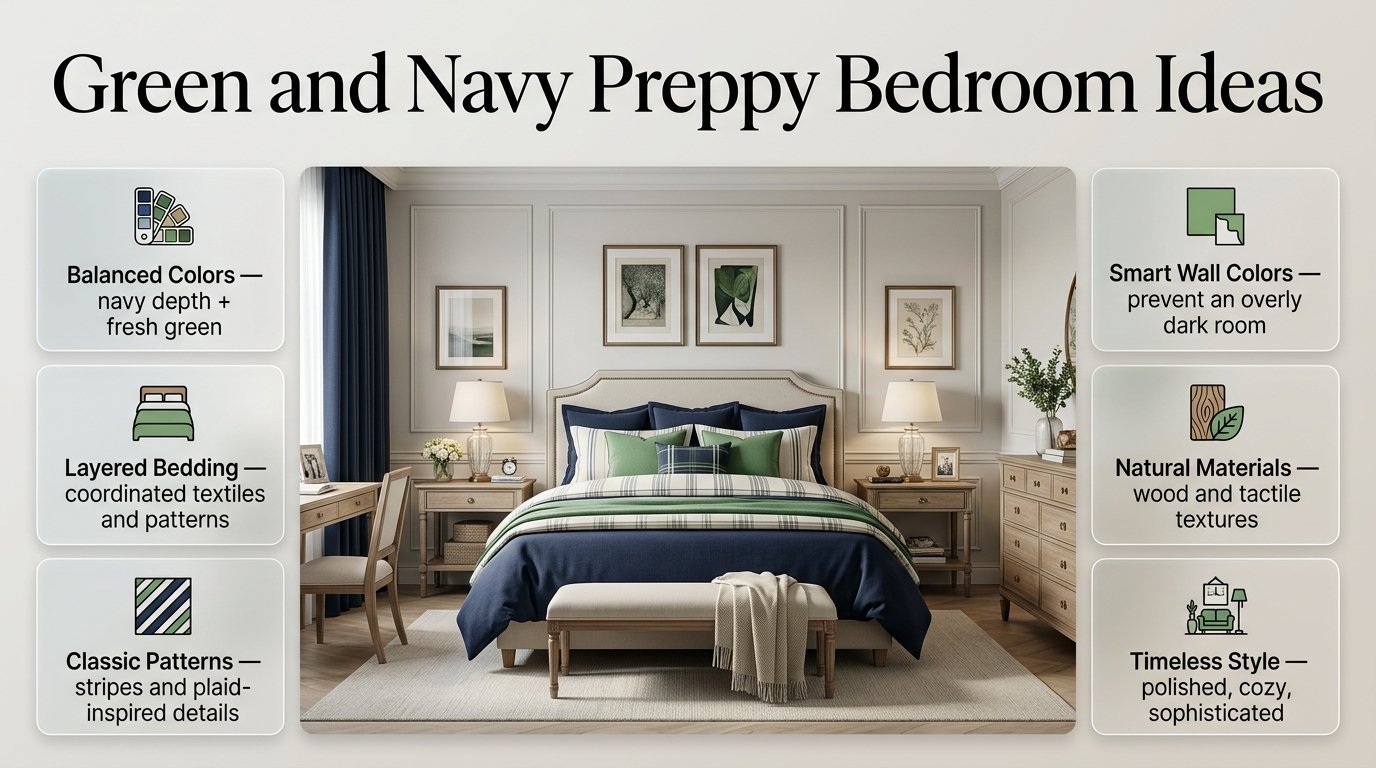
Green and Navy Preppy Bedroom Ideas | A bedroom can look polished without feeling overly formal, and that’s exactly why green and navy preppy bedroom ideas are becoming such a strong choice for people who want a room with personality, structure, and timeless style. The combination of rich navy and fresh green creates a balanced look that can feel classic, youthful, sophisticated, cozy, or modern depending on the shades, patterns, and furniture you choose.
The challenge is knowing how to combine these colors without making the bedroom feel too dark or visually busy. Navy can quickly become heavy when used everywhere, while green can dominate if the shade is too saturated. The key is to give each color a clear role and then connect them through textiles, patterns, artwork, and natural materials.
If you’re building the overall style of your room from the ground up, you can also explore Preppy Room for broader decorating inspiration.
In this guide, you’ll learn how to create a green and navy preppy bedroom, which shades work best together, how to choose bedding and wall colors, how to use stripes and plaids, what furniture works with the palette, and which common mistakes can make the room feel unbalanced.
What Makes a Green and Navy Preppy Bedroom Work?
A green and navy preppy bedroom works because the two colors provide contrast without looking disconnected. Navy brings depth and structure, while green adds freshness and natural character. The preppy element comes from classic patterns, tailored furniture, traditional details, and carefully repeated colors rather than from using every decorative trend at once.
The strongest rooms usually have one dominant color, one supporting color, and one or two neutral tones.
For example:
| Element | Recommended Color |
|---|---|
| Walls | Soft cream or light green |
| Bed | Navy or natural wood |
| Bedding | White, cream, navy, and green |
| Curtains | Cream or subtle green |
| Accent pieces | Navy and green |
| Metal details | Brass or aged gold |
| Natural elements | Wood, rattan, plants |
This approach prevents the bedroom from becoming a simple two-color box.
Why the Color Balance Matters
Navy is visually strong. Green can also be strong depending on the shade. If both are used across large surfaces equally, the room may feel darker than expected.
A better approach is to establish hierarchy.
For example:
60% neutral foundation → 30% dominant color → 10% accent color
You don’t have to follow this formula mathematically. Think of it as a visual guide.
A cream wall, navy bed, green cushions, and patterned bedding can create much more balance than navy walls, green curtains, green bedding, and navy furniture all competing for attention.
Pro Tip: When you’re unsure which color should dominate, make navy the structural color and green the refreshing accent. This is one of the easiest combinations to control.
Which Shades of Green Work Best With Navy?
Not every green creates the same atmosphere with navy. The right shade depends on the amount of natural light, room size, furniture, and the overall mood you want.
Sage Green and Navy
Sage green is one of the easiest choices for a relaxed preppy bedroom.
It has a muted quality that prevents the room from becoming overly colorful. Sage works especially well with cream bedding, natural wood, woven textures, and antique-style brass.
Try sage on:
- Accent walls
- Quilts
- Curtains
- Throw pillows
- Artwork
- Upholstered furniture
Sage is particularly useful when you want a bedroom that feels calm rather than dramatic.
Emerald Green and Navy
Emerald creates a richer and more luxurious appearance.
Because both emerald and navy have strong visual weight, use them carefully. An emerald upholstered headboard against a soft neutral wall can be enough to establish the color story without overwhelming the room.
Olive Green and Navy
Olive gives the palette a warmer, more traditional character.
It pairs beautifully with:
- Walnut furniture
- Leather accents
- Cream textiles
- Brass hardware
- Vintage-inspired artwork
Olive and navy are especially effective if you want your bedroom to feel collected rather than newly decorated.
Forest Green and Navy
Forest green creates the deepest and most dramatic version of this palette.
It’s best used when the bedroom receives good natural light or when you’re intentionally creating a cozy, moody atmosphere.
If the room is small or poorly lit, consider using forest green in smaller doses rather than covering every major surface.
Mint or Soft Green and Navy
A softer green creates a fresher, younger feeling.
This combination works well in rooms where you want the navy to provide structure while the green keeps the atmosphere light.
How Should You Use Navy in a Preppy Bedroom?
Navy is often most effective when it appears in visually important pieces rather than everywhere.
A navy upholstered headboard, quilt, rug, or accent chair can anchor the room immediately.
You can also use navy through smaller details:
- Piping on bedding
- Striped pillows
- Window treatments
- Picture frames
- Lampshades
- Desk accessories
- Decorative boxes
- Small artwork details
Navy Accent Wall
A navy accent wall behind the bed can create a strong focal point.
This works particularly well when the remaining walls are cream, white, pale green, or another light neutral.
The bed then becomes part of the composition rather than competing with the wall.
Navy Bedding
Navy bedding is one of the simplest ways to introduce the color.
However, avoid making every layer navy. Instead, combine navy with:
- White
- Cream
- Green
- Light blue
- Small amounts of patterned fabric
A navy quilt with white sheets and green patterned cushions feels much lighter than an entirely navy bedding set.
How Can Green Become the Main Color?

If you prefer green over navy, reverse the hierarchy.
For example, use:
Green walls + cream bedding + navy accents + natural wood
This creates a softer room while keeping navy visible enough to provide contrast.
Green walls can work especially well with traditional white trim.
For a stronger preppy effect, add navy through:
- A striped duvet
- Navy piping
- A small bench
- Picture frames
- A desk chair
- Decorative pillows
This method is useful if you want the bedroom to feel fresh and botanical rather than nautical.
What Bedding Works Best With Green and Navy?
Bedding is one of the most important parts of a preppy bedroom because it can combine color and pattern in one place.
The best bedding arrangements usually include several layers rather than one large block of color.
A simple combination might be:
White sheets + navy quilt + green patterned pillows + cream throw
Another option is:
Cream duvet + green blanket + navy lumbar pillow + striped accent pillows
The goal is to create visual rhythm.
Use Patterned Bedding Carefully
Preppy design is closely associated with classic patterns such as:
- Stripes
- Plaid
- Gingham
- Checks
- Small florals
- Botanical prints
- Geometric patterns
But using several large patterns at the same time can make the bed look chaotic.
Instead, establish a pattern hierarchy.
For example:
Main pattern: Navy and green plaid
Secondary pattern: Small green floral
Simple layer: Solid cream
Accent: Navy stripe
The patterns share colors, so they appear coordinated even though they’re different.
How Do You Mix Plaid, Stripes, and Florals?
Pattern mixing is one of the defining characteristics of a successful preppy bedroom, but it needs structure.
The easiest method is to vary the scale.
Use one large pattern, one medium pattern, and one small pattern.
For example:
- Large navy-and-green plaid duvet
- Medium striped pillows
- Small botanical cushions
Don’t make every pattern equally bold.
The One-Pattern-Anchor Rule
Choose one pattern that immediately catches the eye.
Everything else should support it.
If your duvet has a strong plaid, your pillows don’t need another oversized plaid. A stripe or small floral will provide contrast without creating competition.
Expert Tip: Repeat at least one color from your main pattern in the surrounding accessories. This makes mixed patterns feel intentional rather than random.
What Wall Colors Work With Green and Navy?
The wall color can completely change how the palette behaves.
Cream Walls
Cream is one of the safest choices.
It softens navy and makes green feel more natural. It also gives you flexibility if you later change bedding or furniture.
White Walls
Crisp white creates a brighter, cleaner appearance.
This works particularly well when navy is used heavily in furniture or bedding.
Pale Green Walls
Pale green creates a softer atmosphere.
It works especially well when navy is being used as the main contrast color.
Navy Walls
Navy walls create drama and sophistication.
If you choose this approach, balance the room with lighter bedding, cream curtains, pale rugs, and natural wood.
Green Walls
A muted sage or olive wall can create a warm, sophisticated foundation.
Avoid choosing an extremely bright green unless the rest of the room is deliberately restrained.
Green and Navy Preppy Bedroom Ideas for Small Rooms
A small bedroom doesn’t need to avoid dark colors completely.
The key is controlling where they appear.
Instead of painting all four walls navy, use navy on:
- The headboard
- Bedding
- One accent wall
- A rug
- Artwork
- Small furniture
Keep larger surrounding surfaces light.
Mirrors can also help reflect natural light, while lighter curtains prevent the windows from becoming visually heavy.
Small-Room Formula
Try this combination:
Cream walls + navy bed + sage bedding + light wood + brass accents
It provides contrast without making the room feel closed in.
How Do You Make the Bedroom Feel More Luxurious?

Luxury doesn’t necessarily mean expensive furniture.
It often comes from consistency, proportion, texture, and quality-looking finishes.
For a more refined green and navy bedroom, consider:
- Upholstered headboard
- Layered bedding
- Tailored curtains
- Brass lighting
- Natural wood furniture
- Framed artwork
- Thick rug
- Decorative molding
- Quality-looking textiles
A limited palette can actually make the room feel more expensive because the eye sees fewer competing elements.
Add Texture Instead of More Color
If the room already has enough green and navy, don’t add another accent color just because a surface looks empty.
Add texture instead.
Use:
- Linen
- Cotton
- Velvet
- Woven baskets
- Wood
- Rattan
- Bouclé
- Quilted fabrics
Texture adds depth without disrupting the palette.
How Can Wood Furniture Work With Green and Navy?
Wood is an excellent bridge between green and navy because it introduces warmth.
Light oak creates a casual, fresh appearance.
Walnut creates a richer traditional feeling.
Medium wood tones are especially versatile because they sit comfortably between cool navy and fresh green.
A bedroom with:
navy bedding + sage accents + walnut nightstands + cream walls
can feel much warmer than the same room filled with painted furniture.
A Practical Guide to Green and Navy Room Ideas
Green and navy can create a room that feels both refreshing and sophisticated, but achieving the right balance requires more than simply combining the two colors. Start by deciding which shade will act as the dominant color and which will provide contrast or visual depth. Softer greens such as sage and muted olive can create a relaxed atmosphere, while deeper forest or emerald shades produce a richer look when paired with navy. You can then introduce cream, white, beige, natural wood, or warm metallic accents to prevent the palette from feeling too heavy. If you want to explore different ways of applying this combination throughout an interior, Green and Navy Room Ideas provides a useful guide to color placement, furniture coordination, textiles, patterns, wall treatments, and decorative accents. These ideas can help you determine where to use each color and how to layer them across different surfaces without making the room appear overly matched. Whether you are refreshing one area or planning the entire room from the beginning, using the green-and-navy palette with a clear color hierarchy can create a space that feels cohesive, comfortable, and thoughtfully designed.
Should You Use Brass or Black Hardware?
Both can work, but they create different moods.
| Hardware | Overall Effect |
|---|---|
| Brass | Warm, traditional, elegant |
| Aged brass | Vintage and collected |
| Black | Modern and structured |
| Chrome | Crisp and contemporary |
| Wood | Casual and natural |
For a classic preppy bedroom, brass is particularly effective because it adds warmth to the coolness of navy.
Black works better if you’re aiming for a cleaner, more contemporary interpretation.
How Can You Add Preppy Wall Decor?
Wall decor is where you can reinforce the theme without adding too much furniture.
Consider:
- Botanical prints
- Traditional landscapes
- Framed maps
- Striped artwork
- Vintage-style illustrations
- Monograms
- Small gallery walls
- Decorative plates
- Botanical photography
A gallery wall can combine green, navy, cream, and wood frames to reinforce the palette.
Avoid filling every available wall.
A few intentional pieces usually look more sophisticated than many unrelated decorations.
Green and Navy Preppy Bedroom Ideas With a Coastal Feel
Green and navy naturally lend themselves to coastal-inspired interiors, but you don’t have to turn the bedroom into a beach theme.
Keep the coastal influence subtle.
Use:
- Navy stripes
- Light wood
- Cream textiles
- Soft green
- Woven baskets
- Linen
- Simple artwork
Avoid overusing anchors, shells, ropes, and obvious nautical accessories.
The goal is to borrow the relaxed color language of coastal interiors while maintaining a preppy character.
How Can You Make the Room Feel Cozy?
A cozy bedroom needs more than warm colors.
Layering is the easiest solution.
Start with the bed and add:
- Fitted sheet
- Flat sheet
- Quilt or duvet
- Folded blanket
- Decorative pillows
- Small accent cushion
Then extend texture throughout the room with a rug, curtains, upholstered furniture, and natural materials.
A sage green blanket over a cream duvet can soften a navy bed dramatically.
Warm lighting also matters.
Use bedside lamps with warm-toned bulbs instead of relying only on bright overhead lighting.
Green and Navy Preppy Bedroom Ideas for Teen and Young Adult Spaces
A preppy bedroom can be stylish without feeling too formal.
The trick is combining classic elements with personal touches.
For example:
Classic foundation: Navy bedding and cream walls
Fresh element: Green cushions
Personal element: Photos, books, artwork, or hobbies
Modern element: Simple desk and lighting
Softening element: Rug and layered textiles
This creates a room that can evolve as personal tastes change.
Instead of investing heavily in trendy decorative pieces, keep the permanent furniture relatively neutral and use bedding and accessories to introduce the strongest colors.
Explore Green and Navy Room Inspiration
If you are planning a room around green and navy but are not yet sure how these colors should work together, exploring different room combinations can make the decorating process much easier. Our green and navy room inspiration guide provides practical ideas for creating a balanced palette, including ways to combine different shades of green with navy, cream, warm white, beige, natural wood, and other supporting elements. It also explains how color proportions, lighting, furniture, patterns, textures, and room size can affect the final look. For example, softer sage green can create a calm and relaxed atmosphere, while olive, forest, or emerald green can give the room a richer and more dramatic character when paired with navy. You can use these ideas when choosing wall colors, bedding, rugs, curtains, furniture, artwork, or smaller decorative accents. Rather than using green and navy in equal amounts, consider choosing one as the dominant color and using the other as a supporting accent, then introduce lighter neutrals to keep the space comfortable and visually balanced. This approach is especially helpful when creating a preppy, classic, cozy, or modern room where the colors should feel connected without making the space appear too dark or crowded.
How Do You Create a Green and Navy Bedroom on a Budget?
You don’t need to replace the entire room.
Start with the pieces that make the biggest visual difference.
Budget Priority List
1. Bedding
A new duvet or quilt can immediately establish the color palette.
2. Curtains
Changing curtains can significantly alter the room’s appearance.
3. Pillows
Use green and navy patterns to connect existing furniture.
4. Artwork
Affordable framed prints can strengthen the preppy theme.
5. Lighting
A new lamp can make an old nightstand feel more intentional.
6. Small Accessories
Use baskets, books, trays, and decorative objects to repeat the colors.
This approach allows you to change the room gradually.
How Can You Make the Bedroom Look More Cohesive?

Cohesion comes from repetition.
If you use navy only once, it can look accidental.
Repeat it several times across the room.
For example:
- Navy headboard
- Navy stripe in bedding
- Navy artwork
- Navy lamp detail
Do the same with green:
- Green pillow
- Green artwork
- Green throw
- Small plant or botanical detail
The colors don’t need to be identical. They simply need to visually relate.
This is one reason successful rooms often feel “finished” even when they contain relatively few decorative pieces.
How Do Patterns Work in a Green and Navy Preppy Bedroom?
Patterns should create rhythm rather than noise.
A strong pattern strategy uses different scales and types.
For example:
Large: Navy and green plaid
Medium: Navy stripe
Small: Green floral
Solid: Cream
This arrangement allows the eye to move around the room.
If every pattern is large, the room becomes visually demanding.
If every pattern is tiny, the design can feel flat.
Balance is more important than the number of patterns.
What Are the Best Green and Navy Preppy Bedroom Combinations?
Here are several combinations you can use as starting points.
| Style | Main Colors | Supporting Materials |
|---|---|---|
| Classic | Navy + sage | Wood + brass |
| Traditional | Navy + olive | Walnut + cream |
| Fresh | Navy + pale green | White + light wood |
| Luxury | Navy + emerald | Brass + velvet |
| Coastal | Navy + soft green | Linen + rattan |
| Moody | Navy + forest green | Dark wood + warm lighting |
| Minimal | Navy + muted green | Cream + simple wood |
Choose one direction rather than combining every style.
Common Mistakes to Avoid
A beautiful palette can still fail if the colors aren’t distributed correctly.
Using Too Much Navy
This is probably the most common mistake.
Navy can make a bedroom feel smaller when it dominates walls, furniture, bedding, curtains, and accessories simultaneously.
Solution: Keep at least some large surfaces light.
Using Too Many Shades of Green
Sage, olive, emerald, mint, and forest green don’t automatically work together.
Choose one primary green and perhaps one closely related shade.
Making Everything Match
Matching every item exactly can make the bedroom look staged.
Preppy rooms benefit from variation.
Mix materials, patterns, and slightly different tones while keeping the overall palette consistent.
Adding Too Many Patterns
Pattern mixing is useful, but there is a limit.
If the bedding already has a strong pattern, simplify the curtains and rug.
Ignoring Lighting
A color that looks beautiful in a showroom may look completely different in a bedroom with cool artificial lighting.
Always consider the room’s natural light before committing to a dark wall color.
Choosing Color Before Furniture
If you already own walnut furniture, a green or navy shade should complement it.
Don’t choose wall paint in isolation.
Expert Tips for Getting the Palette Right
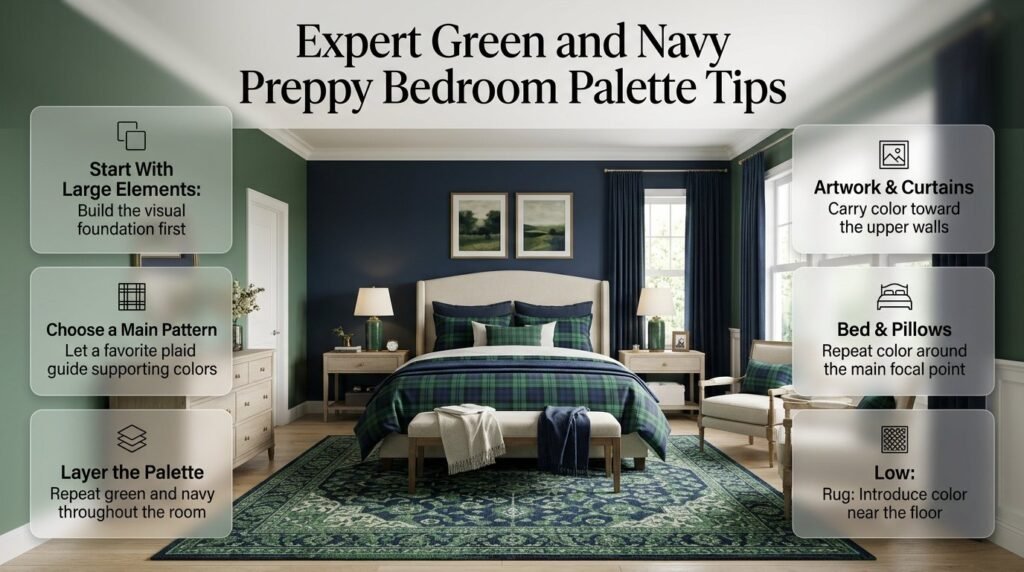
Experienced decorators usually don’t start by buying random accessories in the target colors.
They establish the room’s largest visual elements first.
Start with:
- Wall color
- Bed and headboard
- Large rug
- Main bedding
- Curtains
- Accent furniture
- Artwork
- Small accessories
This order prevents the common problem of having too many decorative items but no clear visual foundation.
Use the Main Pattern as a Color Guide
If you find a green and navy plaid you love, use it as the starting point.
Pull your supporting colors from that pattern.
This makes the room look coordinated because the colors already belong together.
Repeat Colors at Different Heights
Place navy and green at different levels.
For example:
Low: Rug
Middle: Bed and pillows
High: Artwork and curtains
This spreads color through the room rather than creating one heavy area.
Designing a Green and Navy Preppy Interior
A green and navy preppy interior can create a space that feels classic, refined, and welcoming without looking overly formal. Start by deciding which shade will dominate the room, then use the second color through furniture, upholstery, curtains, artwork, cushions, or smaller decorative details. Sage and soft greens can create a relaxed and fresh atmosphere, while forest or emerald green paired with deep navy can produce a richer and more traditional look. Cream, ivory, white, light wood, and warm metallic accents can help balance the stronger colors and keep the overall interior visually comfortable. Classic patterns such as stripes, plaid, gingham, and subtle botanical prints can further strengthen the preppy character when they are layered thoughtfully. For more ideas on coordinating colors, materials, patterns, furniture, and accessories throughout the space, explore these green and navy preppy interior ideas for practical decorating inspiration.
Where Should You Place the Strongest Color?
Usually, the strongest color works best near the focal point.
In a bedroom, that’s often the bed.
A navy headboard with green pillows immediately establishes the palette.
Alternatively, a green upholstered headboard with navy bedding creates the reverse effect.
If the bed is visually quiet, use artwork or an accent wall to create the focal point.
The important thing is to have one clear area that attracts attention first.
How Can You Connect the Bedroom With the Rest of the Home?
If your bedroom is part of a larger home, you don’t need to copy the exact palette from other rooms.
Instead, repeat one or two elements.
For example:
- Same wood tone
- Similar brass finish
- Repeated navy accent
- Similar cream foundation
- Related botanical artwork
For broader green-and-navy decorating inspiration across other room types, you can also visit Green and Navy Preppy Room Ideas.
This lets the bedroom feel connected without becoming visually identical to the rest of the home.
How do you decorate a bedroom with green and navy?
The easiest way to decorate a green and navy bedroom is to give each color a clear role instead of using both colors equally. Navy works particularly well as an anchoring color through the headboard, bedding, furniture, or smaller architectural details, while green can bring freshness through pillows, curtains, artwork, throws, or an accent wall. Balance the darker shades with cream, white, or natural wood so the room still feels comfortable and open.
For a stronger preppy look, introduce classic patterns such as stripes, plaid, gingham, or botanical prints. Keep one pattern dominant and use smaller patterns as supporting details. Brass lighting, framed artwork, and tailored textiles can then add the polished character associated with traditional preppy interiors.
Practical points:
Choose one dominant color and one supporting color.
Use cream or white to break up darker areas.
Add navy and green at different heights throughout the room.
Use classic patterns rather than too many trendy prints.
Bring in natural wood to make the palette feel warmer.
What color goes best with green and navy in a bedroom?
Cream is one of the most effective third colors because it softens the contrast between green and navy while maintaining the classic character of the room. White is another excellent option when you want a brighter, cleaner appearance. Natural wood can also act as a visual bridge between the cool tones, adding warmth without introducing another strong color.
For a more traditional bedroom, brass and warm metallic finishes work particularly well. If you’re creating a more modern version of the style, black accents can provide sharper definition. The best supporting color ultimately depends on the amount of natural light and whether you want the bedroom to feel bright, traditional, cozy, or dramatic.
Best combinations:
Cream: Warm, timeless, and soft.
White: Fresh, bright, and clean.
Natural wood: Warm and organic.
Brass: Traditional and sophisticated.
Black: Modern and structured.
What shade of green looks best with navy for a preppy bedroom?
Sage green is one of the most versatile choices because its muted quality works naturally with navy without overwhelming the bedroom. It creates a relaxed and sophisticated appearance and pairs especially well with cream bedding, natural wood, brass, and linen textures. Olive green is another strong option when you want a warmer, more traditional room.
Emerald and forest green create a richer and more dramatic effect. These deeper shades are better suited to bedrooms with plenty of natural light or to designs where a cozy, moody atmosphere is intentional. Bright greens can work too, but they’re usually easier to control when limited to smaller accessories.
Choose according to the mood:
Sage green: Calm and sophisticated.
Olive green: Warm and traditional.
Emerald green: Rich and luxurious.
Forest green: Moody and dramatic.
Soft/mint green: Fresh and youthful.
How do you mix patterns in a green and navy preppy bedroom without making it look too busy?
The key to successful pattern mixing is controlling scale rather than avoiding patterns altogether. Preppy bedrooms often look best when they combine classic prints such as plaid, stripes, gingham, and florals, but the patterns should not all compete for attention. Choose one larger pattern as the visual anchor, then use medium and smaller patterns to support it.
For example, a navy-and-green plaid duvet can serve as the main pattern, while striped pillows and a small botanical print provide variety. Keep some major surfaces solid, such as the curtains, walls, or rug, so the eye has places to rest.
A reliable pattern formula:
Large pattern: Main bedding or duvet.
Medium pattern: Decorative pillows or curtains.
Small pattern: Accent cushion or artwork.
Solid layer: Cream, white, or navy.
Natural texture: Wood, linen, or woven material.
How do you make a small bedroom with green and navy feel bright and spacious?
A small bedroom can successfully use green and navy, but darker colors should be distributed strategically. Instead of covering every wall in navy or using dark furniture throughout the room, keep the largest surrounding surfaces light and introduce navy and green through the bed, bedding, artwork, cushions, curtains, or one carefully selected accent wall.
Light-colored bedding, cream walls, natural wood, mirrors, and warm layered lighting can prevent the darker palette from feeling heavy. Keeping the floor visually open and avoiding too many large decorative pieces will also help the room feel less crowded.
Small-bedroom tips:
Keep most walls light.
Use navy as an anchor rather than covering everything.
Choose lighter green shades such as sage.
Use cream or white bedding layers.
Add mirrors to reflect available light.
Choose furniture with a visually lighter profile.
Repeat colors through small accessories instead of large blocks.
Conclusion
Creating a beautiful green and navy preppy bedroom is less about following a strict decorating formula and more about finding the right balance between color, pattern, texture, and personality. Navy can provide depth and structure, while green brings freshness and character. When these colors are supported with cream, white, natural wood, or warm brass, the bedroom can feel polished without becoming too dark or formal.
Start with one clear focal point, such as a navy headboard, green accent wall, patterned duvet, or upholstered bed. From there, repeat the colors naturally through pillows, artwork, curtains, rugs, and smaller accessories. Classic patterns like stripes, plaid, gingham, and botanical prints can strengthen the preppy style, but keeping a clear pattern hierarchy will prevent the room from feeling visually crowded.
Most importantly, choose colors and furnishings that suit your room’s natural light, size, and everyday use. A successful bedroom should not only look coordinated in photographs—it should feel comfortable and personal when you actually live in it.
With thoughtful color balance, layered textures, controlled patterns, and a few meaningful personal details, your green and navy bedroom can become a timeless space that feels both classic and fresh.