
Introduction
Green and Cream Bedroom Layout Ideas | A bedroom can have beautiful furniture, soft bedding, and carefully chosen colors yet still feel uncomfortable if the layout doesn’t work. A bed that blocks a walkway, a wardrobe that is difficult to open, or a dark corner beside the window can affect the entire room, even when every individual item looks attractive.
The best green and cream bedroom layout ideas solve these everyday problems while creating a relaxing, coordinated space. Green brings a natural sense of depth, while cream keeps the room feeling light, warm, and inviting. Together, these colors work in traditional, modern, minimalist, and preppy bedrooms without requiring expensive furniture or a complete renovation.
If you’re planning a bedroom makeover, the key is to think about the room as a whole rather than choosing decorations one by one. The position of the bed influences the bedside tables, the storage arrangement affects walking space, and the location of the windows determines how the colors appear throughout the day.
In this guide, you’ll learn how to plan furniture placement, choose a suitable green-and-cream palette, arrange small and large bedrooms, improve lighting, organize storage, and avoid common layout mistakes. You’ll also find practical examples, comparison tables, expert recommendations, and answers to the questions people frequently ask before redesigning their bedrooms.
Whether you’re working with a compact bedroom or a spacious main bedroom, you can create a layout that looks coordinated and supports your everyday routine. For broader inspiration across the website, visit Preppy Room and explore ideas that complement your preferred interior style.
1. What Makes a Green and Cream Bedroom Layout Work Well?
A successful green and cream bedroom layout combines comfortable furniture placement, balanced colors, accessible storage, and enough open space for everyday movement. Instead of filling the room with matching accessories, establish a clear focal point, arrange essential furniture around it, and use green and cream consistently to connect the different parts of the design.
Start With the Room’s Shape and Dimensions
Before selecting furniture or paint, measure the bedroom carefully. Record the room’s length and width, the position of windows and doors, and the locations of wardrobes, radiators, electrical outlets, and other fixed features.
These measurements help you understand what the room can accommodate. A layout that works beautifully in a square bedroom may feel awkward in a long, narrow room because the available walking routes are different.
Make a simple floor plan on paper. Include the bed, bedside tables, wardrobe, dresser, and any additional furniture you genuinely need.
Pay particular attention to:
- The route between the doorway, bed, and wardrobe.
- The space needed to open drawers and cabinet doors.
- Access to windows and curtains.
- The position of electrical outlets for lamps and charging devices.
- The amount of natural light available during the day.
Pro Tip: Outline the proposed furniture positions on the floor with masking tape. Walking through the arrangement before moving heavy furniture can reveal problems that measurements alone may not make obvious.
Establish One Main Focal Point
The bed wall is usually the most natural focal point because the bed is the largest piece of furniture in most bedrooms.
You can emphasize it with a muted green accent wall, a cream upholstered headboard, understated wallpaper, or carefully arranged artwork.
Keep the surrounding walls relatively simple if the bed wall already has a strong color or pattern. This creates a visual hierarchy and prevents the room from feeling busy.
Make Everyday Comfort the Priority
Think about the activities that happen in your bedroom every day. You might need easy access to clothing, a convenient place for reading, sufficient bedside storage, or a clear route to the window.
These needs should influence the layout before decorative details are added.
For example, a compact bedroom may benefit more from a narrow bedside shelf than a large nightstand. A larger room might accommodate a reading chair, but only if it doesn’t obstruct the route between the bed and wardrobe.
The best layout is the one that makes the room comfortable to use while allowing the green and cream palette to feel intentional.
2. How Should You Choose the Best Green and Cream Color Scheme?
The best green and cream color scheme depends on the room’s natural light, furniture finishes, and preferred atmosphere. Cream can create a warm background, while green adds depth through walls, upholstery, curtains, or bedding. Choose one dominant shade, one supporting shade, and a limited number of complementary materials to keep the bedroom cohesive.
Use Cream as the Visual Foundation
Cream is particularly useful when you want the bedroom to feel bright without relying on a stark white palette.
It can appear on the walls, duvet cover, curtains, headboard, or rug. Using cream across several larger surfaces helps connect the furniture and makes it easier to introduce green in smaller areas.
However, cream is not a single uniform color. Some shades have yellow undertones, while others lean toward pink, gray, or beige.
A warm cream often pairs comfortably with olive green and natural wood. A more neutral cream may suit cooler sage or eucalyptus shades.
Test samples under both daylight and artificial lighting before making a final decision.
Choose Green According to the Mood You Want
Sage green
Sage is a soft, muted option for bedrooms where relaxation and visual lightness are priorities. It works well on an accent wall, upholstered headboard, or bedding.
Pair it with warm cream, pale oak, and natural linen for a gentle, balanced appearance.
Olive green
Olive has an earthy character that suits traditional furniture, warm wooden finishes, and textured fabrics.
Use cream bedding and lighter accessories to keep the room from appearing too heavy, especially when olive covers a large wall.
Forest green
Forest green creates a stronger focal point and works well in bedrooms with suitable lighting and enough visual contrast.
Balance it with cream upholstery, pale bedding, and restrained accessories rather than adding dark finishes everywhere.
Eucalyptus green
Eucalyptus shades offer a fresh, understated appearance that can complement contemporary and minimalist bedrooms.
Combine them with cream textiles, simple furniture, and subtle natural textures.
Follow a Simple Color Distribution

A useful starting point is to let cream occupy the largest visual areas, use green as the defining color, and introduce wood or a restrained metal finish for warmth.
For example:
| Design element | Suggested color | Purpose |
|---|---|---|
| Main walls | Warm cream | Creates a light background |
| Bed wall | Sage green | Establishes a focal point |
| Bedding | Cream and ivory | Keeps the bed visually calm |
| Bedside furniture | Pale oak | Adds natural warmth |
| Cushions or throw | Muted green | Repeats the accent color |
| Lamp details | Brass or neutral metal | Adds a finishing touch |
This is a flexible guide rather than a strict formula. A forest-green room with cream bedding can look equally successful if the lighting and furniture proportions support it.
Coordinate the Colors With Existing Furniture
If your bed frame is dark wood, olive or forest green may create a rich, coordinated appearance. Pale wood usually works easily with sage and cream. Black furniture can provide contrast, but repeating black in every accessory may make a soft color scheme feel too harsh.
You don’t need to replace furniture simply because its finish isn’t a perfect match. Cream fabrics, a coordinated rug, and a few green accents can connect existing pieces.
3. What Are the Best Green and Cream Bedroom Layout Ideas for Different Room Sizes?
The right layout depends on the bedroom’s dimensions, the size of the bed, and how much storage you need. Small rooms usually benefit from compact furniture and clear walking routes, while larger rooms can accommodate symmetrical arrangements or separate functional areas. In both cases, the bed should guide the layout rather than being squeezed into whatever space remains.
Layout Idea 1: A Centered Bed for a Balanced Bedroom
Place the bed against the most suitable uninterrupted wall, with its headboard positioned centrally. If the room is wide enough, add a bedside table on each side and use matching lamps to create visual symmetry.
A sage-green wall behind the bed can establish the focal point, while cream bedding softens the contrast.
This arrangement is particularly useful when the bedroom is shared or when you prefer a classic, organized appearance.
Why it works: The centered bed creates a clear visual anchor, making the other furniture easier to arrange.
What to watch for: Don’t sacrifice comfortable walking space just to achieve perfect symmetry. If the room is narrow, one slim bedside table may be more practical than two oversized ones.
Layout Idea 2: A Space-Saving Arrangement for Small Bedrooms
In a narrow bedroom, placing the bed against one side wall can create a more usable walkway on the other side. This approach may be suitable for a single bedroom or a compact guest room.
Use a floating bedside shelf instead of a full cabinet. Keep the walls cream if you want the room to feel visually open, and introduce sage green through bedding or a small accent area.
Under-bed drawers can provide extra storage without requiring another cabinet.
Why it works: It prioritizes useful floor space instead of forcing a symmetrical arrangement into a room that cannot accommodate it.
What to watch for: If two people regularly use the bed, consider whether one-sided access will be comfortable. A layout that saves space may not suit every household.
Layout Idea 3: A Green Feature Wall Behind the Bed
If the bedroom feels plain, paint the bed wall a suitable shade of green and keep the remaining walls cream.
This arrangement gives the room a clear focal point without requiring patterned wallpaper or numerous accessories. It also allows the bed, headboard, and bedding to work together as one coordinated area.
Choose the depth of green according to the available light. A soft sage may be easier to balance in a dim room, while a deeper olive or forest green can work beautifully when supported by adequate lighting.
Why it works: The color establishes visual direction without occupying additional floor space.
What to watch for: Check how the green looks behind your actual headboard. A dark wooden headboard may need a lighter green, while cream upholstery can create contrast against a deeper shade.
Layout Idea 4: A Window-Side Reading Area
If the bedroom has an unused corner near a window, consider adding a compact reading chair and a small side table.
Keep the bed as the main focal point, then use a green cushion or a cream throw to connect the reading area to the overall palette.
This arrangement works particularly well in larger bedrooms where the bed does not need to occupy every available part of the room.
Why it works: It introduces a useful second function without requiring a complete room redesign.
What to watch for: Make sure the chair doesn’t block curtains, window access, or the main walking route.
Layout Idea 5: A Low Bed With Integrated Storage
A low-profile bed can make the room feel visually simpler, especially when paired with streamlined bedside tables and restrained decoration.
Choose a suitable storage bed if you need space for spare bedding, seasonal clothing, or other items that don’t require daily access.
Cream bedding and a muted green wall can create a calm backdrop, while wooden details add warmth.
Why it works: The layout combines practical storage with a relatively uncluttered appearance.
What to watch for: Check the dimensions of storage drawers and confirm that they can open fully. Storage that cannot be accessed easily won’t be useful in everyday life.
4. How Should You Arrange the Bed, Wardrobe, and Bedside Tables?
Arrange the bed first, then position the wardrobe and bedside tables around the remaining space. Keep frequently used furniture accessible, preserve a clear route from the doorway, and check that drawers and doors can open fully. The goal is to make the bedroom easy to move around without allowing large furniture pieces to compete visually.
Position the Bed Before Everything Else
The bed usually occupies the largest portion of the bedroom, so its position determines what is possible elsewhere.
Start by identifying the walls that can accommodate the bed without blocking doors, windows, or essential access points.
Where the room allows, leave space on both sides of a double bed. Around 24–30 inches (61–76 cm) is a useful planning target for comfortable access, although the ideal amount depends on the room, the furniture, and individual mobility needs.
In a compact room, a smaller clearance may be unavoidable. Prioritize a safe, practical route instead of trying to meet a measurement that the room cannot support.
Choose Bedside Tables That Fit the Bed
A bedside table should be proportionate to the bed and useful for everyday essentials.
If the bed is large, a tiny shelf may not provide enough surface area. If the bedroom is small, however, a wide cabinet can make the room feel cramped.
Consider these options:
- Floating shelves for very compact bedrooms.
- Narrow bedside cabinets for a balance of storage and floor space.
- Matching tables for a symmetrical arrangement.
- A single table when one side of the bed has limited clearance.
Cream bedside tables can blend into a light background, while natural wood can introduce warmth beside green walls.
Position the Wardrobe for Easy Access

Wardrobes require more than the space they occupy when closed. Hinged doors, sliding panels, and internal drawers all affect how much clearance you need.
If the wardrobe faces the bed, check whether you can open it and stand comfortably in front of it. If the room is narrow, sliding doors may be worth considering.
Keep the wardrobe near the usual dressing area when possible. A full-length mirror placed nearby can make the arrangement more convenient.
Common Mistake: Placing a dresser at the foot of the bed without checking the remaining clearance. The result can be a narrow passage that makes opening drawers or walking through the room uncomfortable.
Use a Practical Furniture Layout Checklist
Before finalizing your arrangement, confirm that:
- The bed doesn’t obstruct the doorway.
- Wardrobe doors and drawers open properly.
- The main walking route remains clear.
- Bedside lighting is within comfortable reach.
- Curtains can open and close freely.
- Storage remains accessible.
- No unnecessary furniture blocks natural light.
These checks are more valuable than following a decorative trend that doesn’t suit your room.
How to Choose Furniture for a Green and Cream Bedroom
Selecting the right furniture helps create a bedroom that feels organized, comfortable, and visually cohesive. Green and cream work well together because cream furniture and neutral finishes keep the room light, while green accents add freshness and personality. Consider a cream upholstered bed, a natural wood dresser, or simple bedside tables as the foundation of your design. You can introduce green through an accent chair, a bedroom bench, decorative cushions, or coordinated accessories. Before choosing furniture, measure the available space, assess your storage needs, and make sure drawers and wardrobe doors can open comfortably. In smaller bedrooms, multifunctional furniture can provide useful storage without overcrowding the layout. For more inspiration, explore our guide to Green and Cream Bedroom Furniture Ideas for practical furniture combinations, space-saving suggestions, and decorating tips to help you create a balanced and functional bedroom.
Green and Cream Guest Bedroom Ideas for Comfort and Style
Creating a welcoming guest bedroom means combining attractive decor with practical features that make visitors feel comfortable. Green and cream offer a balanced color palette that brings freshness, warmth, and timeless appeal to the room. Start with cream bedding, neutral walls, and light-colored curtains, then add green through accent pillows, a soft throw, botanical artwork, or bedside accessories. Natural wood furniture and warm lighting can make the space feel more inviting without overcrowding it. For added convenience, provide accessible bedside storage, a reading light, extra blankets, and enough room for guests to store their belongings. Keep decorative accessories coordinated and leave clear walking paths around the bed to maintain a functional layout. For more inspiration, explore our guide to Green and Cream Guest Bedroom Ideas for practical decorating tips, furniture suggestions, and thoughtful details that help create a comfortable and attractive guest room.
5. How Can You Make a Small Green and Cream Bedroom Feel More Spacious?
A small green and cream bedroom feels more open when the furniture has an appropriate scale, the walking route remains clear, and the largest surfaces use coordinated light colors. Cream walls, streamlined furniture, mirrors, and carefully planned storage can reduce visual clutter. Green still has an important role, but it doesn’t need to cover every surface.
Choose Furniture With a Smaller Footprint
A slim bedside table can provide the same everyday function as a bulky cabinet without occupying as much space.
If you need a dresser, compare its storage capacity with the internal storage already available in your wardrobe. You may not need both pieces.
Avoid buying furniture solely because it looks attractive in a large showroom or inspiration photograph. Consider how much usable space it will leave in your actual bedroom.
Make Better Use of Vertical Space
Wall-mounted shelves can hold books, small decorative objects, or everyday essentials without filling the floor.
Tall, narrow storage may also work better than a wide cabinet, provided it is stable and suitable for the room.
Keep the arrangement restrained. A wall covered in crowded shelves can make a small bedroom feel busy, even if the floor is clear.
Use Mirrors to Reflect Available Light
A mirror can make a room appear brighter when it reflects a window or a well-lit area.
Position it where it serves a practical purpose, such as near the wardrobe or dressing area. Avoid placing it where it creates uncomfortable glare from lamps.
A full-length mirror can be particularly useful because it combines everyday function with a relatively small footprint.
Choose Storage That Does More Than One Job
Multifunctional furniture can help you reduce the number of separate items in the room.
Useful options include:
- A bed with accessible storage drawers.
- A storage bench, if there is enough clearance at the foot of the bed.
- A wall shelf that replaces a bedside cabinet.
- Wardrobe organizers that make existing storage more efficient.
- Hooks behind a suitable door for frequently used items.
Expert Tip: Before adding another storage unit, review what you already own. Better organization inside an existing wardrobe may free up enough space to avoid purchasing an additional cabinet.
Keep the Color Scheme Simple
In a small bedroom, cream can dominate the walls, curtains, and bedding, while green appears through a headboard, throw, cushions, or a single feature wall.
This doesn’t mean dark green is unsuitable for small rooms. It simply means the lighting and surrounding finishes deserve extra attention.
A deep green wall can look sophisticated in a small room when balanced with cream bedding and sufficient illumination. The important thing is to avoid combining too many dark, bulky elements in the same area.
6. How Should You Use Windows, Curtains, and Natural Light?
Window placement should influence the furniture arrangement, curtain choice, and location of the main green accent. Keep windows accessible, avoid blocking useful daylight with bulky furniture, and choose curtains that complement the cream background. The best arrangement allows the bedroom to remain comfortable during the day while providing the privacy and light control needed at night.
Keep the Window Area Functional
Avoid placing tall furniture directly in front of a window unless the arrangement is necessary and doesn’t interfere with ventilation or access.
A compact chair, low bench, or small table may work near a window if enough room remains for curtains and movement.
If the window is the strongest architectural feature, allow it to remain visible instead of surrounding it with too many decorative objects.
Choose Curtains That Connect the Colors
Cream curtains can make the room feel cohesive, particularly when the bedding and walls use similar tones.
Green curtains can also work, especially when the walls are cream and the green shade is repeated elsewhere.
For a wider-looking window, you can consider mounting the curtain rod slightly beyond the window frame if the wall space allows. This lets the curtains sit farther to the sides when open.
Choose the curtain length according to the window, heating equipment, and flooring. Avoid fabric that interferes with doors or creates a tripping hazard.
Plan for Different Lighting Conditions
A green paint color may look fresh in morning daylight but darker or warmer under evening lamps.
Before choosing the final shade, observe samples at different times of day. Consider how the color appears beside the actual bedding, curtains, and furniture.
If the room receives little natural light, use appropriate general lighting and lighter surrounding finishes to maintain visual balance.
For additional ideas on coordinating these colors across a complete interior, explore Green and Cream Room Styling.
7. Which Bedding, Rugs, and Textures Work Best With Green and Cream?
The best textiles for a green and cream bedroom combine a consistent color palette with a variety of textures. Cream bedding creates a calm foundation, green cushions or a throw introduce color, and a suitable rug can visually connect the bed with the surrounding furniture. Choose patterns and fabrics according to the room’s size and the amount of decoration already present.
Build the Bed Around a Cream Foundation

Cream sheets and a duvet cover are versatile because they work with both soft and dark greens.
Instead of buying a complete matching bedding set, consider combining a few related materials. Smooth cotton, textured linen, a knitted throw, or a quilted bedspread can add interest without requiring additional colors.
For example, a cream duvet cover, sage-green cushions, and a lightweight olive throw create a layered appearance while maintaining a clear visual relationship.
Introduce Patterns Without Overcrowding the Room
Stripes, gingham, small checks, and botanical patterns can complement green and cream, especially if you prefer a classic or preppy bedroom.
The trick is to give each pattern enough visual space.
If you choose striped bedding, keep the curtains relatively simple. If the bedspread has a botanical print, use plain cushions and a restrained rug.
For a coordinated preppy look, explore Green and Cream Preppy Room Ideas. Use the broader inspiration to select suitable patterns while keeping this bedroom’s furniture placement and circulation as the priority.
Choose a Rug That Supports the Furniture Arrangement
A rug can visually anchor the bed and make the bedroom feel more complete.
The right size depends on the bed, available floor space, and desired placement. A larger rug can extend beyond the sides of the bed, while a smaller arrangement may use matching bedside rugs where space is limited.
Before purchasing, measure the available area and check that the rug won’t obstruct doors or create a tripping hazard.
Quick Tip: When choosing a patterned rug, repeat one of its colors in the bedding or curtains. This small connection can make the whole arrangement feel more deliberate.
8. How Can You Plan Bedroom Lighting Around Green and Cream?
A well-lit green and cream bedroom uses general lighting for everyday activities, focused lighting for reading, and softer lighting for relaxation. Cream surfaces can help distribute available light, while darker green finishes may absorb more of it. Combining suitable lighting sources makes the room more flexible and helps the colors look balanced throughout the day.
Combine Three Types of Lighting
| Lighting type | Practical example | Main purpose |
|---|---|---|
| General lighting | Ceiling fixture | Illuminates the whole room |
| Task lighting | Bedside lamp or reading light | Supports reading and dressing |
| Accent lighting | Small dresser lamp | Adds a softer atmosphere |
You don’t need an elaborate lighting system to use these principles. A suitable ceiling light and two bedside lamps may be sufficient for a larger bedroom, while a compact room might need only a ceiling fixture and one carefully placed task light.
Select Bulbs That Suit the Color Palette
Warm-white lighting often complements cream fabrics and earthy greens. However, very yellow light can alter how certain paint colors appear.
Test the lighting with your actual wall color before committing to multiple bulbs. If you have forest-green walls, make sure the room still has enough illumination for reading, dressing, and finding items in storage.
Keep Bedside Lighting Convenient
Place lamps where they can be switched on and off comfortably from the bed. If bedside table space is limited, consider wall-mounted lights or suitable plug-in alternatives.
Avoid placing cables across walking routes. A good lighting arrangement should improve both comfort and safety.
9. Which Furniture Finishes and Accessories Complement This Layout?
Natural wood, restrained metal finishes, woven materials, and simple ceramics work well with green and cream because they introduce texture without competing with the main palette. Choose a small number of complementary finishes and repeat them where appropriate instead of mixing too many unrelated materials.
Choose Wood According to the Green Shade
Pale oak and light timber usually create a relaxed appearance with sage green and cream. Walnut and deeper wood finishes add warmth to olive or forest-green bedrooms.
You don’t need every wooden item to match exactly. Similar undertones and compatible proportions can create a coordinated result even when furniture comes from different collections.
Use Metal Accents Selectively
Brass or muted gold details can complement warm cream and earthy green. Black metal can provide a sharper contrast in a contemporary bedroom.
Repeat the chosen finish in a few places, such as lamp bases, drawer handles, or picture frames.
Avoid introducing several competing metal finishes unless the overall design deliberately uses an eclectic approach.
Keep Decorative Objects Proportionate
Artwork, lamps, plants, and vases should support the layout rather than fill every empty surface.
A large artwork above the bed may provide sufficient decoration on its own. In a smaller bedroom, a single framed print and a simple bedside lamp may create a more balanced result than numerous small objects.
Choose plants according to the available daylight and care requirements, and keep them away from routes where they could be knocked over.
Green and Cream Master Bedroom Design for a Timeless Interior
Designing a master bedroom with green and cream involves balancing soothing colors, comfortable furniture, and practical decorative details. Cream walls, neutral bedding, and upholstered furniture create a soft foundation, while green accents add depth and natural character. Consider sage green curtains, emerald decorative cushions, or a green upholstered headboard to introduce color without overwhelming the room. Wooden bedside tables, layered lighting, and textured bedding can further enhance the overall design. For a cohesive appearance, repeat your chosen green shade in a few accessories and keep larger furniture pieces in complementary neutral tones. Also, consider your storage needs and leave enough space for comfortable movement around the bed. For more inspiration, explore our guide to Green and Cream Master Bedroom Design for practical styling advice, furniture coordination tips, and creative ideas for designing a comfortable and elegant master bedroom.
10. What Are the Most Common Green and Cream Bedroom Layout Mistakes?
The most common mistakes involve overcrowding, poor furniture proportions, inconsistent color undertones, inadequate lighting, and insufficient storage planning. These problems occur when individual purchases are made without considering the entire room. A better approach is to plan the layout first, test the palette, and introduce decorative elements only when they serve a clear purpose.
Mistake 1: Choosing Furniture Without Measuring
A large bed or dresser may look suitable in a showroom but leave too little space at home.
How to avoid it: Measure the room and each major furniture piece. Include the space required to open doors, extend drawers, and move around the bed.
Mistake 2: Using Too Many Green Shades
Combining sage, olive, emerald, forest green, and several patterned fabrics can make the room feel disjointed.
How to avoid it: Choose one dominant green and, if needed, one related supporting shade. Use cream to connect the different elements.
Mistake 3: Making Everything Match
Identical bedding, curtains, cushions, and accessories can make a bedroom look flat rather than thoughtfully coordinated.
How to avoid it: Keep the colors related but vary the textures. Pair plain cream bedding with a textured green throw or subtle patterned cushions.
Mistake 4: Blocking Natural Light
Tall furniture placed in front of a window may make a room feel darker and interfere with ventilation.
How to avoid it: Keep the window area accessible whenever possible. Place bulky storage along another suitable wall and use lighter finishes where they improve the overall balance.
Mistake 5: Ignoring the Cream Undertone
A yellow-toned cream may clash with a cooler green, even if both colors looked attractive when viewed separately.
How to avoid it: Compare paint and fabric samples together under daylight and evening lighting.
Mistake 6: Adding Too Much Furniture
A bedroom can become crowded when a chair, bench, dresser, and multiple tables are added without considering their purpose.
How to avoid it: Identify the essential furniture first. Leave unused corners open unless another item would provide a genuine benefit.
Mistake 7: Treating Storage as an Afterthought
When storage isn’t planned, everyday belongings can accumulate on the bed, floor, and bedside tables.
How to avoid it: Decide where clothing, books, spare bedding, and other essentials will go before finalizing the layout.
11. How Can You Create Your Green and Cream Bedroom Layout Step by Step?
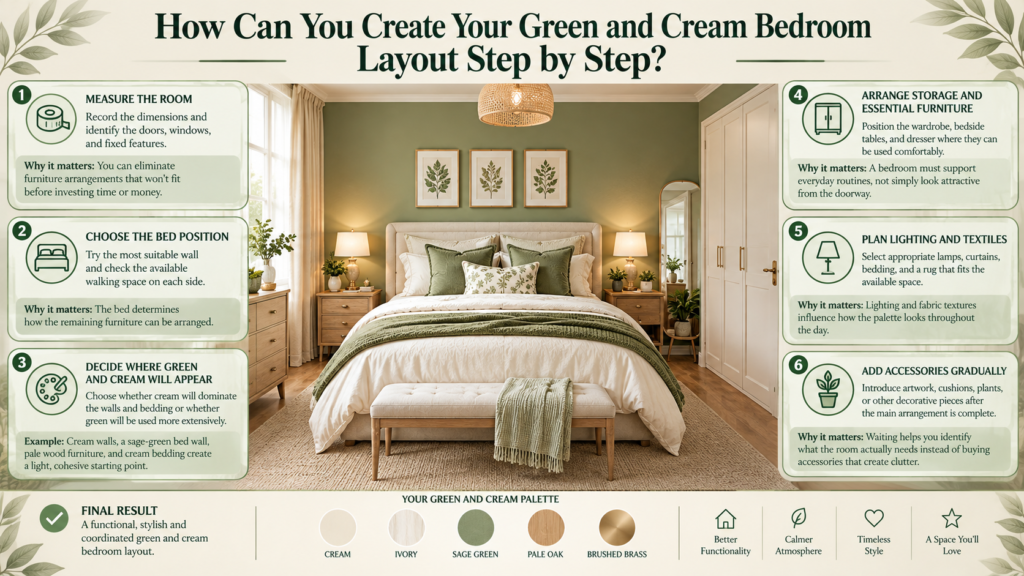
The simplest method is to make decisions in the right order: measure the room, position the bed, plan storage, choose the colors, and finish with lighting and accessories. Working from large elements to small details reduces unnecessary purchases and helps the bedroom remain practical as well as attractive.
Step 1: Measure the Room
Record the dimensions and identify the doors, windows, and fixed features.
Why it matters: You can eliminate furniture arrangements that won’t fit before investing time or money.
Step 2: Choose the Bed Position
Try the most suitable wall and check the available walking space on each side.
Why it matters: The bed determines how the remaining furniture can be arranged.
Step 3: Decide Where Green and Cream Will Appear
Choose whether cream will dominate the walls and bedding or whether green will be used more extensively.
Example: Cream walls, a sage-green bed wall, pale wood furniture, and cream bedding create a light, cohesive starting point.
Step 4: Arrange Storage and Essential Furniture
Position the wardrobe, bedside tables, and dresser where they can be used comfortably.
Why it matters: A bedroom must support everyday routines, not simply look attractive from the doorway.
Step 5: Plan Lighting and Textiles
Select appropriate lamps, curtains, bedding, and a rug that fits the available space.
Why it matters: Lighting and fabric textures influence how the palette looks throughout the day.
Step 6: Add Accessories Gradually
Introduce artwork, cushions, plants, or other decorative pieces after the main arrangement is complete.
Why it matters: Waiting helps you identify what the room actually needs instead of buying accessories that create clutter.
12. What Expert Design Principles Make the Bedroom Feel Finished?
A professionally coordinated bedroom usually has a clear focal point, consistent proportions, useful storage, and a restrained color palette. You don’t need expensive furnishings to achieve this effect. The difference often comes from making deliberate choices and leaving enough space for the important elements to stand out.
Follow a Clear Visual Hierarchy
Give the bed the strongest visual presence, then use the wall treatment, bedside furniture, and textiles to support it.
For example, a sage accent wall can be the main feature, while cream bedding and pale wood tables provide a quieter background. Small accessories should complete the composition rather than compete with it.
Repeat Colors in More Than One Place
A green accent wall looks more connected to the room when the same shade appears in a cushion, throw, or artwork detail.
Likewise, repeating cream in the bedding and curtains helps link different areas without requiring identical fabrics.
Leave Enough Negative Space
Empty space is a useful part of interior design. It allows furniture to remain accessible and gives the eye a break between decorative elements.
Don’t add a chair or table to every available corner. If the bedroom already functions well and looks balanced, leaving an area open may be the better design decision.
Test the Layout Before Finalizing It
Once the essential furniture is in place, spend a few days using the room.
Notice whether you can open drawers comfortably, reach bedside essentials, move around the bed, and access the window without difficulty.
Make small adjustments before purchasing additional furniture or accessories.
For further inspiration and a wider range of coordinated interior ideas, return to Preppy Room.
How do you create a balanced green and cream bedroom layout in a small space?
Creating a balanced green and cream bedroom in a small space starts with choosing the right furniture arrangement and controlling how much visual space each color occupies. Cream walls and bedding can help the room feel bright, while sage or muted olive green adds depth without overwhelming the interior. Position the bed against the most practical wall, keep the main walkway clear, and select compact furniture that provides useful storage.
Instead of filling the bedroom with decorative accessories, focus on a few coordinated elements that connect the colors. For example, a sage-green headboard, cream bedding, pale wooden bedside furniture, and a small textured rug can create a cohesive appearance without overcrowding the room.
Practical tips:
Choose slim bedside tables or floating shelves to preserve floor space.
Use under-bed storage to reduce the need for additional cabinets.
Keep windows accessible to make the most of natural light.
Introduce green through one main feature and a few smaller accents.
Avoid oversized furniture that restricts movement around the bed.
Which shades of green and cream work best together for a relaxing bedroom?
Sage green and warm cream are versatile choices for a relaxing bedroom because they create a soft, understated color combination. Sage provides gentle color, while cream adds warmth and visual balance. Olive green is another suitable option if you prefer a more earthy appearance, whereas forest green creates a richer, more dramatic atmosphere when paired with lighter bedding and appropriate lighting.
The best combination depends on your room’s natural light, existing furniture, and preferred interior style. A north-facing or naturally dim bedroom may benefit from lighter green shades and warm cream finishes. A brighter bedroom can accommodate deeper green walls, particularly when the remaining furnishings provide enough contrast.
Color combinations to consider:
Sage green and warm cream: Suitable for a light, calming bedroom.
Olive green and ivory: Ideal for an earthy look with wooden furniture.
Forest green and cream: Creates a more dramatic focal point.
Eucalyptus green and neutral cream: Works well with contemporary and minimalist interiors.
Before painting, compare color samples beside your bedding and furniture under both daylight and evening lighting. This helps prevent undertone differences from making the finished room look inconsistent.
How should you position the bed and furniture in a green and cream bedroom?
The bed should usually be positioned first because it occupies the largest amount of space and determines where the other furniture can go. If the room is wide enough, placing the bed centrally against a suitable wall creates a balanced arrangement and allows room for bedside tables on both sides. In a narrow bedroom, moving the bed toward one side may provide a more practical walkway.
Once the bed is positioned, arrange the wardrobe, dresser, and bedside furniture according to their everyday use. Check that doors and drawers open fully, windows remain accessible, and lighting can be reached comfortably from the bed. Furniture placement should support your routine rather than simply imitate a decorative photograph.
Professional layout recommendations:
Measure the room and furniture before rearranging anything.
Keep the main route between the doorway, bed, and wardrobe clear.
Use matching bedside tables when symmetry suits the room.
Choose compact or multifunctional furniture when space is limited.
Avoid placing bulky furniture where it unnecessarily blocks natural light.
A practical arrangement will make the green and cream palette look more intentional because every piece has a clear place and purpose.
How can you make a green and cream bedroom look elegant without spending too much?
An elegant green and cream bedroom doesn’t require expensive furniture or a complete renovation. The biggest improvements often come from rearranging existing pieces, choosing coordinated textiles, improving lighting, and reducing unnecessary clutter. Start with the items you already own, then identify the changes that would make the greatest difference to the room’s appearance and functionality.
For example, cream bedding can refresh a dark bed frame, while sage-green cushions or a throw can connect the bed to an existing green wall. Natural wood, simple lamps, and a carefully chosen piece of artwork can complete the arrangement without requiring a full matching furniture set.
Budget-friendly improvements:
Rearrange furniture to create a more balanced focal point.
Refresh the bedding with coordinated cream and green textiles.
Repaint one wall instead of redecorating the entire bedroom.
Organize existing wardrobes and drawers before buying more storage.
Replace mismatched small accessories gradually rather than all at once.
The key is consistency. A few well-chosen colors, practical furniture placement, and clean surfaces often create a more polished result than numerous expensive decorative pieces.
What common mistakes should you avoid when designing a green and cream bedroom?
The most common mistakes include overcrowding the room, choosing green shades without testing them, ignoring furniture proportions, and adding decorative accessories before planning the layout. These decisions can make a bedroom feel cramped or visually inconsistent, even when the individual colors and furnishings are attractive.
One frequent problem is combining dark green walls with bulky dark furniture, heavy curtains, and limited lighting. The result may feel visually heavy, particularly in a smaller bedroom. Another mistake is selecting cream fabrics with undertones that clash with the chosen green paint, making the palette look less coordinated than expected.
Mistakes to avoid:
Buying furniture before measuring the room.
Using too many competing shades of green.
Blocking windows or restricting access to wardrobes.
Choosing oversized bedside tables for a narrow bedroom.
Filling every empty corner with decorative furniture.
Ignoring storage needs and allowing clutter to accumulate.
Relying on one overhead light when the room needs additional task lighting.
Expert recommendation: Finalize the furniture arrangement first, test your colors in the actual room, and add accessories gradually. This approach helps you avoid unnecessary purchases while creating a bedroom that looks coordinated, feels comfortable, and remains practical over time.
Conclusion
Creating a beautiful bedroom with green and cream bedroom layout ideas is about more than choosing attractive colors. The right furniture arrangement, balanced color distribution, comfortable walking space, and thoughtful lighting all contribute to a bedroom that feels peaceful, practical, and visually appealing. Green introduces a natural, refreshing quality, while cream adds warmth, brightness, and flexibility.
Start by measuring your bedroom and identifying the best position for the bed. Arrange essential furniture around your daily needs, keep pathways clear, and use green and cream in proportions that suit the room’s size and natural light. In smaller bedrooms, lighter cream surfaces and carefully placed green accents can help the space feel open. Larger bedrooms offer more flexibility for green feature walls, upholstered furniture, layered textiles, and coordinated accessories.
For a cohesive result, choose complementary finishes, repeat your colors thoughtfully, and avoid filling every available surface with decorative items. You do not need to replace all your furniture or purchase expensive accessories to create a noticeable improvement. Small, intentional changes can make your bedroom more comfortable and coordinated.
Explore more inspiration through Green and Cream Preppy Room Ideas and discover practical ways to coordinate your colors with Green and Cream Room Styling. With careful planning and a clear design direction, you can create a green and cream bedroom that balances everyday functionality with timeless style.